
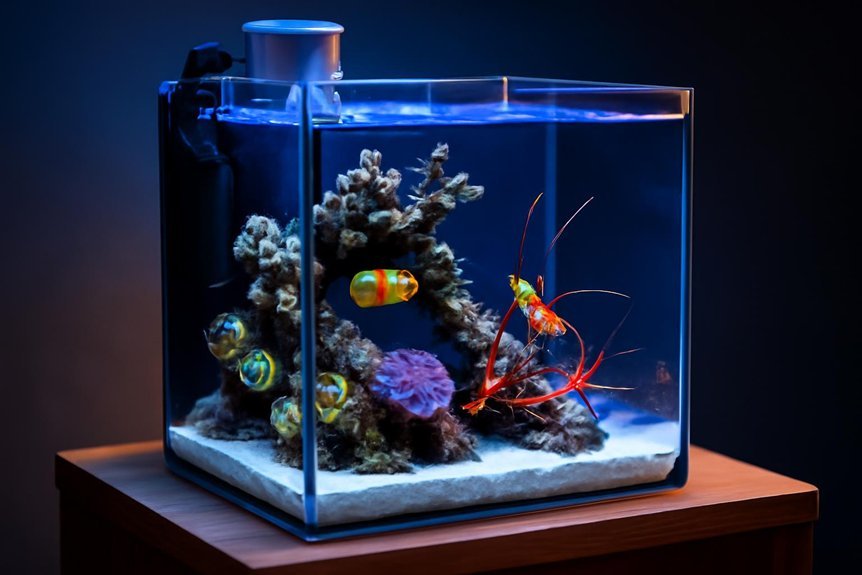
Nano Reef Aquariums for Beginners: Complete Setup Guide
If you’ve ever daydreamed about having your very own underwater paradise, a nano reef aquarium could be just the adventure you’re looking for.
Picture this: you walk into your living room after a long day, and there it is—a vibrant little ecosystem bustling with colorful fish and swaying corals. Compact and manageable, these tanks are perfect for beginners, offering a fantastic way to dive into the enchanting world of marine life without feeling overwhelmed.
Setting up your nano reef is like piecing together a beautiful puzzle. You’ll find joy in each step, from selecting the right equipment to choosing the perfect aquatic inhabitants.
Maybe it starts with a trip to the local aquarium store, where you pause to admire a clownfish playfully darting through an anemone. With some careful planning and a sprinkle of patience, you’ll be able to create a stunning reef that brings you endless joy and satisfaction.
So, are you ready to take the plunge? Let’s explore the essentials together and embark on this exciting journey!
Key Takeaways
- Choose a beginner-friendly nano reef tank size between 5 to 20 gallons for manageable maintenance and stability.
- Invest in essential equipment: filtration system, heater, lighting, air pump, and protein skimmer for a healthy environment.
- Set up your aquarium in a stable location, rinse all equipment, and cycle the tank before introducing marine life.
- Start with hardy corals like zoanthids and fish such as clownfish to create a vibrant and compatible ecosystem.
- Regularly test water parameters and establish a maintenance schedule to ensure long-term health and stability of your reef.
Choosing the Right Nano Reef Tank
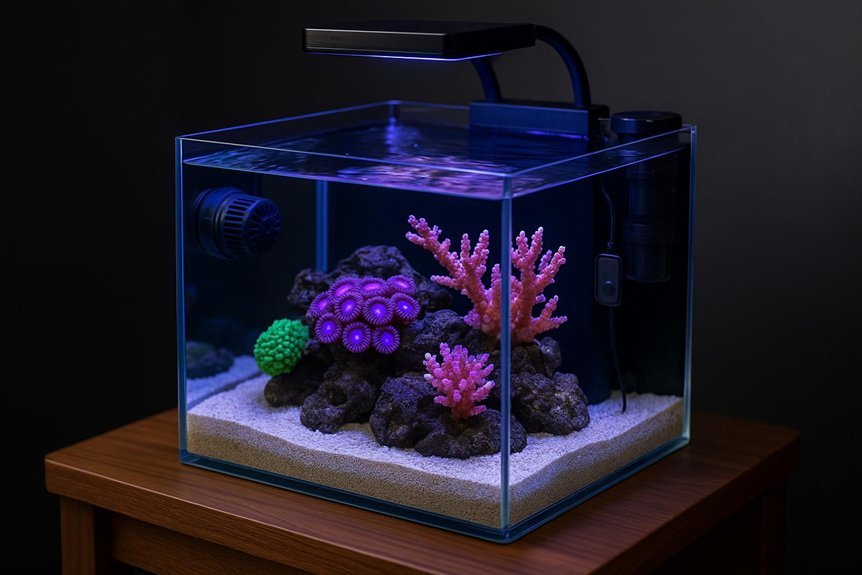
Have you ever wondered what makes a great nano reef tank? Choosing the right one is essential for your aquatic adventure. First, think about size—most beginners opt for tanks between 5 and 20 gallons. Smaller tanks can be easier to maintain, but they require more frequent attention. You’ll also want a tank made of high-quality glass or acrylic, as this helps with clarity and durability. Look for a design that allows for good water circulation and easy access for cleaning. Don’t forget about the shape! A wider tank can provide more surface area for oxygen exchange. Finally, consider what style suits your space. After all, your tank should not only thrive but also look fantastic in your home!
Essential Equipment for Your Nano Reef
Now that you’ve picked the perfect nano reef tank, it’s time to think about the equipment that’ll keep your underwater world thriving. First, you’ll need a good filtration system to keep the water clean and clear—think of it as your tank’s superhero! Next, invest in a heater to maintain a cozy temperature for your marine friends. Don’t forget a reliable lighting system, since corals need light to grow, just like you need snacks to power through your homework! An air pump can help with oxygen levels, while a protein skimmer removes waste. Finally, keep some test kits handy to monitor water quality. With the right equipment, you’ll create a happy, healthy home for your fish and corals!
Setting Up Your Nano Reef Aquarium
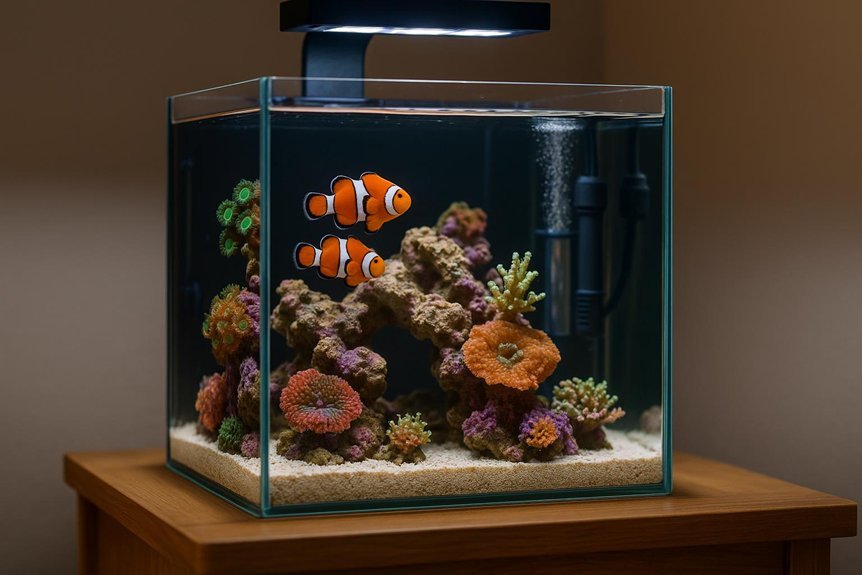
Setting up your nano reef aquarium can feel like a fun adventure, and you’ll want to jump in with a plan! Start by choosing the right spot—somewhere stable, away from direct sunlight or heat sources. Next, rinse your tank and equipment with fresh water to eliminate any dust or residues. Once everything’s clean, set up your substrate; you can use sand or crushed coral. Add your filtration system and heater, then fill the tank with dechlorinated water. Don’t forget to cycle your aquarium before adding any creatures! This process takes time, but it’s essential for a healthy environment. Patience is key here, just like waiting for a pizza to bake. Soon, you’ll be ready for your aquatic friends!
Selecting Corals and Fish for Your Reef
When you’re ready to select corals and fish for your reef, it’s like picking out the perfect toppings for your pizza—each choice adds something unique to your underwater masterpiece! Start with hardy corals like zoanthids and mushrooms, as they’re great for beginners. These vibrant corals not only look fantastic, but they’re also more forgiving if conditions aren’t perfect.
Next, choose fish that suit your nano tank’s size. Clownfish and gobies are popular options that bring personality to your reef without overcrowding it. Just remember to research their compatibility; not all fish get along! By selecting the right mix of corals and fish, you’re setting the stage for a lively, colorful aquarium that’ll impress everyone who sees it!
Maintaining a Healthy Nano Reef Ecosystem
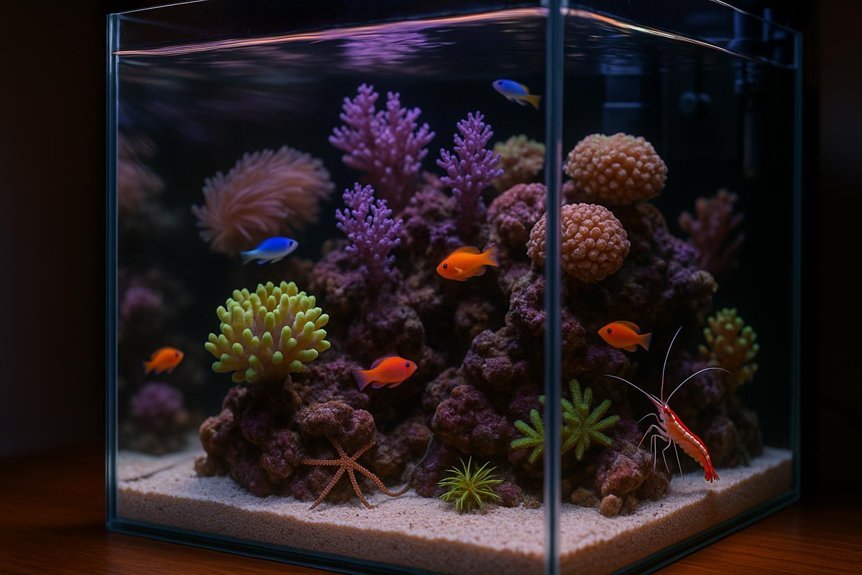
Creating a stunning nano reef isn’t just about choosing the right corals and fish; it’s all about keeping your underwater environment healthy and thriving! To do this, regularly test the water for parameters like pH, ammonia, and nitrate levels. A consistent schedule for water changes is essential; it helps maintain stability. Don’t forget to clean your tank’s equipment, like filters and heaters, to keep everything running smoothly. Feeding your fish the right amount is key too—overfeeding can lead to algae problems. You should also monitor your corals for signs of stress or disease. Finally, patience is important! A healthy nano reef ecosystem takes time to establish, so enjoy the process and watch your underwater world flourish!
FAQ
How Much Does a Nano Reef Aquarium Typically Cost?
FAQs About Nano Reef Aquarium Costs
1. What is the typical cost range for a nano reef aquarium?
A nano reef aquarium usually costs between $100 and $500. The price varies based on the size and equipment you choose.
2. What factors influence the cost of a nano reef aquarium?
The cost can be influenced by the size of the aquarium, the quality of the equipment, and additional accessories needed for setup.
3. What essential equipment is needed for a nano reef aquarium?
Key equipment includes live rock, sand, filtration systems, and appropriate lighting. Each of these components contributes to the overall setup cost.
4. How much should I budget for live rock in a nano reef aquarium?
Live rock prices can vary widely, but you should set aside a significant portion of your budget for it as it is crucial for maintaining a healthy reef environment.
5. Is sand necessary for a nano reef aquarium?
Yes, sand is important for creating a natural environment for marine life and can also affect the overall cost of the setup.
6. What type of lighting is required for a nano reef aquarium?
Lighting is essential for the health of corals and other organisms in a nano reef. The cost will depend on the type and intensity of the lighting you select.
7. Are there ongoing costs associated with maintaining a nano reef aquarium?
Yes, ongoing costs include electricity for lighting, water changes, and purchasing food and supplements for the marine life.
8. Can I find budget-friendly options for nano reef aquariums?
Yes, there are budget-friendly options available, especially if you consider second-hand equipment or smaller setups.
9. How can I save money when setting up a nano reef aquarium?
You can save by purchasing equipment in bundles or looking for sales, and by opting for DIY solutions for certain components.
10. What is the most expensive part of setting up a nano reef aquarium?
Typically, the most expensive parts are the live rock and high-quality lighting systems, which are crucial for the health of the reef.
11. Is it wise to invest in high-quality equipment for a nano reef aquarium?
Investing in high-quality equipment is often recommended, as it can lead to a healthier environment and reduce long-term costs associated with maintenance and replacements.
Can I Use Tap Water for My Nano Reef?
FAQ 1: Can I use tap water in my nano reef aquarium?
No, using tap water for your nano reef is not recommended. It contains chemicals and impurities that can be harmful to marine life.
FAQ 2: What is the main concern with tap water for nano reefs?
The primary concern is that tap water often includes chlorine, heavy metals, and other contaminants, which can negatively impact the health of your aquatic inhabitants.
FAQ 3: What type of water should I use instead of tap water?
Opt for purified water or RO/DI (Reverse Osmosis/Deionized) water. These options ensure that harmful substances are removed, creating a safer environment for your reef.
FAQ 4: Are there any specific chemicals in tap water that harm marine life?
Yes, common chemicals include chlorine, chloramine, and heavy metals like lead or copper, all of which can be toxic to fish and corals.
FAQ 5: How can I purify tap water for my nano reef?
You can use a reverse osmosis (RO) system or a deionization (DI) filter to purify tap water. These systems effectively remove harmful impurities before the water enters your aquarium.
FAQ 6: Is bottled water a good alternative for my nano reef?
Bottled water may be better than tap water, but it’s essential to check for its mineral content and ensure it’s suitable for marine life. Not all bottled waters are created equal.
FAQ 7: What are the benefits of using RO/DI water for my nano reef?
RO/DI water is free from contaminants, which helps maintain stable water parameters and promotes the overall health of your marine ecosystem.
FAQ 8: How often should I change the water in my nano reef?
Regular water changes, usually 10-20% weekly, are essential to maintain water quality. Using purified water helps ensure that any changes benefit your marine life.
FAQ 9: Can I use tap water for other parts of my aquarium setup?
It’s best to avoid using tap water for any aquarium purposes, including top-offs and mixing saltwater. Always choose purified water for consistency and safety.
FAQ 10: What should I do if I’ve already used tap water in my nano reef?
If you’ve already used tap water, consider doing a significant water change with RO/DI water to reduce contaminants. Monitor your marine life closely for any signs of stress or health issues.
How Often Should I Change the Water in My Nano Reef?
FAQ 1: How often should I change the water in my nano reef?
You should change approximately 10-15% of the water in your nano reef every week to maintain optimal conditions.
FAQ 2: Why is it important to change the water regularly?
Regular water changes help stabilize water parameters, ensuring a healthier environment for both fish and corals.
FAQ 3: What happens if I don’t change the water frequently?
Neglecting water changes can lead to poor water quality, which may harm your aquatic life and disrupt the ecosystem.
FAQ 4: Can I change more than 15% of the water at once?
While you can change more than 15%, it’s generally safer to stick to smaller percentages to avoid shocking your system.
FAQ 5: Should I monitor water parameters while changing the water?
Yes, regular monitoring of water parameters is essential to ensure a stable environment and to adjust your maintenance routine as needed.
FAQ 6: What types of water should I use for changes?
It’s best to use dechlorinated tap water or RO/DI water to ensure that harmful chemicals do not enter your nano reef.
FAQ 7: How do I prepare the new water for my nano reef?
Make sure to match the temperature and salinity of the new water with your existing tank water before adding it.
FAQ 8: Is it necessary to vacuum the substrate during water changes?
Vacuuming the substrate can be beneficial, as it removes debris and waste, but it should be done carefully and not during every water change.
FAQ 9: Are there specific times when I should change the water?
Weekly water changes are recommended, but you can adjust based on the tank’s bioload and any fluctuations in water quality.
FAQ 10: What signs indicate that I need to change the water sooner?
If you notice increased algae growth, cloudy water, or changes in fish behavior, it may be time for an earlier water change.
What Should I Do if My Fish Get Sick?
FAQ on Caring for Sick Fish
1. What should I do first if I notice my fish is sick?
Isolate the sick fish immediately to prevent the spread of illness. This will help in monitoring and treating the fish effectively.
2. How can I monitor the water quality for sick fish?
Test the water parameters such as pH, ammonia, nitrites, and nitrates. Maintaining optimal water quality is crucial for the recovery of your fish.
3. What symptoms should I look for in sick fish?
Look for signs like lethargy, changes in appetite, abnormal swimming behavior, or visible spots and lesions. Research these symptoms to identify potential illnesses.
4. What adjustments might I need to make for sick fish?
Depending on the symptoms, you may need to adjust temperature, salinity, or pH levels. Ensuring the right environment can greatly aid in recovery.
5. Should I treat my sick fish with medication?
Yes, if the symptoms suggest a specific illness, research appropriate medications. Always follow dosage instructions carefully to avoid harming your fish.
6. How can I create a stress-free environment for my sick fish?
Reduce noise, dim lighting, and avoid sudden movements near the tank. Providing hiding spots and maintaining a stable environment can help minimize stress.
7. How long should I isolate sick fish?
Keep the sick fish isolated until they show signs of recovery for several days, and ensure they are free from symptoms before reintroducing them to the main tank.
8. Can I treat multiple sick fish at once?
If multiple fish show similar symptoms, you may treat them together, but ensure each fish is monitored for individual reactions to treatment.
9. Is it safe to use home remedies for sick fish?
While some home remedies can be effective, they may not always be safe or appropriate. Research thoroughly and consult with a veterinarian before trying any home treatments.
10. When should I consult a veterinarian for my fish?
If symptoms persist despite treatment or if the fish’s condition worsens, seek professional advice. A veterinarian specialized in fish can provide tailored treatment options.
11. What can I do to prevent my fish from getting sick in the future?
Regularly maintain water quality, provide a balanced diet, and avoid overstocking the tank. Keeping stress levels low and monitoring fish behavior can also help prevent illness.
Are There Any Pests to Watch Out for in My Nano Reef?
FAQ 1: What pests should I be aware of in my nano reef?
You should be cautious of pests such as aiptasia, majano anemones, and flatworms. These organisms can pose a threat to the health of your coral and fish.
FAQ 2: How do aiptasia affect my nano reef?
Aiptasia are aggressive pests that can harm or outcompete corals for resources. They reproduce quickly, making them difficult to control once established.
FAQ 3: What are majano anemones, and why are they a concern?
Majano anemones are similar to aiptasia and can spread rapidly, harming corals and other inhabitants in your reef. They can also release toxins into the water, negatively impacting tank health.
FAQ 4: How do flatworms impact my nano reef?
Flatworms can consume corals and algae, leading to deterioration of the ecosystem in your tank. Some species can also release harmful substances when they die.
FAQ 5: What signs indicate a pest problem in my nano reef?
Look for unusual growths, such as small anemones or pests on your corals, and check for a decrease in coral health or fish behavior. Regular inspections will help you spot these signs early.
FAQ 6: How can I prevent pests from entering my nano reef?
To minimize the risk, always quarantine new additions for at least two weeks before introducing them to your main tank. This helps to ensure that any hidden pests are identified and treated.
FAQ 7: What should I do if I discover pests in my nano reef?
If you find pests, it’s essential to act quickly. Depending on the type of pest, you may need to remove them manually or use specialized treatments.
FAQ 8: Are there any natural predators for these pests?
Some fish and invertebrates are known to help control pest populations naturally. Research suitable species that can coexist with your current nano reef inhabitants.
FAQ 9: How often should I inspect my nano reef for pests?
It’s advisable to inspect your nano reef at least once a week. Regular checks can help catch any pest problems early before they escalate.
FAQ 10: Can pests affect the water quality in my nano reef?
Yes, pests can negatively influence water quality by competing for resources or releasing toxins. Maintaining a healthy environment is crucial for your reef’s success.
Final Thoughts
Setting up a nano reef aquarium is an exciting adventure that can bring the beauty of the ocean right into your home. By choosing the right tank, essential equipment, and hardy corals and fish, you’ll create a vibrant underwater world. Remember to keep an eye on water quality and make regular changes to maintain a healthy ecosystem. Immerse yourself, enjoy the process, and soon you’ll be the proud owner of a enchanting nano reef masterpiece!