
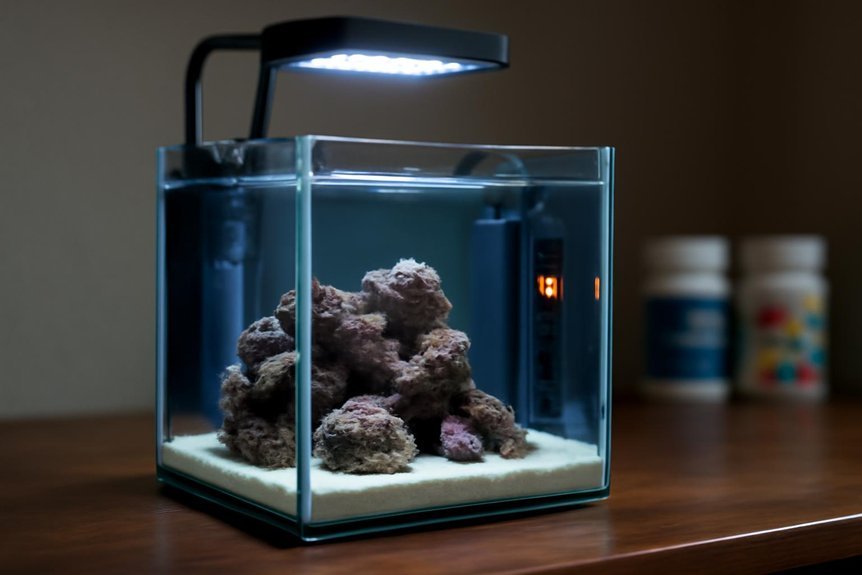
Nano Reef Aquarium Starter Equipment List
So, you’re thinking about starting a nano reef aquarium? That’s fantastic! Just imagine the tranquility of watching colorful fish glide through a miniature coral paradise right in your living room.
It all begins with choosing a tank size that fits your space—maybe a sleek 10-gallon option that can comfortably rest on your coffee table, catching the eye of every guest who walks in.
Next, you’ll want to invest in a solid filtration system. Picture it: you’re settled on the couch with a cup of tea, and the gentle hum of the filter becomes a soothing background melody as you admire your little aquatic world.
And don’t forget the LED lights! They’re not just functional; they’ll bring out the vibrant colors of your corals, transforming the tank into a mesmerizing light show during the evening.
Of course, maintaining water quality is crucial, and that’s where testing kits come into play. You might find yourself in the kitchen, carefully measuring out samples and feeling like a scientist in your own little lab, all in the name of keeping your aquatic friends happy and healthy.
But wait, there’s so much more to consider before diving in! From the right substrate to the best live rock, each choice will play a part in your unique underwater ecosystem.
So gear up for this exciting adventure—your nano reef awaits!
Key Takeaways
- Choose a tank size between 10 to 20 gallons for optimal stability and manageable space for your nano reef setup.
- Invest in a hang-on-back or small canister filter that turns over tank volume 3 to 5 times per hour.
- Use LED lighting that mimics natural sunlight, providing a spectrum of blue and white light for coral health.
- Maintain a water temperature between 76°F and 82°F with a reliable heater and regular thermometer checks.
- Acquire water quality testing kits for pH, ammonia, nitrites, and nitrates to ensure a balanced environment for your marine life.
Selecting the Right Tank Size
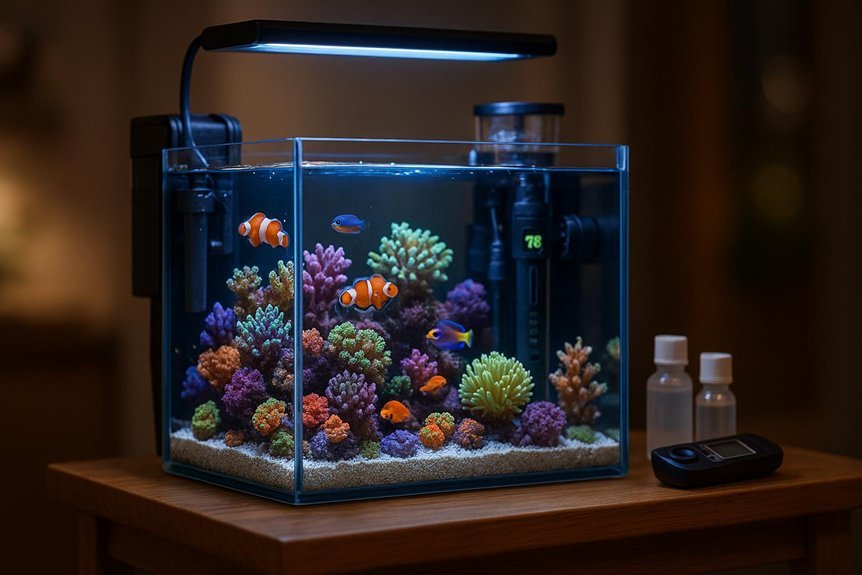
When it comes to selecting the right tank size for your nano reef aquarium, you’ve got a few options to deliberate. Most hobbyists start with tanks ranging from 10 to 20 gallons, which are manageable yet spacious enough for a variety of marine life. Remember, smaller tanks can be tricky because water parameters change quickly, so a bit more volume helps create stability. You might think, “Bigger is better,” but keep in mind that larger tanks require more equipment and maintenance. Plus, you’ll need to reflect on your available space. So, whether you want to showcase vibrant corals or tiny fish, choose a size that fits your lifestyle, while also allowing you to enjoy the beauty of a thriving reef.
Essential Filtration Systems
To keep your nano reef aquarium thriving, you can’t overlook the importance of a solid filtration system. A good filter removes waste, toxins, and debris, ensuring your water stays clean and clear. For nano tanks, consider a hang-on-back filter or a small canister filter, as these options are efficient and easy to maintain. You’ll want a filter that can turn over the tank’s volume at least three to five times an hour. Don’t forget to include a sponge or foam filter to provide additional biological filtration and a cozy home for beneficial bacteria. Regularly clean your filter and replace cartridges as needed to keep everything running smoothly. After all, happy fish lead to a happy reef!
Lighting Options for Coral Growth
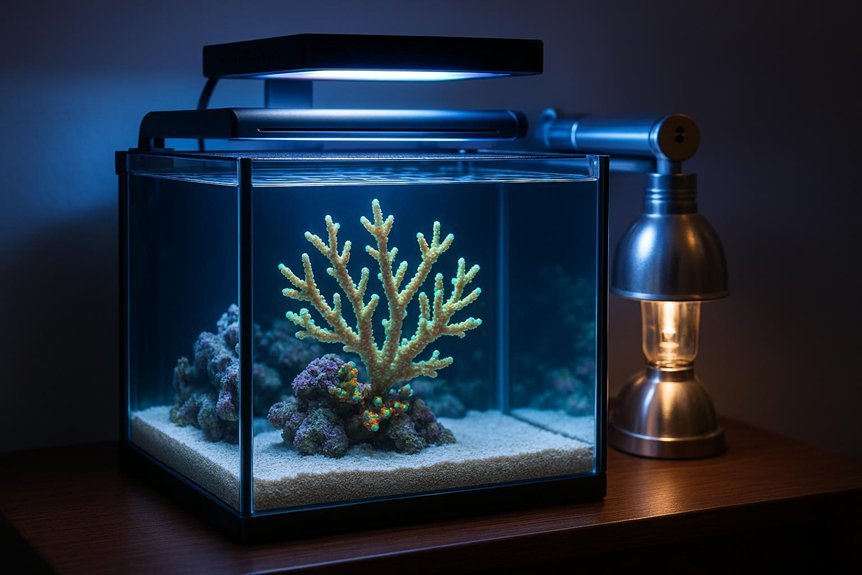
Lighting plays an essential role in keeping your coral happy and healthy, so choosing the right system is important. You’ll want to evaluate LED lights, as they’re energy-efficient and customizable. These lights can mimic natural sunlight, which is vital for coral growth. Make sure the spectrum includes both blue and white light; the blue helps your corals fluoresce beautifully!
Metal halide lights are another option, but they can produce a lot of heat and use more energy. If you’re on a tight budget, fluorescent lights work too, though they may not be as effective. Remember, your coral needs about 8 to 10 hours of light daily, so set up a timer to keep things consistent. Happy corals make for a happy aquarium!
Heating Equipment and Temperature Control
While it might seem like a small detail, keeping your nano reef aquarium at the right temperature is essential for your corals and fish. You’ll want to invest in a reliable heater that can maintain a consistent temperature, typically between 76°F and 82°F. Look for a heater with an adjustable thermostat for easy temperature control. It’s also a good idea to use a thermometer to monitor the water temperature regularly. This way, you can catch any sudden changes that could stress your aquatic life. Don’t forget to take into account the size of your tank when choosing a heater; a heater that’s too powerful might overheat the water. With the right heating equipment, your underwater world will thrive!
Water Quality Testing Kits
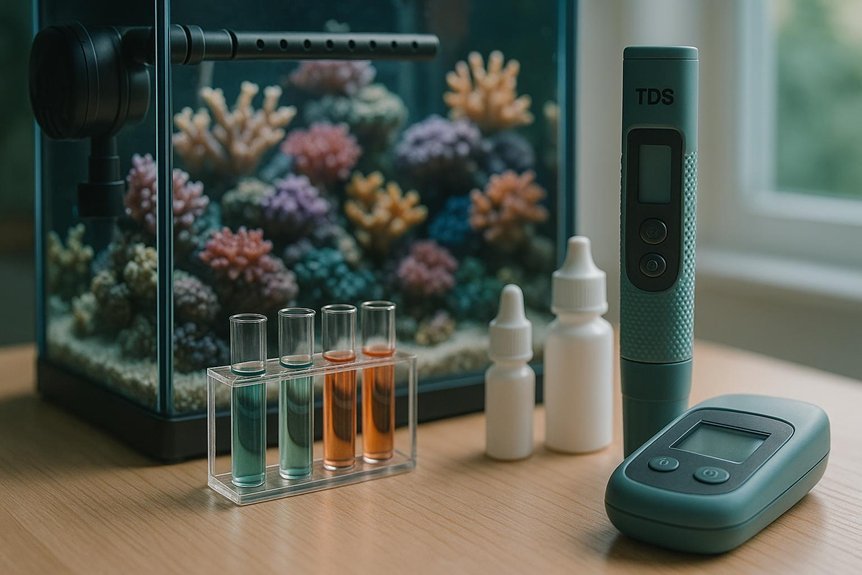
When you set up a nano reef aquarium, testing the water quality is just as important as picking the right fish or corals. You can’t see what’s happening in the water, but trust me, it’s essential for your marine buddies’ health! Water quality testing kits help you check key factors like pH, ammonia, nitrites, and nitrates. These kits come with easy-to-read color charts, making it simple to understand your results. Regular testing keeps your water balanced, preventing nasty surprises that could harm your fish and corals. Plus, it’s kind of fun to play scientist! So, grab a testing kit, and make sure your underwater world stays happy and thriving. Your fish will thank you!
Substrate and Aquascaping Materials
Choosing the right substrate and aquascaping materials is essential for creating a stunning nano reef aquarium that your fish and corals will love. Start with a fine coral sand or aragonite substrate, as it helps maintain water quality while providing a comfy home for beneficial critters. You can also use live rock, which not only looks great but also enhances the ecosystem by promoting good bacteria growth. For aquascaping, think about creating caves, ledges, or overhangs to give your fish plenty of places to hide and explore. Don’t forget some decorations like driftwood or artificial corals to add character! Just remember, balance is key, so avoid overcrowding your space—your reef will thrive with a little room to breathe!
Livestock and Coral Selection Guidelines
After setting up the perfect substrate and aquascaping your nano reef, it’s time to think about the livestock and coral that will make your underwater world come alive. Start with hardy fish like clownfish or damselfish, which adapt well to smaller tanks. Next, choose corals that thrive in lower light, such as zoanthids and mushrooms. These colorful corals are not only beautiful but also relatively easy to care for. Remember, it’s important to avoid overstocking your tank; a good rule is one inch of fish per gallon of water. Keep an eye on water parameters and compatibility among species to create a happy, healthy environment. Your little reef will flourish with the right choices, and you’ll enjoy watching it grow!
FAQ
What Is the Ideal Water Flow Rate for a Nano Reef Aquarium?
1. What is the recommended water flow rate for a nano reef aquarium?
The recommended water flow rate for a nano reef aquarium is between 5 to 20 times the tank volume per hour. This ensures adequate water circulation for the aquatic life.
2. Why is water flow important in a nano reef aquarium?
Good water flow is essential for maintaining healthy coral and fish environments. It helps distribute nutrients, remove waste, and prevent dead spots in the tank.
3. How do I calculate the flow rate for my nano reef tank?
To calculate the flow rate, determine your tank’s volume in gallons and multiply it by the desired flow rate (5 to 20). For example, a 10-gallon tank should have a flow rate of 50 to 200 gallons per hour.
4. Can I have too much water flow in my nano reef aquarium?
Yes, excessive water flow can stress fish and corals, making it difficult for them to thrive. It’s important to find a balance that suits the specific needs of your tank inhabitants.
5. How can I adjust the water flow in my aquarium?
You can adjust the water flow using pump controllers, adjusting the pump’s output, or positioning water flow devices strategically. This allows you to create different flow patterns suitable for various species.
6. What types of pumps are suitable for nano reef aquariums?
Submersible pumps, powerheads, and wavemakers are commonly used in nano reef aquariums. Choose a pump that can handle the desired flow rate while being energy-efficient.
7. How often should I check the flow rate in my aquarium?
It’s advisable to check the flow rate regularly, at least once a month, to ensure that the equipment is functioning properly. Adjustments may be necessary due to changes in tank conditions or equipment wear.
8. What signs indicate inadequate water flow in my aquarium?
Signs of inadequate water flow include algae growth, stagnant areas, and poor coral health. Fish may also appear lethargic or stressed if the water movement is insufficient.
9. Are there specific flow requirements for different types of corals?
Yes, different corals have varying flow preferences. Soft corals typically prefer lower flow, while hard corals may thrive in higher flow environments.
10. How can I create varied water flow in my nano reef tank?
You can create varied water flow by using multiple pumps or powerheads set at different angles. Additionally, incorporating rock structures can help direct flow around the tank.
How Often Should I Perform Water Changes in a Nano Reef?
1. How often should I perform water changes in my nano reef aquarium?
You should perform water changes every one to two weeks to maintain optimal water quality.
2. Why are water changes important for a nano reef?
Regular water changes help reduce toxins in the water, which is crucial for the health of corals and fish.
3. What volume of water should I change during each water change?
Changing about 10-20% of the water volume is generally recommended for nano reefs to avoid shocking the system.
4. Can I do water changes more frequently than every week?
Yes, if your water quality is poor or if you notice high levels of toxins, more frequent water changes can be beneficial.
5. What tools do I need for performing water changes in a nano reef?
A siphon or gravel vacuum, a clean bucket, and a water conditioner are essential tools for conducting water changes efficiently.
6. Should I monitor water parameters before changing the water?
Yes, checking parameters like salinity, pH, and nitrate levels can help determine if a water change is necessary.
7. Is it necessary to treat the new water before adding it to the aquarium?
Absolutely. Always treat new water with a dechlorinator and ensure it matches the temperature and salinity of the aquarium.
8. Can water changes affect the stability of my nano reef?
While water changes help stabilize conditions, drastic changes in water chemistry can cause stress to your marine life, so always aim for consistency.
9. What should I do if I forget to perform a water change?
If you miss your scheduled water change, try to perform it as soon as possible to help maintain water quality, but avoid changing too much water at once.
10. Are there any signs that indicate I need to change the water?
Common signs include cloudy water, algae blooms, or noticeable changes in fish behavior, all of which suggest a water change may be needed.
Can I Use Tap Water for My Nano Reef Aquarium?
FAQs about Using Tap Water in Nano Reef Aquariums
1. Can I use tap water in my nano reef aquarium?
No, it’s not recommended to use tap water as it may contain harmful chemicals like chlorine and heavy metals that can harm marine life.
2. What impurities are commonly found in tap water?
Tap water can contain chlorine, chloramine, heavy metals, and various impurities that can disrupt the delicate balance in a reef aquarium.
3. What is reverse osmosis water?
Reverse osmosis water is purified water that has been filtered through a semipermeable membrane to remove impurities and contaminants, making it ideal for aquariums.
4. Why should I choose dechlorinated water instead of tap water?
Dechlorinated water is treated to remove harmful chlorine and chloramine, making it safer for aquatic life and helping to maintain water quality.
5. How can I treat tap water for my aquarium?
You can treat tap water by using a dechlorinator that neutralizes chlorine and chloramine, but this may not remove heavy metals or other impurities.
6. What are the risks of using untreated tap water?
Using untreated tap water can lead to stress or death in fish and corals due to toxicity from chemicals, which can disrupt the biological filtration process.
7. Is bottled water safe for my nano reef?
Bottled water may be safe if it is labeled as distilled or reverse osmosis water, but it’s essential to check for any added minerals or chemicals that might harm marine life.
8. How often should I change the water in my nano reef aquarium?
Regular water changes, typically 10-20% weekly, are important to maintain water quality and remove built-up toxins, regardless of the water source used.
9. What water parameters should I monitor in my nano reef?
Key parameters to monitor include salinity, pH, nitrate, phosphate, and ammonia levels to ensure a healthy environment for your reef inhabitants.
10. Can I use tap water for top-offs in my nano reef?
It’s best to avoid using tap water for top-offs; instead, use RO or dechlorinated water to prevent the accumulation of harmful substances in your aquarium.
What Type of Food Should I Feed My Coral?
1. What are the best foods to feed my coral?
Corals thrive on a mix of high-quality coral pellets, liquid foods, and phytoplankton. These options provide essential nutrients that support their growth and health.
2. How often should I feed my coral?
Feeding frequency can vary, but generally, corals benefit from being fed 2-3 times a week. Monitor their response to adjust the frequency as needed.
3. Can I use regular fish food for my coral?
While some fish foods may contain beneficial ingredients, they often lack the specific nutrients corals need. It’s better to use foods specifically formulated for corals.
4. What role do amino acids play in coral health?
Amino acids are vital for coral growth and tissue health. Supplementing with amino acids can enhance their resilience and overall vitality.
5. Is phytoplankton necessary for coral feeding?
Yes, phytoplankton is an excellent food source for many coral species, providing essential nutrients. It can be especially beneficial for filter-feeding corals.
6. Can corals eat meaty foods?
Some corals, particularly LPS (Large Polyp Stony) corals, can consume meaty foods, such as shrimp or fish. However, it’s crucial to ensure that the food is appropriately sized.
7. What are coral pellets?
Coral pellets are specially formulated granules designed to provide balanced nutrition for corals. They are convenient and help reduce waste in the aquarium.
8. How do I know if my coral is well-fed?
Healthy corals should display vibrant colors and good polyp extension. If they appear retracted or discolored, it may indicate underfeeding or poor water quality.
9. Should I vary the food types I offer my coral?
Yes, varying food types ensures a well-rounded diet, which can improve coral health. Different foods provide diverse nutrients that can support various coral species.
10. Can overfeeding harm my coral?
Yes, overfeeding can lead to poor water quality and increased nitrates, which can harm corals. It’s essential to find a balance and only provide what they can consume in a short time.
How Do I Acclimate New Livestock to My Nano Reef?
FAQ on Acclimating New Livestock to a Nano Reef
1. How long should I float the sealed bag in my tank?
Float the sealed bag in your tank for 15-20 minutes. This allows the temperature of the water inside the bag to equalize with that of your tank.
2. Why is it important to mix tank water into the bag?
Gradually mixing tank water into the bag helps acclimate the livestock to the water parameters of your aquarium, reducing stress and the risk of shock.
3. How should I mix tank water into the bag?
Begin by adding small amounts of tank water to the bag every few minutes. Continue this process for about 30-60 minutes to ensure a smooth transition.
4. What should I do after mixing the tank water?
After acclimation, carefully transfer the livestock into your tank. Use a net to avoid adding any water from the bag into your aquarium.
5. Can I add the bag water to my aquarium?
No, you should avoid adding bag water to your aquarium. The bag water may contain pollutants or pathogens that could harm your tank’s ecosystem.
6. How can I ensure the livestock is healthy before acclimation?
Inspect the livestock closely for any signs of disease or stress before you begin the acclimation process. Healthy specimens will appear active and show no visible signs of distress.
7. Is there a specific order for adding different types of livestock?
It’s generally best to introduce hardy species first, followed by more sensitive ones. This helps to establish a stable environment for the more delicate livestock later on.
8. What should I do if the livestock appears stressed during acclimation?
If the livestock shows signs of stress, such as rapid gill movement or hiding, slow down the acclimation process. Consider giving them more time in the bag before transferring them.
9. How often should I acclimate new livestock?
Every time you introduce new livestock to your nano reef, you should follow the acclimation process. Consistency is key to maintaining a healthy environment.
10. Can I use a drip acclimation method instead?
Yes, a drip acclimation method can be used for sensitive species. This involves slowly dripping tank water into the bag over several hours, gradually increasing the volume of tank water.
11. What should I monitor after introducing new livestock?
After introduction, monitor for signs of stress or aggression among the livestock. Observe their feeding behavior and overall health for the first few days in the new environment.
Final Thoughts
Setting up your nano reef aquarium can be an exciting adventure! With the right tank size, filtration, lighting, heating, and testing kits, you’re well on your way to creating a thriving underwater world. Remember, patience is key, so take your time when choosing livestock and corals. Before you know it, you’ll have a colorful, lively aquarium that’ll impress your friends and family. Immerse yourself in the fun, and enjoy every moment of your reef journey!