
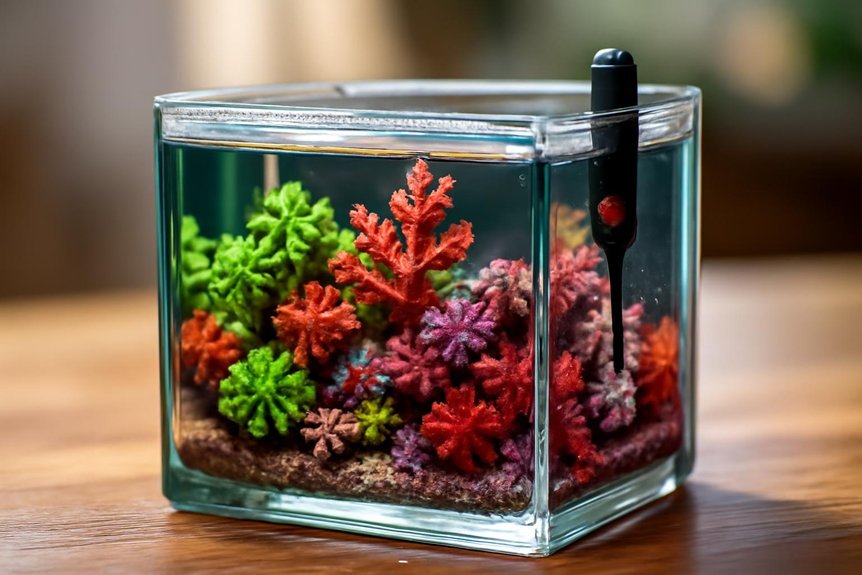
Nano Reef Ph & Salinity Basics
If you’re stepping into the captivating world of nano reefs, you’re in for an adventure that goes beyond just adding water and fish. Picture yourself standing in front of your tank, watching your aquatic friends dart around. Understanding pH and salinity is like the secret ingredient in a recipe that keeps your little underwater paradise thriving.
Imagine pH as the backbone of your reef’s water chemistry—much like the foundation of a cozy home. It’s that steady support that ensures everything else can flourish.
Now, think about salinity; it’s the unsung hero, quietly working behind the scenes to keep your fish and corals alive and well. Just like how you would check the weather before planning a day out, monitoring these levels is essential to your reef’s success.
Getting these parameters just right can feel a bit daunting at first, but don’t worry—it’s part of the journey. With a little bit of patience and practice, you’ll learn how to maintain that perfect balance.
Picture yourself, a few weeks from now, confidently checking your water levels and knowing exactly how to adjust them, all while your fish swim happily around their vibrant home. Are you ready to dive deeper into this fascinating world?
Key Takeaways
- Optimal pH for nano reefs is between 7.8 and 8.5, crucial for coral and fish health.
- Salinity should be maintained between 1.020 and 1.025 specific gravity for marine life well-being.
- Regular testing with pH kits and hydrometers ensures stable water conditions in your reef.
- Adjust pH and salinity gradually to prevent stress on aquatic organisms during changes.
- Consistent water changes help stabilize both pH and salinity levels in nano reefs.
Understanding Ph: the Foundation of Water Chemistry
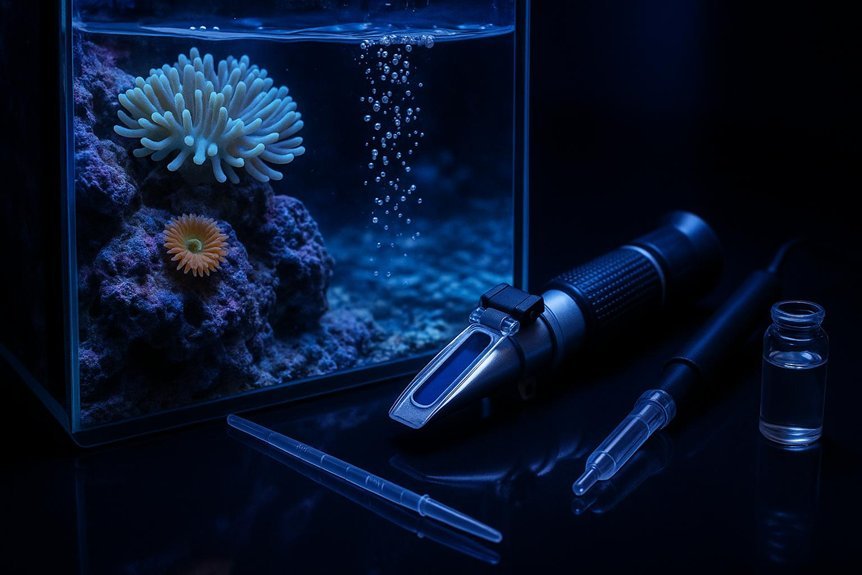
When it comes to your nano reef, pH is like the superhero of water chemistry. It measures how acidic or basic your water is, and it’s vital for your aquatic friends. A pH level between 7.8 and 8.5 is usually best for most reef inhabitants. If your pH drops too low, it can stress out your corals and fish, making them feel like they’re in a bad movie. You can keep an eye on pH using test kits, which are easy to find. If you notice it’s off, you can adjust it with buffering additives. Just remember, a stable pH is key! So, give your nano reef the superhero treatment it deserves, and watch your underwater world thrive!
The Importance of Salinity in a Nano Reef
Salinity is just as essential to your nano reef as pH, and it’s one of those things you can’t afford to overlook. The salt levels in your aquarium water directly affect the health of your fish and corals. If salinity is too low, it can stress your marine life, making them more susceptible to diseases. On the flip side, if it’s too high, you risk dehydration for your creatures, which isn’t a fun situation for anyone! Keeping salinity stable between 1.020 and 1.025 is key to creating a thriving environment. Regularly check your salinity with a reliable hydrometer, and adjust it as needed. Your nano reef is a delicate ecosystem, and you’re the caretaker, so let’s keep it happy and healthy!
How Ph Affects Coral Growth and Health
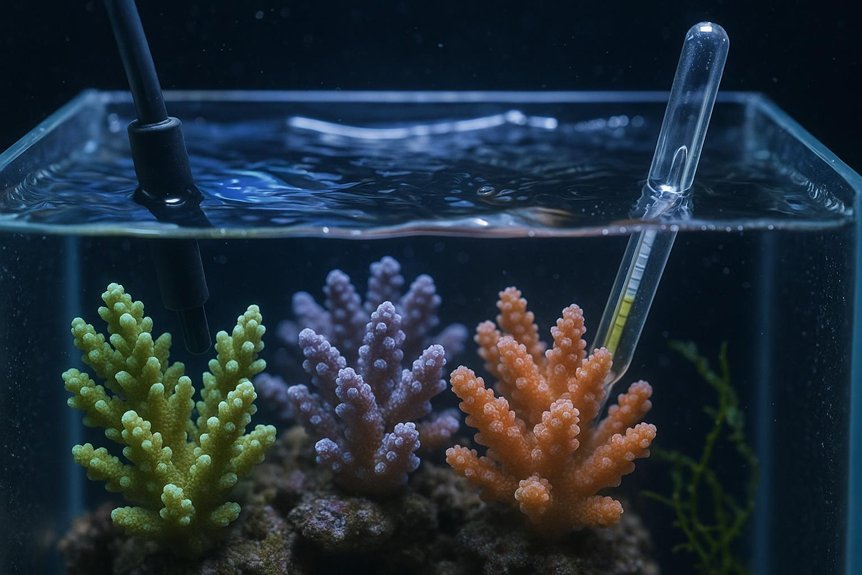
Maintaining the right balance of pH in your nano reef is just as important as keeping an eye on salinity. Coral thrives in a pH range of 7.8 to 8.5. If it dips too low or rises too high, your corals might struggle to grow. Think of it like a Goldilocks situation—too hot, too cold, or just right! Low pH can lead to stress, making corals more susceptible to disease. Conversely, high pH can hinder their ability to absorb nutrients. Regularly testing your water pH helps guarantee a healthy environment. When corals are happy, they’ll show it by growing and even brightening up! So, keep that pH in check, and your coral will reward you with its vibrant beauty.
The Role of Salinity in Marine Life Survival
While you might think of fish as the stars of your nano reef, salinity plays a essential supporting role in their survival. Just like you need water to drink, marine life needs the right salinity level to thrive. Too low or too high salinity can stress your fish, making them sick or even leading to death. Each species has its own sweet spot, so it’s important to know what works best for your fish. When salinity levels are stable, fish can maintain their bodily functions, like breathing and digesting food. Plus, corals and invertebrates rely on proper salinity too! Keeping an eye on this significant factor guarantees a happy, healthy underwater community in your nano reef.
Measuring Ph: Tools and Techniques
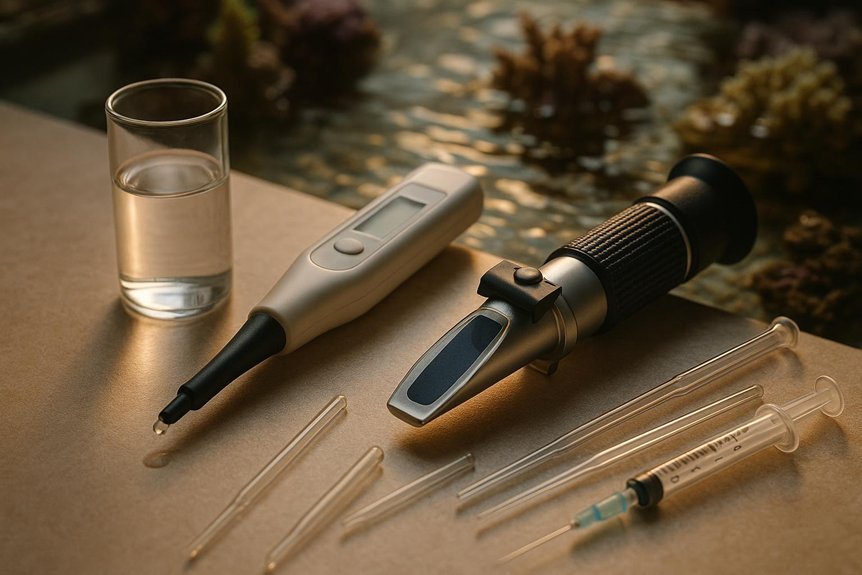
When it comes to keeping your nano reef thriving, measuring pH is just as essential as monitoring salinity. You can easily measure pH using test kits or digital pH meters. Test kits usually come with reagents that change color based on the pH level; just mix the water sample with the reagent and compare the color to a chart. Digital pH meters are more precise, giving you a direct reading. Just remember to calibrate them regularly to guarantee accuracy! Whichever method you choose, make certain to test your water regularly. Keeping the pH balanced helps your corals and fish stay happy and healthy. After all, a thriving reef is a happy reef! So, immerse yourself and start measuring!
Monitoring Salinity: Methods and Equipment
To keep your nano reef in top shape, monitoring salinity is essential for the health of your aquatic friends. You can use several methods to keep an eye on those salt levels. A simple and effective choice is a hydrometer, which measures the specific gravity of your water. Just dip it in and read the scale—easy peasy! Another option is a refractometer, which uses light to determine salinity. It’s a bit more precise and can give you a clearer picture. Don’t forget to check regularly, as fluctuations can sneak up on you. Keeping a log of your readings helps you track changes over time, ensuring your little underwater world stays happy and thriving. Happy monitoring!
Common Causes of Ph Fluctuations
pH fluctuations in your nano reef can be a bit of a mystery, but understanding the common causes can help you keep your aquatic environment stable. One major factor is the buildup of organic waste, like uneaten food and fish waste, which can lower pH levels. Another culprit is the presence of carbon dioxide; if your tank’s surface area is limited, gas exchange might be poor, leading to higher CO2 levels and lower pH. Temperature changes can also play a role, as warmer water often holds less oxygen, affecting pH. Finally, the types of corals and algae you have can influence pH, since they absorb or release acids. Keep an eye on these factors to maintain balance in your reef!
Adjusting Ph Levels: Best Practices
If you’re looking to keep your nano reef thriving, adjusting the pH levels is an essential step. Start by testing the water with a reliable pH kit. You want your pH to be between 7.8 and 8.5 for most reef inhabitants. If it’s too low, consider adding a buffer, like baking soda, gradually to raise it. Just remember, changes should be slow and steady—like a turtle in a race! If your pH is too high, you can use a diluted vinegar solution to bring it down, but do this carefully. Regular water changes help maintain stable pH, too. Keep an eye on your levels, and your corals will thank you with vibrant colors and happy growth!
Maintaining Optimal Salinity: Tips and Tricks
Maintaining the right salinity in your nano reef is essential for keeping your aquatic friends happy and healthy. To start, use a reliable hydrometer or refractometer to measure salinity regularly. Aim for a level between 1.020 and 1.025 specific gravity. If you need to adjust it, do so gradually; sudden changes can stress your fish and corals. When topping off your tank, always use fresh water, as evaporation leaves behind salt. Consider using a salt mix designed for marine aquariums to maintain consistent levels. And remember, regular water changes can help keep salinity stable while rejuvenating nutrients. With these tips, you’ll have a thriving reef environment that’ll make your underwater buddies smile!
The Interconnection Between Ph and Salinity
While you might think of pH and salinity as separate issues in your nano reef, they’re actually closely connected. When salinity levels change, it can affect the pH balance, and vice versa. If your salinity is too low, it might lead to a drop in pH, making your tank more acidic. This can stress your corals and fish, which isn’t what you want. On the flip side, high salinity can push pH levels up, making your water too alkaline. Keeping an eye on both parameters helps maintain a healthy environment for your aquatic friends. So, think of them like dance partners; when one takes a step, the other follows! Monitoring these levels will keep your reef thriving and vibrant.
FAQ
Can I Use Tap Water for My Nano Reef Setup?
FAQ 1: Can I use tap water in my nano reef?
No, using tap water in your nano reef is not advisable. It often contains harmful chemicals and minerals that can negatively impact marine life.
FAQ 2: What are the risks of using tap water in a nano reef setup?
Tap water may contain chlorine, chloramines, and heavy metals, which can be toxic to fish and corals. These substances can disrupt the delicate balance required for a healthy reef ecosystem.
FAQ 3: What type of water should I use for my nano reef?
For a healthier reef environment, it’s best to use deionized or reverse osmosis (RO) water. These options are free from contaminants typically found in tap water.
FAQ 4: How does reverse osmosis water benefit my nano reef?
Reverse osmosis water is purified through a filtration process that removes impurities and harmful substances. This creates a stable and safe environment for your marine life.
FAQ 5: Is deionized water safe for my nano reef?
Yes, deionized water is safe for your nano reef. Like RO water, it is purified to eliminate harmful chemicals and minerals that could harm your aquatic inhabitants.
FAQ 6: Are there any alternatives to RO or deionized water for marine setups?
While RO and deionized water are the best options, you can also use natural seawater if it is collected from a clean source and properly filtered. However, this may be less practical for most hobbyists.
FAQ 7: Can I treat tap water to make it safe for my nano reef?
While some treatments can remove chlorine and other chemicals, they may not eliminate all harmful substances. It’s generally safer to use purified water instead.
FAQ 8: How can I test my tap water for contaminants?
You can use water testing kits specifically designed for aquariums to check for contaminants in your tap water. These kits typically measure pH, ammonia, nitrates, and other harmful substances.
FAQ 9: How important is water quality for a nano reef?
Water quality is crucial for the health and survival of marine life in a nano reef. Poor water conditions can lead to stress, disease, and even death of your aquatic pets.
FAQ 10: What should I do if I’ve already used tap water in my nano reef?
If you’ve already used tap water, monitor your water parameters closely and consider performing a water change with purified water. This can help improve the overall quality of your reef environment.
How Often Should I Test My Nano Reef’s Ph and Salinity?
1. How often should I test the pH in my nano reef?
You should test the pH of your nano reef weekly, especially during the initial setup phase.
2. Why is it important to monitor pH in a nano reef?
Regular pH monitoring helps maintain stable conditions, which is vital for the health of your aquatic life.
3. How often should I check salinity in my nano reef?
Salinity should also be tested weekly to ensure it remains within the appropriate range for your inhabitants.
4. What can happen if I don’t regularly test pH and salinity?
Neglecting to test these parameters can lead to stress or harmful fluctuations in your reef environment.
5. Should I increase the frequency of testing during certain times?
Yes, if you notice any changes in your tank or after adding new livestock, increase testing frequency to ensure stability.
6. What tools do I need to test pH and salinity?
You’ll need a reliable pH test kit and a salinity refractometer or hydrometer for accurate measurements.
7. What is the ideal pH range for a nano reef?
The ideal pH range for most nano reefs is between 7.8 and 8.5.
8. What salinity level should I aim for in my nano reef?
A salinity level of 1.020 to 1.025 specific gravity is generally recommended for nano reefs.
9. How can I stabilize pH and salinity levels?
Regular water changes and monitoring will help stabilize these levels; consider using buffers or additives if needed.
10. What should I do if my tests show fluctuating pH or salinity?
If fluctuations occur, investigate potential causes such as overfeeding, insufficient water changes, or equipment malfunction to address the issue promptly.
What Are the Signs of Low Ph in My Aquarium?
FAQs on Signs of Low pH in Your Aquarium
1. What are the first signs of low pH in my aquarium?
The initial signs include lethargic behavior in fish and retraction of corals. You may also notice an increase in algae growth.
2. How does low pH affect fish behavior?
Fish may become less active, hiding more often and showing signs of stress. This change in behavior indicates discomfort due to poor water conditions.
3. What changes occur in corals due to low pH?
Corals may retract their polyps and appear less vibrant. This reaction is a stress response to unfavorable water chemistry.
4. Can low pH cause cloudy water in my aquarium?
Yes, low pH levels can lead to cloudy water, which is often a sign of increased dissolved organic matter or bacterial blooms.
5. What types of algae thrive in low pH conditions?
Certain types of algae, such as green algae, may proliferate in low pH environments. This excess growth can further disrupt the balance in your aquarium.
6. Are there any specific fish species that are more sensitive to low pH?
Many freshwater and marine species are sensitive to low pH, but species like discus and certain reef fish are particularly vulnerable. Monitoring their conditions is crucial.
7. How can I tell if my aquatic life is behaving unusually due to low pH?
Unusual behavior may include erratic swimming, gasping for air at the surface, or unusual hiding patterns. These behaviors indicate stress and potential health issues.
8. What should I monitor alongside pH levels?
It’s essential to monitor ammonia, nitrite, nitrate levels, and overall water hardness. These factors can also impact the health of your aquatic life.
9. How often should I check the pH levels in my aquarium?
Regular checks, at least once a week, are recommended to ensure stability. More frequent testing may be necessary if you notice any signs of distress.
10. What steps can I take if I detect low pH in my aquarium?
You can gradually adjust the pH using buffering agents or water changes. Ensure any adjustments are made slowly to avoid shocking your aquatic life.
Is It Normal for Salinity to Fluctuate in a Nano Reef?
1. Is it normal for salinity to change in a nano reef?
Yes, salinity fluctuations are common in nano reefs due to factors like evaporation and water changes.
2. What causes salinity to fluctuate in a nano reef?
Salinity can fluctuate primarily because of evaporation of water and the addition or removal of water during maintenance activities.
3. How often should I check salinity in my nano reef?
It’s advisable to check salinity regularly, ideally weekly, to ensure a stable environment for your aquatic life.
4. What is the ideal salinity level for a nano reef?
The ideal salinity level for most nano reefs is typically around 1.025 specific gravity, but this can vary depending on the species kept.
5. How can I stabilize salinity in my nano reef?
To stabilize salinity, maintain consistent water changes and top off evaporated water with fresh water regularly.
6. What should I do if salinity is too high?
If salinity is too high, perform a water change with fresh water to gradually lower the salinity to the desired level.
7. What should I do if salinity is too low?
If salinity is too low, you can add a concentrated salt mix to the tank or perform a water change with saltwater to increase the salinity.
8. Can rapid salinity changes harm my aquatic life?
Yes, rapid salinity changes can stress or harm your aquatic life, so it’s important to make adjustments slowly and carefully.
9. Are there tools to help monitor salinity?
Yes, tools like hydrometers or refractometers can help you accurately measure and monitor salinity levels in your nano reef.
10. How can evaporation impact salinity in my nano reef?
Evaporation can concentrate the salt in the remaining water, leading to increased salinity levels if not addressed with regular top-offs of fresh water.
Can Fish Tolerate Temporary Changes in Ph and Salinity Levels?
FAQ: Can Fish Tolerate Temporary Changes in pH and Salinity Levels?
1. Can fish handle temporary changes in their pH levels?
Yes, fish can tolerate temporary fluctuations in pH levels. However, these changes should not last long, as prolonged exposure can lead to stress.
2. What happens if the pH level changes too quickly?
Rapid changes in pH can shock fish, causing stress or health issues. It’s crucial to make adjustments gradually to avoid harming the fish.
3. How do fish react to changes in salinity?
Fish can adapt to short-term salinity changes, but sudden shifts can be harmful. They require time to acclimate to new salinity levels.
4. What are the signs of stress in fish due to pH or salinity changes?
Signs of stress may include erratic swimming, hiding, or changes in coloration. Monitoring behavior can help identify stress related to environmental changes.
5. How often should I test pH and salinity levels?
Regular testing is recommended, especially after introducing new fish or making water changes. Consistency helps maintain a stable environment.
6. What is the ideal pH range for most fish?
Most freshwater fish thrive in a pH range of 6.5 to 7.5, while saltwater fish prefer a range of 7.8 to 8.4. Research specific species for their ideal conditions.
7. How can I minimize pH fluctuations?
To minimize pH fluctuations, perform regular water changes and use quality filtration systems. Adding buffers can also help stabilize pH levels.
8. What should I do if I notice a pH or salinity spike?
If you notice a spike, take immediate action by gradually adjusting the levels back to normal. Use appropriate products to safely adjust pH or salinity.
9. Can acclimating fish help with pH and salinity changes?
Yes, acclimating fish slowly to new environments can help them adjust to changes in pH and salinity. This process reduces stress and promotes healthier transitions.
10. Are there specific fish more sensitive to pH or salinity changes?
Some species, like certain cichlids and reef fish, are more sensitive to changes in pH and salinity. It’s essential to know the needs of your specific fish to maintain their health.
Final Thoughts
Keeping your nano reef’s pH and salinity in check is like being a superhero for your aquatic friends. By measuring regularly and making small adjustments, you’re helping corals thrive and fish stay happy. Remember, a stable environment means a healthy reef, and that’s something to celebrate! With a little care and attention, you’ll create a vibrant underwater world that’s full of life. Now, go plunge into your reef adventure!