
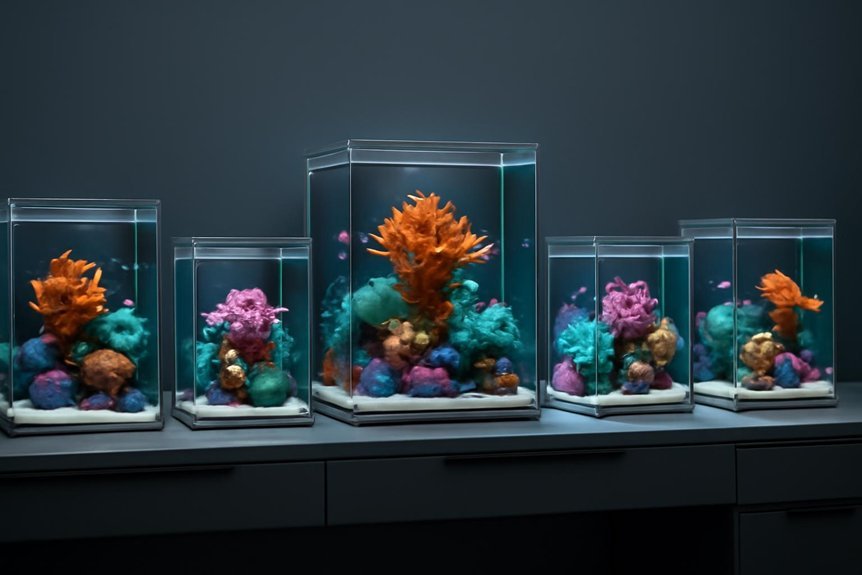
The 5 Best Nano Reef Tanks for Desks – Perfect for Small Spaces and Big Style
Are you a fish enthusiast looking to enhance your workspace with a touch of marine magic? This guide is tailored for those who want to incorporate a nano reef tank into their desk setup without compromising on space or style.
These compact aquariums not only bring vibrant aquatic life to your environment but also create a calming atmosphere that can boost productivity.
When selecting the best nano reef tanks, we focused on key criteria: aesthetic appeal, ease of maintenance, and efficient filtration systems.
These factors ensure that you can enjoy a stunning underwater ecosystem with minimal fuss, making it perfect for busy professionals or students. The right tank can transform an ordinary desk into an extraordinary aquatic oasis!
Ready to discover the top five nano reef tanks that combine functionality with flair? Let’s dive into our curated selection of products that will not only fit seamlessly into your small space but also elevate your workspace with their beauty and charm.
Scroll down to find the perfect match for your desk!
40 oz Micro Reef Ready Aquarium
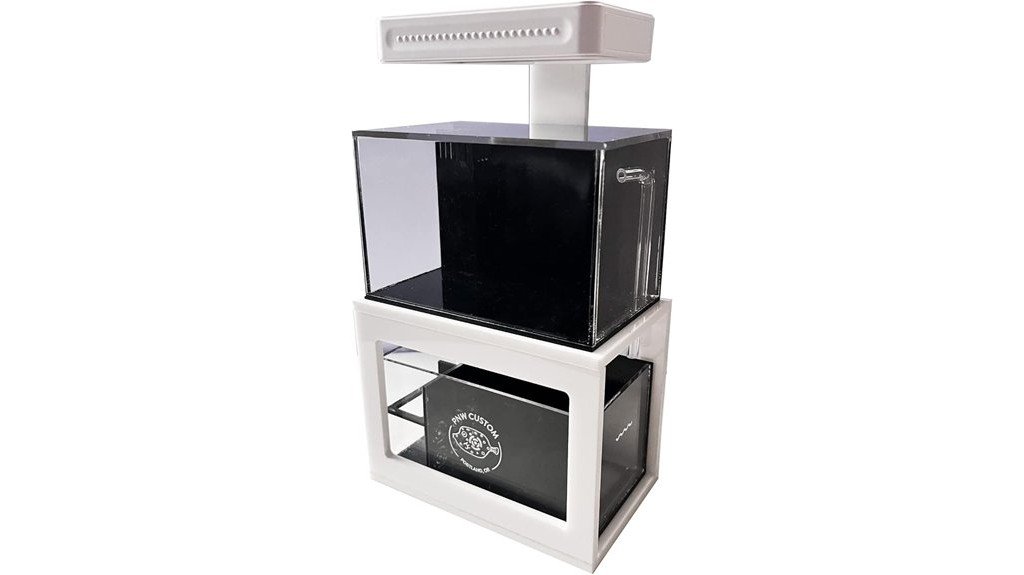
If you’re looking to brighten up your desk with a splash of ocean life, the 40 oz Micro Reef Ready Aquarium is a fantastic choice! This small desktop saltwater fish tank measures just 5.7 inches long and 3.7 inches wide, making it perfect for tight spaces. It holds a total of 40 ounces of water, with a display of 28 ounces and a sump of 12 ounces. Featuring a powerful adjustable return pump and an LED light, it mimics a real reef tank! Just keep in mind some customers faced issues with broken parts, so check your package carefully when it arrives.
Best For: Those seeking a compact and stylish aquarium to enhance their desktop space with a bit of marine life.
Pros:
- High-quality construction ensures durability and aesthetic appeal.
- Efficient design includes a built-in sump and adjustable return pump for optimal water flow.
- LED lighting enhances the visual display while being energy efficient.
Cons:
- Issues with broken parts upon arrival have been reported by some customers.
- Discrepancies in light specifications may lead to confusion regarding brightness and usage.
- Difficulty in obtaining customer support for replacements or repairs has been noted.
hygger Horizon 8 Gallon LED Glass Aquarium Kit
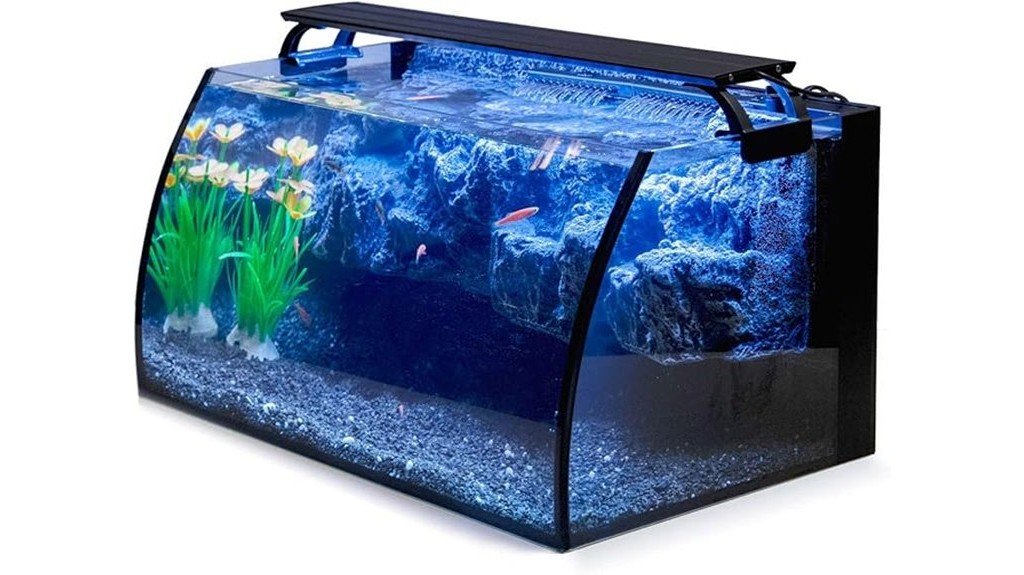
The hygger Horizon 8 Gallon LED Glass Aquarium Kit is perfect for anyone looking to add a splash of life to their desk without taking up too much space. With its unique curved design, your fish will be the stars of the show! This kit includes a powerful filter and an adjustable LED light, making it easy to create a vibrant underwater world. You can even customize the lighting with multiple modes. Plus, the 3D rockery background not only looks cool but also gives your fish some cozy hiding spots. It’s a stylish and fun way to enjoy aquatic life right at your fingertips!
Best For: Those seeking a stylish and compact aquarium that combines aesthetic appeal with practical features for a vibrant aquatic environment.
Pros:
- Easy to customize lighting with multiple modes and adjustable brightness settings.
- Compact design makes it ideal for small spaces like desks or countertops.
- 3D rockery background provides both visual appeal and shelter for fish.
Cons:
- May be too strong for small fish under 2 inches due to the powerful filter.
- Limited capacity for aquatic life due to the 6-gallon effective water volume after accounting for decor.
- Requires careful monitoring of lighting and filtration settings to maintain optimal conditions for fish.
biOrb Flow 30 Acrylic Aquarium (8-Gallon)
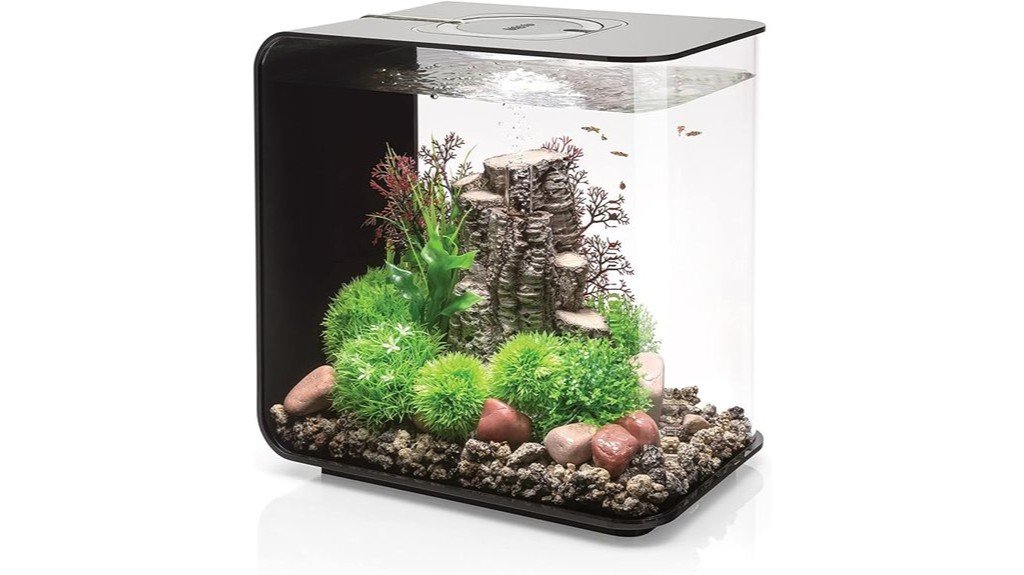
Looking for a stunning way to brighten up your workspace? The biOrb Flow 30 Acrylic Aquarium is a perfect choice! With its chic minimalist design and bold black trim, it instantly adds style to any desk. Measuring 10.2 x 15 x 15.4 inches, this 8-gallon aquarium features three transparent sides for a fantastic view of the underwater world. Made from durable acrylic, it’s 10 times stronger than glass and retains heat well. The true 5-stage filtration system keeps your tank clean with minimal monthly maintenance. Plus, it comes with everything you need to get started, making setup a breeze!
Best For: Those looking for a stylish and functional aquarium to enhance their workspace or home decor.
Pros:
- Chic minimalist design with bold black trim complements any decor.
- Durable acrylic construction is 10 times stronger and 50% lighter than glass.
- True 5-stage filtration system ensures a clean and healthy environment for fish.
Cons:
- Some users report noise from the pump can be distracting.
- Filter replacement costs may add up over time.
- Cleaning the tank can be challenging for some users.
HelloReef 15 Gallon Beginner Clownfish Saltwater Aquarium Kit
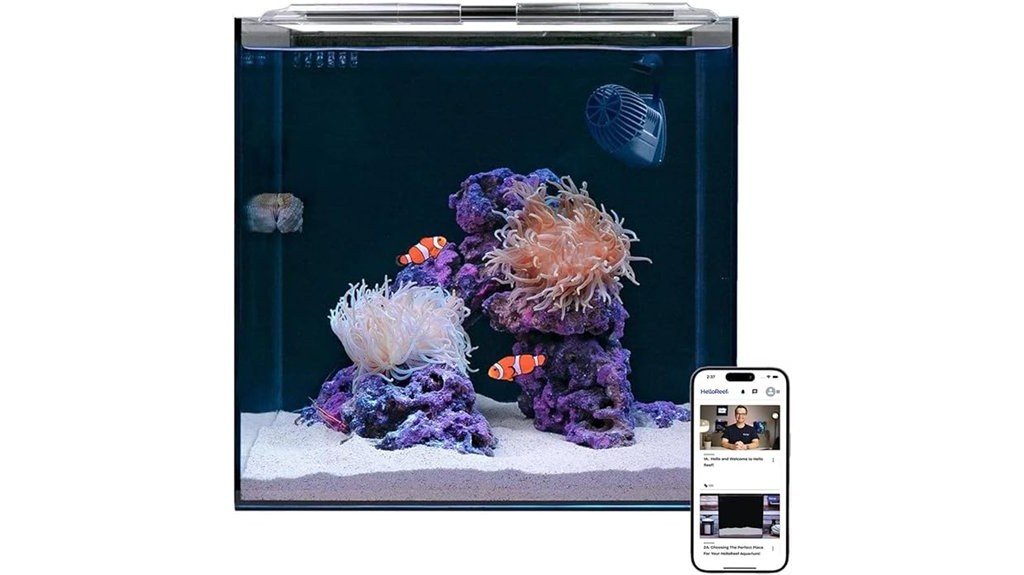
For anyone enthusiastic to plunge into the colorful world of marine life, the HelloReef 15 Gallon Beginner Clownfish Saltwater Aquarium Kit stands out as an ideal choice. This complete kit comes with everything you need, including an aquarium, filtration, and even a setup guide. With app-controlled smart LED lighting, you’ll impress your friends in no time! Its high-quality equipment makes it easy for both newbies and seasoned aquarists to succeed. Plus, you’ll feel good knowing that 2% of your purchase supports coral conservation efforts. Just keep an eye on your fish, as some folks have noted they might jump out!
Best For: Beginners and experienced aquarists looking for an easy-to-set-up saltwater aquarium with all necessary components.
Pros:
- High-quality equipment ensures a successful setup for both beginners and experienced users.
- App-controlled smart LED lighting adds convenience and enhances the aquarium’s aesthetic.
- Supports coral conservation with 2% of net proceeds contributing to environmental efforts.
Cons:
- Some components are perceived as cheap, which may impact overall durability.
- Lack of a lid can lead to fish jumping out of the aquarium.
- Thin glass quality has been noted as a concern by some users.
Coralland 8-Gallon Saltwater Aquarium
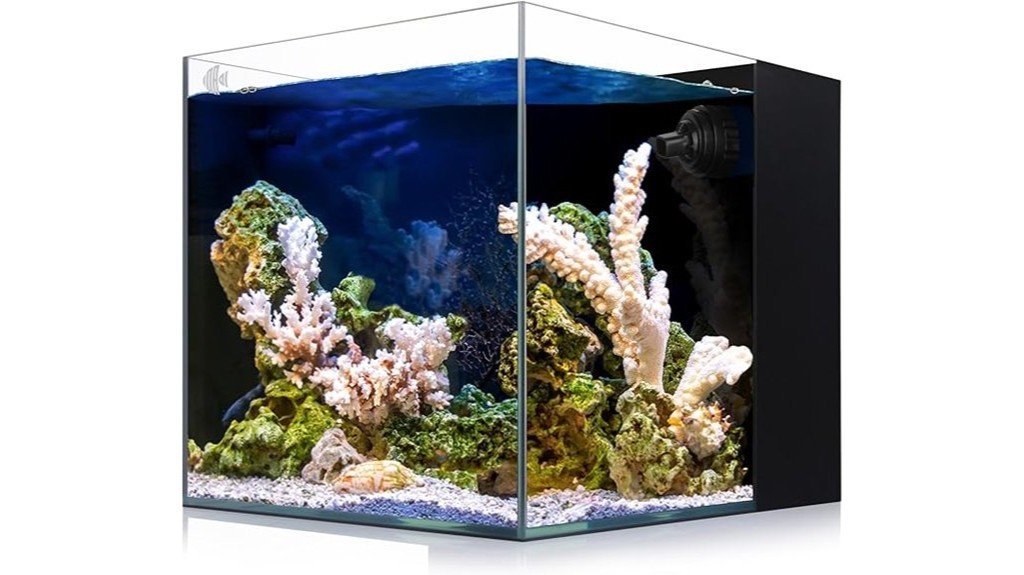
If you’re dreaming of creating a vibrant underwater world right on your desk, the Coralland 8-Gallon Saltwater Aquarium is a fantastic option. With a display capacity of 5.5 gallons and a 2.5-gallon rear sump, it’s perfect for saltwater fish, live rock, and even corals. The premium low iron glass gives you crystal-clear views, while its sleek design adds a modern touch. Setting it up is a breeze, making it great for both beginners and seasoned aquarists. Just remember, it doesn’t come with accessories, so you’ll need to grab those separately. Immerse yourself in the thrilling world of marine life today!
Best For: This aquarium is best for beginners and experienced aquarists looking to create a small marine environment with saltwater fish and corals.
Pros:
- Premium low iron glass offers enhanced visibility and clarity.
- User-friendly design simplifies setup and maintenance.
- Compact size makes it suitable for desktops and small spaces.
Cons:
- Does not include any accessories, requiring additional purchases.
- Limited capacity may not be ideal for larger fish or extensive coral systems.
- Requires careful monitoring of water parameters typical for saltwater environments.
Factors to Consider When Choosing Nano Reef Tanks for Desks
When choosing a nano reef tank for your desk, there are a few key factors to reflect on. You’ll want to take into account the size and dimensions to make sure it fits nicely in your space, along with the filtration and maintenance needs to keep your aquatic friends happy. Plus, don’t forget about lighting options, material durability, and how the tank looks—after all, it should be a stunning addition to your workspace!
Size and Dimensions
Choosing the right size and dimensions for your nano reef tank can make all the difference in how it fits on your desk and how enjoyable it is to maintain. Nano reef tanks usually range from 5 to 30 gallons, but for desks, smaller options like a 40 oz micro reef are perfect. Just remember, smaller tanks might need more frequent care due to their limited water volume. You’ll want to pick dimensions that suit your space, like a compact 5.7 in L x 3.7 in W x 8 in H tank. A well-designed tank not only looks great but also makes feeding and maintenance easier, so you can focus on enjoying your underwater world without too much hassle!
Filtration and Maintenance
Once you’ve picked the perfect size for your nano reef tank, it’s time to think about how you’ll keep everything clean and healthy. Effective filtration is key to maintaining water quality, so look for tanks with multi-stage systems that include biological, mechanical, and chemical filtration. You’ll need to commit to regular maintenance, like water changes and filter cleaning every few weeks, to avoid toxin buildup. Specialized pumps are great for optimizing water flow, which helps distribute nutrients and oxygen. Make sure the filtration system is easy to access—removable filter cartridges can save you time. Finally, don’t forget to monitor water parameters like salinity and temperature to keep your aquatic friends happy and stress-free!
Lighting Options Available
Lighting is one of the most exciting aspects of setting up your nano reef tank, as it not only helps your aquatic life thrive but also makes your desk look super cool! Most nano reef tanks use LED lighting, which is energy-efficient and comes with adjustable brightness and color settings. You’ll find options ranging from 7W to 18W, perfect for different tank sizes and creatures. With adjustable height mounting, you can place the lights just right for ideal coverage. Some systems even have digital controllers, allowing you to set lighting schedules to mimic natural day-night cycles. Plus, advanced setups offer different light modes, mixing colors like white, blue, and red to boost plant growth and enhance your tank’s beauty!
Material Durability
When you’re setting up your nano reef tank for your desk, material durability is one of the key factors to keep in mind. Acrylic tanks are a great choice; they’re ten times stronger and fifty percent lighter than glass, making them less likely to shatter. Plus, they’re easier to handle! If you prefer glass, look for ultra-clear options that reduce greenish tint, giving you a crystal-clear view of your aquatic friends. Pay attention to tank joints, too—angled joints can boost durability and reduce leaks. A good filtration system helps beneficial bacteria thrive, leading to a healthier tank. Don’t forget, regular maintenance and proper setup can keep your tank looking great for years!
Aesthetic Design Features
Choosing the right aesthetic design features for your nano reef tank can really transform your desk into a mini ocean paradise. Look for sleek, minimalist shapes that fit perfectly on your workspace. Transparent sides give you a stunning 360-degree view of your aquatic friends, making it hard to look away! Premium materials like acrylic and low iron glass improve clarity, so your fish pop with vibrant colors. Consider adding 3D backgrounds or integrated lighting; they not only boost visual appeal but also create fun habitats for your fish. Plus, these tanks are sized just right, maximizing beauty while fitting snugly on your desk. With the right design, your nano reef tank can truly be a stylish statement piece!
Setup Complexity
Setting up a nano reef tank on your desk can be a fun adventure, but you’ll want to contemplate how complex the setup might be before diving in. Some tanks come with built-in filtration and lighting systems that make things easier, while others, like those with integrated sumps, can require more plumbing knowledge. If you choose a tank with adjustable LED lighting, be ready to learn about programming and light cycles. For beginners, tanks designed for easy setup often include helpful guides and online support. Just remember, some setups might demand a deeper understanding of marine ecosystems and water chemistry, so pick one that matches your experience level to keep the fun rolling!
Water Volume Capacity
Picking the right water volume capacity is key to a successful nano reef tank on your desk. Typically, these tanks range from 5 to 15 gallons, making them perfect for small spaces. If you’re a beginner, an 8-gallon tank is manageable and still supports various marine life and corals. Remember, larger tanks often provide more stability, keeping water parameters steady. This is important because smaller tanks can fluctuate quickly, making it tricky to maintain a healthy ecosystem. Also, consider the display versus sump volume, as this affects water quality and maintenance. Ultimately, a larger tank allows for a more diverse and balanced environment, so think carefully about what fits best in your space and your vision!
Compatibility With Marine Life
When setting up your nano reef tank, it’s important to think about the marine life you want to include. Smaller species like clownfish, gobies, and shrimp are perfect for these cozy spaces. You’ll need to make sure your tank has good filtration and water flow to keep things healthy. Many of these fish need stable water conditions, so pay attention to salinity, pH, and temperature. Adding live rock and coral not only looks great but also gives your little friends places to hide and explore. Just remember, smaller tanks can’t hold too many fish, so avoid overcrowding. Regular water changes and monitoring ammonia, nitrite, and nitrate levels are essential for a happy and thriving marine community.
FAQ
How Much Maintenance Do Nano Reef Tanks Require?
1. How often should I check water parameters in a nano reef tank?
You should check water parameters weekly to ensure the health of your tank. This includes monitoring levels of ammonia, nitrites, nitrates, pH, and salinity.
2. How frequently should I perform water changes in a nano reef tank?
Partial water changes should be done bi-weekly to maintain water quality. This helps remove toxins and replenish essential minerals.
3. What kind of maintenance is required for equipment in a nano reef tank?
Regular cleaning of equipment is essential to prevent buildup and ensure efficient operation. This includes checking filters, pumps, and heaters for any signs of debris or wear.
4. Is it difficult to maintain a nano reef tank?
While nano reef tanks require moderate maintenance, they can be manageable with consistency. Following a schedule for water testing and changes makes the process easier.
5. What specific water parameters should I monitor in a nano reef tank?
Key water parameters include ammonia, nitrites, nitrates, pH, temperature, and salinity. Keeping these within optimal ranges is crucial for the health of your marine life.
6. Can I skip water changes if my tank looks clean?
No, skipping water changes can lead to a buildup of harmful substances, even if the tank appears clean. Regular changes are vital for maintaining a stable environment.
7. How long does the maintenance routine take each week?
The maintenance routine for a nano reef tank typically takes about 1-2 hours a week. This includes testing water parameters and performing water changes.
8. Do I need any special tools for maintaining a nano reef tank?
Basic tools like a water testing kit, algae scraper, and a siphon for water changes are recommended. These tools help facilitate easier maintenance and ensure accuracy in testing.
9. What happens if I neglect maintenance in a nano reef tank?
Neglecting maintenance can lead to poor water quality, which may harm or kill your marine life. It can also cause algae blooms and other imbalances in the tank.
10. Are there any tips for making nano reef tank maintenance easier?
Creating a maintenance schedule and setting reminders can help keep you on track. Additionally, investing in quality equipment can reduce the frequency of cleaning and checks.
Can I Keep Corals in a Nano Reef Tank?
1. Can I keep corals in a nano reef tank?
Yes, corals can thrive in a nano reef tank with proper care.
2. What are the essential water parameters for corals in a nano reef?
Stable water parameters, including salinity, pH, and temperature, are crucial for coral health.
3. How important is lighting for corals in a nano reef tank?
Adequate lighting is vital as it supports photosynthesis, which is essential for coral growth.
4. Can all types of corals be kept in a nano reef tank?
Not all corals are suitable for nano tanks; consider soft or small stony corals that are more manageable.
5. What type of filtration is best for a nano reef tank with corals?
A good quality filtration system, such as a protein skimmer, can help maintain water quality and support coral health.
6. How often should I perform water changes in a nano reef tank?
Regular water changes, typically every 1-2 weeks, help maintain stable water conditions for corals.
7. Is it necessary to add supplements for corals in a nano reef tank?
Yes, supplements like calcium and alkalinity can be important for the growth and health of corals.
8. What should I feed my corals in a nano reef tank?
Corals benefit from both direct feeding (like plankton) and the nutrients provided by tank lighting.
9. How can I prevent algae growth in my nano reef tank?
Maintaining stable water parameters and avoiding overfeeding can help control algae growth in the tank.
10. What are common signs of stress in corals?
Signs of stress include color fading, tissue recession, and detachment from the substrate. Regular monitoring is essential.
What Fish Species Are Suitable for Small Reef Tanks?
FAQ: Suitable Fish Species for Small Reef Tanks
1. What types of fish can I keep in a small reef tank?
You can keep species like clownfish, damselfish, and gobies. These fish are known for their vibrant colors and adaptability to smaller environments.
2. Are clownfish suitable for small reef tanks?
Yes, clownfish are a popular choice for small reef tanks. They are hardy and can thrive in confined spaces if the tank conditions are appropriate.
3. What are damselfish like in small reef tanks?
Damselfish are another good option for small reef tanks. They are resilient and come in various colors, adding visual interest to your aquarium.
4. Can I keep gobies in a small reef tank?
Absolutely! Gobies are small, peaceful fish that do well in smaller reef environments. They typically have interesting behaviors that can enhance your tank’s ecosystem.
5. Do these fish require specific water conditions?
Yes, each species has specific water quality requirements. It’s crucial to monitor parameters like salinity, temperature, and pH to ensure their health.
6. How many fish can I keep in a small reef tank?
The number of fish you can keep depends on the tank size and filtration system. Generally, it’s best to start with a few and gradually increase the number while monitoring water quality.
7. Are there compatibility concerns among these fish?
While clownfish, damselfish, and gobies can generally coexist, individual temperaments can vary. It’s essential to research each species’ behavior to avoid aggression.
8. What size reef tank is best for these species?
A tank size of at least 20 gallons is often recommended for these species to ensure adequate swimming space. Smaller tanks can work, but careful monitoring is essential.
9. Do these fish require special feeding?
Clownfish, damselfish, and gobies often thrive on a varied diet of high-quality flakes, pellets, and frozen foods. Regular feeding helps maintain their health and vibrancy.
10. How can I maintain a healthy environment for these fish?
Regular water changes, proper filtration, and monitoring water parameters are key to maintaining a healthy environment. Implementing a good maintenance routine will help keep your fish thriving.
11. Are there any other small fish suitable for reef tanks?
Yes, there are other small fish options, such as blennies and some species of wrasses. Always research compatibility and care requirements for any additional species you consider.
How Often Should I Change the Water in My Nano Reef Tank?
FAQ 1: How often should I change the water in my nano reef tank?
You should change about 10-20% of the water in your nano reef tank every week. This regular schedule helps maintain optimal water quality.
FAQ 2: Why are water changes important for my nano reef tank?
Water changes are crucial as they help reduce toxins and waste build-up. This ensures a healthy environment for both fish and corals.
FAQ 3: What percentage of water should I change weekly?
A weekly change of 10-20% is recommended for nano reef tanks. This amount strikes a balance between maintaining water quality and minimizing stress on the inhabitants.
FAQ 4: Can I change more than 20% of the water at once?
While it’s possible to change more than 20%, it’s generally not advisable as it can stress the tank’s inhabitants. Gradual changes help maintain stability in the ecosystem.
FAQ 5: Is it necessary to change water if my tank looks clean?
Yes, even if your tank appears clean, regular water changes are necessary to manage dissolved toxins and nutrient levels. Clear water doesn’t always indicate healthy water.
FAQ 6: What should I do before changing the water?
Before changing the water, test your tank’s parameters such as salinity, pH, and ammonia levels. This helps you prepare the new water to match the tank’s conditions.
FAQ 7: How do I prepare new water for my nano reef tank?
Prepare new water by mixing saltwater to the proper salinity and allowing it to aerate and reach the appropriate temperature. Always ensure it matches the conditions of your tank.
FAQ 8: Can I skip water changes if I use a filtration system?
Even with a filtration system, you should not skip water changes. Filters help, but they don’t eliminate the need for regular water changes to maintain overall water health.
FAQ 9: What happens if I forget to change the water?
If you forget to change the water, toxin levels may rise, leading to stress or illness in your fish and corals. Consistent neglect can result in more serious health issues.
FAQ 10: Are there any signs that I need to change the water?
Signs that indicate a need for a water change include cloudy water, unusual algae growth, or visible waste. Regular monitoring can help you catch these issues early.
Do Nano Reef Tanks Need Special Lighting?
1. Do nano reef tanks require special lighting?
Yes, nano reef tanks do require special lighting to support the delicate ecosystem.
2. What type of lighting is best for nano reef tanks?
LED and metal halide lights are recommended as they closely mimic natural sunlight.
3. Why is lighting important for coral growth in nano reef tanks?
Proper lighting promotes coral growth and helps enhance the vibrant colors of the tank’s inhabitants.
4. How does LED lighting benefit nano reef tanks?
LED lights are energy-efficient, emit less heat, and can be adjusted for intensity, making them ideal for nano reef setups.
5. What role does metal halide lighting play in nano reef tanks?
Metal halide lighting provides strong illumination and penetrates deeper into the water, beneficial for light-demanding corals.
6. How often should I adjust the lighting in my nano reef tank?
Regular adjustments are key for optimal performance; monitor your tank’s parameters and the health of your corals.
7. Can I use regular aquarium lights for my nano reef tank?
Regular aquarium lights typically do not provide the spectrum needed for coral health, so specialized lighting is essential.
8. What light spectrum is ideal for nano reef tanks?
A full spectrum light that includes blue and white wavelengths is ideal for promoting coral health and color.
9. How long should I keep the lights on in a nano reef tank?
A typical lighting schedule is around 8-12 hours per day, depending on the specific needs of your corals.
10. Are there any risks associated with poor lighting in nano reef tanks?
Insufficient lighting can lead to poor coral growth, algae blooms, and overall tank imbalance, jeopardizing the health of the ecosystem.
11. How can I determine if my nano reef tank lighting is adequate?
Monitor coral health, growth rates, and coloration; if corals appear bleached or unhealthy, consider upgrading or adjusting your lighting.
Final Thoughts
In conclusion, selecting the right nano reef tank for your desk can significantly enhance your workspace. For those on a budget, the sleek hygger Horizon is an excellent choice, providing style without breaking the bank. Beginners will find the HelloReef appealing with its app-controlled features, making maintenance a breeze. If you’re an advanced user seeking performance, the more robust options will cater to your sophisticated needs while ensuring durability.
Choose the hygger Horizon if you’re looking for an affordable and stylish option, choose the HelloReef if you’re a beginner wanting user-friendly tech, and opt for the more advanced models if you prioritize performance and durability. With any of these tanks, you’re guaranteed a captivating aquatic display that will surely delight both you and your guests!