
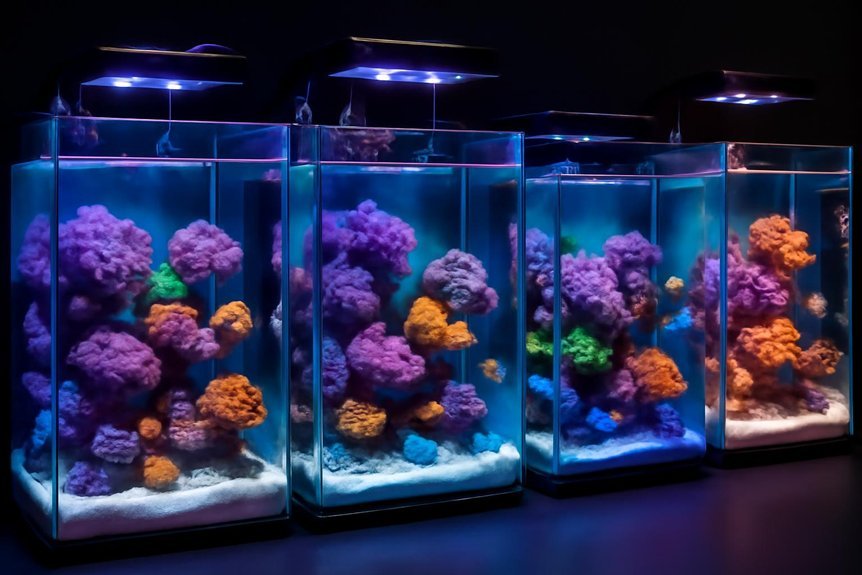
The 5 Best Nano Reef Tanks for AIO Builds: Perfect Choices for Aquarists
Are you an aquarist eager to create a mesmerizing underwater habitat in a compact space? If so, you’re in the right place! This guide is designed for both beginners and seasoned hobbyists looking to explore the best nano reef tanks available.
With their stunning aesthetics and integrated features, these tanks solve the dilemma of how to maintain a vibrant marine ecosystem without taking up too much room.
When selecting the ideal nano reef tank, several key factors come into play. Size and design are paramount, as they determine how seamlessly the aquarium will fit into your living space.
Additionally, having a reliable filtration system is crucial for maintaining water quality and ensuring the health of your aquatic life. Lastly, ease of setup and maintenance can significantly impact your overall experience.
In this roundup, we’ve narrowed down the top five nano reef tanks that excel in beauty, functionality, and user-friendly features.
Whether you’re looking for a stylish centerpiece for your home or a straightforward option to start your reef-keeping journey, we’ve got you covered.
Ready to discover the perfect nano reef tank for your aquatic adventure? Scroll down to explore our top picks!
hygger Horizon 8 Gallon LED Glass Aquarium Kit
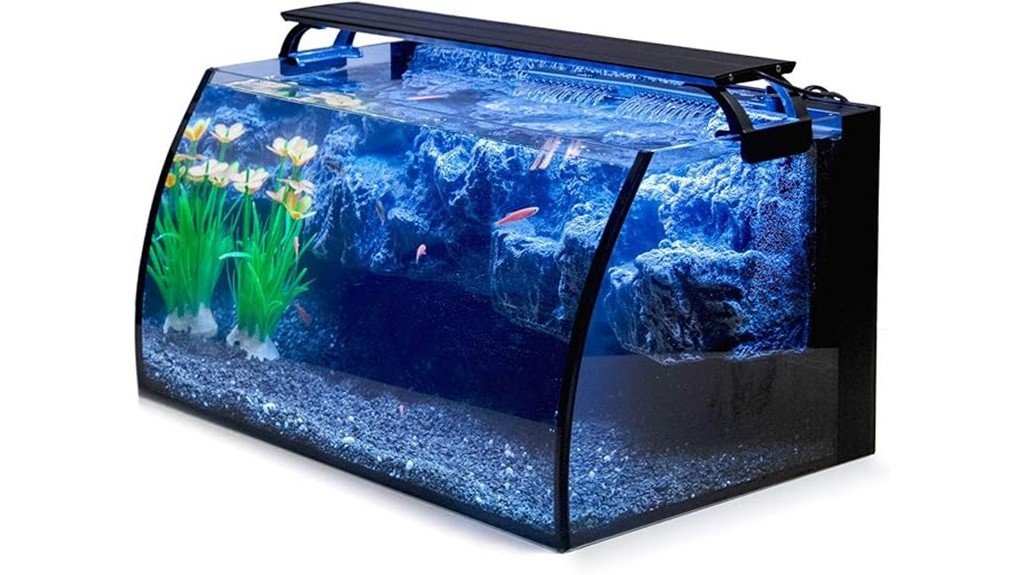
If you’re looking for a fantastic nano reef tank, the hygger Horizon 8 Gallon LED Glass Aquarium Kit might just be your perfect match! This kit comes with an 8-gallon glass tank, a powerful 7W filter pump, and an awesome 18W LED light. The 3D rockery background not only looks great but also gives your fish cozy spots to hide. Plus, the adjustable LED light lets you control brightness and choose different colors, making your tank shine! Just be careful with tiny fish, as the filter might be too strong for them. Overall, it’s a stunning choice for any aquarist!
Best For: Aquarists looking for a compact and visually appealing aquarium setup for small fish and aquatic plants.
Pros:
- Stunning Design: The unique convex arc shape and 3D rockery background enhance the aesthetic appeal of the tank.
- Versatile LED Lighting: Adjustable brightness and multiple color modes allow for customizable lighting effects to suit different moods or times of day.
- Efficient Filtration: The 7W filter pump provides effective two-stage filtration, ensuring a clean and healthy environment for fish.
Cons:
- Space Limitation: The 8-gallon tank only holds about 6 gallons due to the background decor, which may limit stocking options.
- Strong Filter Current: The filter may be too powerful for small fish under 2 inches, necessitating caution when stocking.
- Weight When Full: Weighing approximately 68 pounds when full, the tank may require careful placement and support.
HelloReef 15 Gallon Beginner Clownfish Saltwater Aquarium Kit
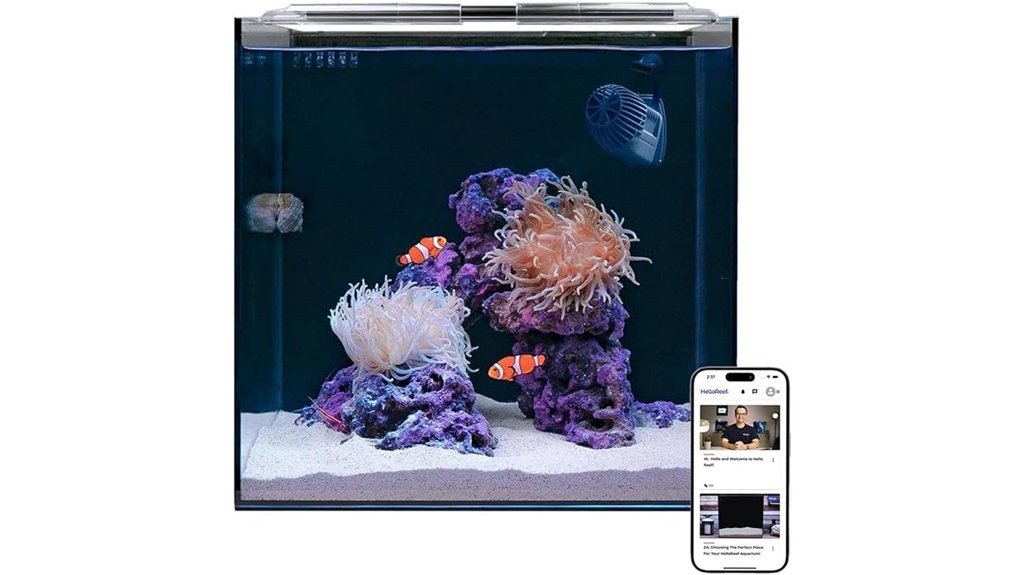
The HelloReef 15 Gallon Beginner Clownfish Saltwater Aquarium Kit is perfect for those just diving into the world of saltwater aquariums, making it a top choice for beginner hobbyists. This complete kit comes with everything you need, including an aquarium, filtration system, pump, and even fish food! It’s compact, measuring just 15 x 15 x 15 inches, so you won’t need a huge space. Plus, the app-controlled LED lighting adds a cool touch. With access to guides and a supportive online community, you’ll feel confident as you start your aquatic adventure. Just remember to keep an eye on that lid!
Best For: Beginners looking to start their journey in saltwater aquariums with a comprehensive and user-friendly kit.
Pros:
- Complete kit includes all necessary equipment for easy setup.
- App-controlled LED lighting enhances the aquarium experience.
- Access to exclusive guides and a supportive online community for assistance.
Cons:
- Some components may feel cheap and less durable.
- Lack of a lid can lead to fish jumping out of the aquarium.
- Thin glass quality may raise concerns about durability.
Coralland 8-Gallon Saltwater Aquarium
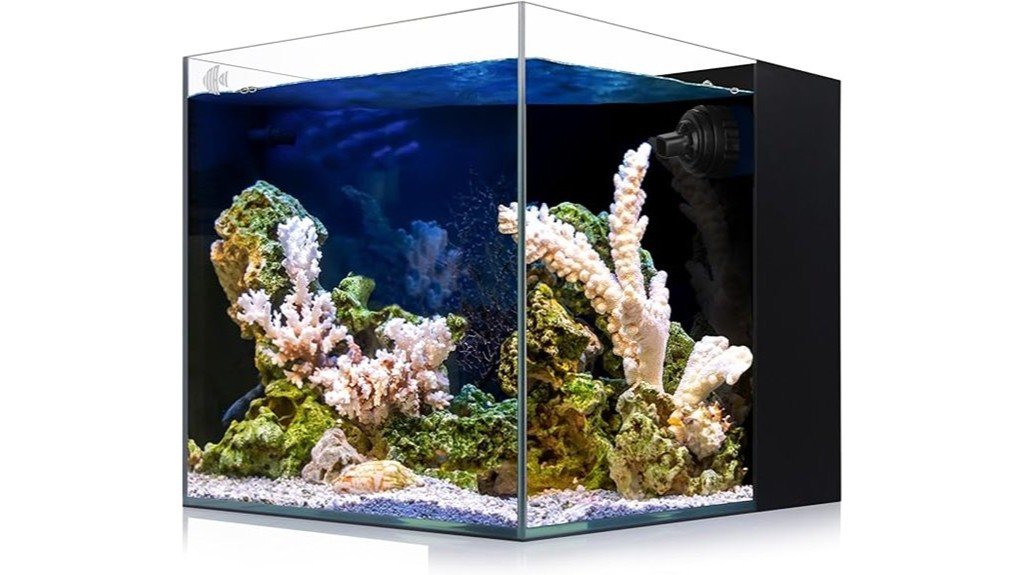
Looking for a compact yet stunning marine aquarium? The Coralland 8-Gallon Saltwater Aquarium might be just what you need! With a 5.5-gallon display and a 2.5-gallon rear sump, it’s perfect for your saltwater fish, live rock, and coral. Made from premium low iron ultra-clear glass, it offers fantastic visibility without that annoying green tint. Plus, the 45° angled joint design adds a modern touch while ensuring durability. Setting it up is a breeze, making it great for both beginners and experienced aquarists. Just remember, you’ll need to grab accessories separately, but the stunning view will be worth it!
Best For: Those looking for a compact and visually stunning marine aquarium suitable for both beginners and experienced aquarists.
Pros:
- Premium low iron ultra-clear glass enhances visibility and reduces greenish tint.
- User-friendly design simplifies setup and cleaning.
- Modern 45° angled joint design provides durability and aesthetic appeal.
Cons:
- Does not come with any accessories, requiring separate purchases.
- Limited capacity may not be suitable for larger marine setups.
- Rear sump design may require additional attention for maintenance.
Fluval Evo XII Saltwater Aquarium Kit (13.5 Gal.)
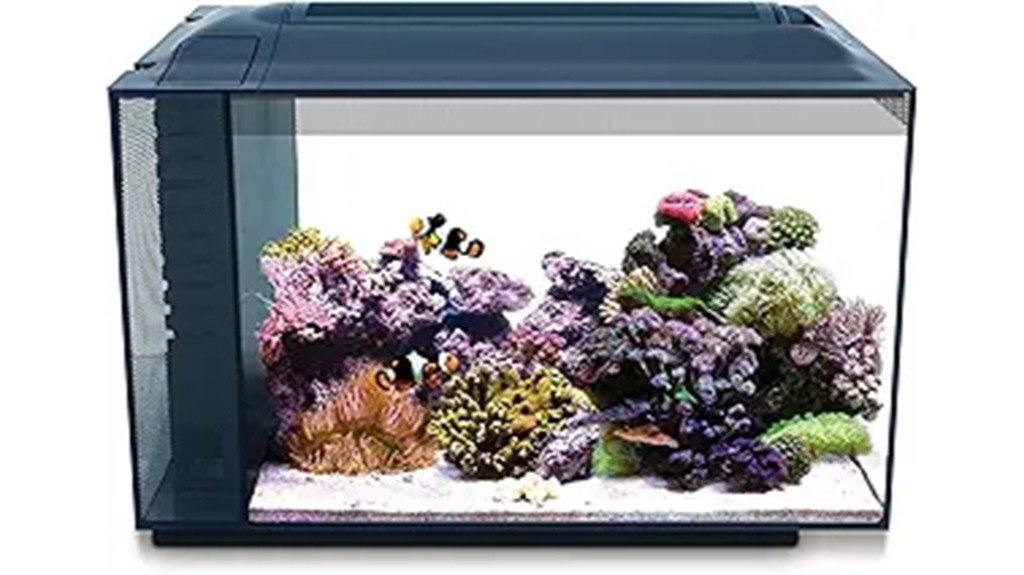
For anyone dreaming of creating a stunning saltwater aquarium without the hassle of complicated setups, the Fluval Evo XII Saltwater Aquarium Kit is an excellent choice. This 13.5-gallon tank measures 22 by 11.5 by 15 inches, making it a perfect fit for your living space. Its stylish honeycomb design cleverly hides the rear filter compartment, keeping things neat. The powerful 3-stage filtration system guarantees your fish stay healthy and happy. Plus, the LED lighting with a touch-start feature lets you easily switch between day and night modes. With its modern look, this kit can beautifully enhance any room!
Best For: Beginner aquarium enthusiasts looking for a stylish and easy-to-set-up saltwater tank.
Pros:
- Powerful 3-stage filtration system ensures a healthy environment for fish.
- Sleek design with honeycomb feature hides equipment for a clean look.
- Convenient LED lighting with touch-start for customizable day and night settings.
Cons:
- Limited to 13.5 gallons, which may not accommodate larger fish or extensive aquascaping.
- Some users may find the initial setup and maintenance challenging.
- The LED light may not be sufficient for advanced coral growth in a reef setup.
CURRENT USA Orbit Marine IC LED Aquarium Light (36-48 Inch)
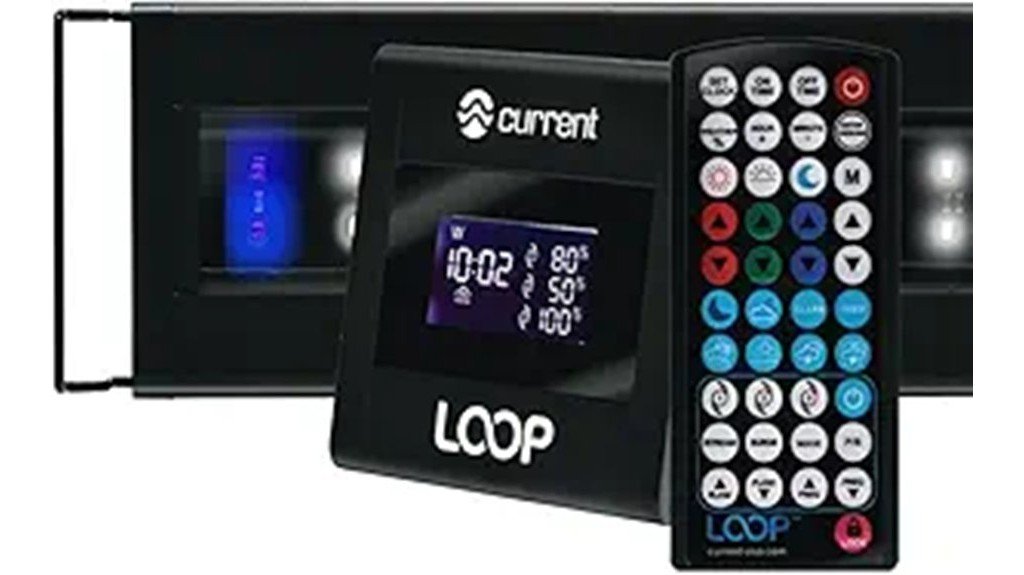
If you’re diving into the world of nano reef tanks, the CURRENT USA Orbit Marine IC LED Aquarium Light is a fantastic choice for your AIO build. This sleek light, measuring less than ½ inch thick, offers full-spectrum control with its vibrant blue and white LEDs, perfect for coral growth. You’ll love the LOOP system, which syncs your lights and pumps while simulating natural day and night cycles. Plus, it has cool effects like cloud cover and lightning! Installation’s a breeze, and you can easily expand it as your tank grows. With great reviews, it’s a smart investment for your aquatic adventure!
Best For: The CURRENT USA Orbit Marine IC LED Aquarium Light is best for saltwater reef aquarium enthusiasts seeking a high-quality lighting solution that promotes coral growth and allows for customizable settings.
Pros:
- Full spectrum control with vibrant blue and white LEDs enhances coral growth and fluorescence.
- Easy installation with extendable brackets and a user-friendly LOOP controller for syncing lights and wave pumps.
- Dynamic lighting effects, including cloud cover and lightning, simulate natural environmental conditions.
Cons:
- Requires additional purchases for full functionality, such as extra accessory LED lights and wave pumps.
- Limited warranty period of only one year for products and three months for lamps may be a concern for some users.
- Size compatibility is limited to tanks 18-24 inches wide, which may not fit all aquarium setups.
Factors to Consider When Choosing Nano Reef Tanks for AIO (All in One) Builds
When you’re picking a nano reef tank for your AIO build, there are a few important factors to keep in mind. You’ll want to think about the tank size, how efficient the filtration system is, and what lighting options are available. Plus, don’t forget about the tank’s design and the quality of materials—after all, you want something that looks great and lasts!
Tank Size Considerations
Choosing the right tank size for your All-in-One (AIO) nano reef setup is super important, and it can really make a difference in your aquarium experience. Nano reef tanks usually range from 5 to 15 gallons. If you’re just starting out, a smaller tank, like 5-8 gallons, might be perfect. But if you want more stability in water parameters, consider going for 10-15 gallons. Remember, an 8-gallon tank often gives you about 5.5 gallons of display space after you add decorations. Also, think about tank shape—cubic designs can offer more creative aquascaping options. Just keep in mind, smaller tanks need careful monitoring, so size really matters, especially for novice aquarists. Choose wisely!
Filtration System Efficiency
A solid filtration system is the backbone of any successful AIO nano reef tank. To keep your aquatic friends happy, you need a multi-stage filtration approach that combines mechanical, chemical, and biological processes. Make certain your filtration capacity matches your tank size; for an 8-gallon tank, a filter rated for at least 110 gallons per hour is ideal. This guarantees good water circulation and oxygenation. A rear sump or compartment in AIO designs makes maintenance easier and provides extra space for filter media, boosting efficiency. Don’t forget about noise levels—quieter filters help maintain a peaceful environment. Finally, keep an eye on your filtration system by regularly cleaning and replacing media to prevent harmful buildup. Your fish will thank you!
Lighting Options Available
While selecting the right lighting for your nano reef tank might seem tricky, it’s actually one of the most exciting parts of setting up your AIO build. You’ll want lighting that provides a full spectrum, which is essential for coral growth. LED lights are a fantastic choice because they’re energy-efficient and can simulate natural light cycles. Plus, some advanced models let you program custom schedules, adding effects like storm simulations! Remember, adjustable intensity is key since different corals have varying light needs. Also, consider your tank’s size and shape to guarantee even light distribution, avoiding those pesky shadows. With the right lighting, your corals will thrive and shine like stars in the ocean!
Aesthetic Design Appeal
When it comes to creating a stunning nano reef tank, aesthetic design is a key player in making your underwater world truly enchanting. Unique shapes, like convex arcs, improve viewing angles, allowing you to see your fish from different perspectives. Adding 3D backgrounds or decorative elements, such as rockery or coral designs, not only boosts visual interest but also provides essential hiding spots for your aquatic friends. Using low iron ultra-clear glass reduces discoloration, giving you a crystal-clear view of your vibrant corals and fish. Plus, sleek filtration systems keep your tank tidy and free from clutter. By choosing the right design elements, you’ll create an aquarium that’s both beautiful and functional, making your space a true underwater paradise!
Material Quality Factors
Choosing the right material for your nano reef tank is like picking the perfect canvas for a masterpiece. You want low iron ultra-clear glass, which boosts visibility and reduces that pesky greenish tint. It’s all about enhancing the beauty of your marine life! Look for tanks with reinforced corners and those fancy 45° angled joints; these features add durability and prevent leaks. You wouldn’t want a watery disaster, right? Also, thicker glass panels can handle more water pressure, making them a smart choice. And don’t forget to check the quality of internal components; they’re essential for keeping everything running smoothly. A well-made tank not only looks good but also lasts longer, giving your underwater world the home it deserves!
Accessory Compatibility Needs
Getting the right accessories for your nano reef tank is like assembling the perfect team for a championship game. You’ll want a built-in multi-stage filtration system to keep your water fresh and clean. Next, consider the lighting—advanced LED lights can really make your corals pop and help them grow strong. Don’t forget to check the tank’s dimensions; you need enough space for heaters and pumps without overcrowding your aquatic friends. It’s also smart to match the water flow specs with your pumps and nozzles to avoid dead spots. Finally, think about adding smart controllers for lighting and water flow. They give you flexibility and let you personalize your aquarium experience. Happy tanking!
Maintenance Ease and Simplicity
Finding a nano reef tank that’s easy to maintain can make your aquarium journey smooth and enjoyable. AIO builds are perfect for this because they’re designed with user-friendly features, simplifying setup and upkeep. Most systems have hidden multi-stage filtration, which means less frequent maintenance for you. Plus, the compact size of these tanks makes accessing and cleaning them a breeze, allowing for quicker water changes than larger tanks. With integrated pumps and skimmers, you won’t have to deal with a bunch of external components, streamlining your routine. Regular tasks, like checking water parameters and cleaning filter media, can be done quickly, giving you more time to enjoy your aquatic world. Happy fishkeeping!
Environmental Impact Commitment
When you’re diving into the world of nano reef tanks, it’s important to think about the environmental impact of your choice. Many manufacturers donate part of their profits to coral conservation and restoration efforts. By choosing a tank from a company committed to the environment, you’re supporting research and educational initiatives that protect aquatic ecosystems. Plus, some brands focus on using sustainable materials and processes, cutting down their carbon footprint. Responsible aquarium brands also conduct environmental impact assessments to guarantee they don’t harm local habitats or marine life. Engaging with these companies can connect you with a community of aquarists who care about preserving ocean health. So, make your choice count, and help our oceans thrive!
FAQ
What Fish Species Are Best Suited for Nano Reef Tanks?
FAQ 1: What types of fish are recommended for nano reef tanks?
Small fish species like clownfish, gobies, and blennies are ideal for nano reef tanks. They are well-suited for the limited space these tanks provide.
FAQ 2: Why are clownfish suitable for nano reef tanks?
Clownfish are hardy and adapt well to smaller environments, making them perfect for nano reef setups. Their vibrant colors also enhance the tank’s visual appeal.
FAQ 3: What makes gobies a good choice for nano reef tanks?
Goby species are typically small and have peaceful temperaments, which makes them suitable for confined spaces. They also interact interestingly with their environment.
FAQ 4: Are blennies compatible with nano reef tanks?
Yes, blennies thrive in nano reef tanks due to their small size and active nature. They add personality and movement to the tank.
FAQ 5: How important is tank filtration for nano reef fish?
Proper filtration is crucial for maintaining water quality in nano reef tanks. It helps keep the environment healthy for small fish species.
FAQ 6: What water parameters should be considered for fish in nano reef tanks?
Monitoring parameters like salinity, pH, and temperature is essential for the health of fish in nano reef tanks. Ensure they are within the ideal ranges for the specific species you keep.
FAQ 7: Can you mix different small fish species in a nano reef tank?
Yes, you can mix compatible small fish species in a nano reef tank, but it’s important to research their compatibility. Avoid overcrowding to maintain a stable environment.
FAQ 8: How many fish can I keep in a nano reef tank?
The number of fish depends on the tank size and species. A general guideline is one inch of fish per gallon of water, but this can vary based on species and their needs.
FAQ 9: Do nano reef tanks require special lighting for fish?
While fish don’t require specific lighting, adequate lighting is important for the health of corals and other tank inhabitants. Choose lights that support both fish and coral health.
FAQ 10: What should I feed fish in a nano reef tank?
Feed a varied diet that includes high-quality flakes, pellets, and frozen foods. Ensure the food is appropriate for the specific species in your tank.
FAQ 11: How often should I perform maintenance on a nano reef tank?
Regular maintenance is vital for nano reef tanks, including weekly water changes and monitoring water parameters. Consistent care helps maintain a healthy environment for your fish.
How Often Should I Perform Water Changes in My Nano Reef Tank?
FAQ 1: How often should I change the water in my nano reef tank?
You should change the water every one to two weeks to keep your tank healthy.
FAQ 2: What percentage of water should I replace during a water change?
Aim to replace about 10-20% of the water during each water change to maintain optimal water quality.
FAQ 3: Why are water changes important for my nano reef tank?
Regular water changes help remove toxins and waste, ensuring a stable environment for your marine life.
FAQ 4: What happens if I don’t perform regular water changes?
Neglecting water changes can lead to poor water quality, which can stress or even harm the inhabitants of your tank.
FAQ 5: Can I change the water more frequently than every week?
While you can change the water more frequently, it is typically unnecessary and could disrupt the tank’s ecosystem if not done properly.
FAQ 6: Is it better to do smaller or larger water changes?
Smaller, more frequent changes (10-20%) are generally better for maintaining stability compared to larger, less frequent changes.
FAQ 7: Should I use dechlorinated water for water changes?
Yes, always use dechlorinated or pre-mixed saltwater to prevent harmful chemicals from entering your tank.
FAQ 8: Do I need to test the water quality before changing it?
Testing the water quality is a good practice to determine if a water change is needed, especially if you notice changes in your tank’s health.
FAQ 9: Can water changes help with algae problems?
Yes, regular water changes can help reduce nutrient levels that contribute to algae growth, helping to control outbreaks.
FAQ 10: What equipment do I need for water changes?
Basic equipment includes a siphon or gravel vacuum for removing water, a container for the new water, and a heater and pump if you’re mixing saltwater.
What Type of Filtration Is Ideal for AIO Nano Reef Tanks?
1. What type of filtration is best for AIO nano reef tanks?
A combination of mechanical, biological, and chemical filtration is ideal for AIO nano reef tanks to ensure optimal water quality.
2. Why is mechanical filtration important in nano reef tanks?
Mechanical filtration helps remove particulate matter and debris from the water, keeping the environment clean for your aquatic life.
3. How does biological filtration benefit an AIO nano reef tank?
Biological filtration supports beneficial bacteria that break down waste products, helping to maintain a healthy and balanced ecosystem.
4. What role does chemical filtration play in nano reef tanks?
Chemical filtration, often using activated carbon, removes toxins and impurities from the water, improving overall water clarity and quality.
5. Are sponge filters effective in AIO nano reef tanks?
Yes, sponge filters are effective as they provide both mechanical and biological filtration, helping to maintain a stable environment.
6. Is live rock necessary for filtration in nano reef tanks?
Live rock is beneficial as it provides surface area for beneficial bacteria and contributes to biological filtration, enhancing the tank’s ecosystem.
7. How often should I clean the filtration system in my nano reef tank?
Regular maintenance is essential; clean mechanical filters monthly, while biological and chemical media should be monitored and replaced as needed.
8. Can I rely solely on one type of filtration?
Relying on a single type of filtration is not recommended; a combination ensures a more resilient and stable environment for your reef inhabitants.
9. What happens if my filtration system is inadequate?
An inadequate filtration system can lead to poor water quality, increased toxins, and stress on aquatic life, potentially resulting in health issues.
10. How can I enhance filtration in my AIO nano reef tank?
You can enhance filtration by adding additional sponge filters, using high-quality live rock, and regularly replacing activated carbon to optimize water conditions.
Can I Keep Coral in a Nano Reef Tank?
FAQ: Can I Keep Coral in a Nano Reef Tank?
1. Is it possible to keep coral in a nano reef tank?
Yes, coral can thrive in a nano reef tank if proper care is taken.
2. What tank parameters should I maintain for corals?
It’s essential to keep your tank’s water parameters stable, including temperature, salinity, and pH levels suitable for coral health.
3. How important is lighting for coral in a nano reef tank?
Adequate lighting is crucial, as different coral species have varying light requirements. Ensure your lighting system meets these needs.
4. What types of coral are suitable for a nano reef tank?
Choose coral species that are compatible with small tank environments and have similar care requirements, such as soft corals or certain LPS corals.
5. How often should I conduct maintenance for my nano reef tank?
Regular maintenance, including water changes and equipment checks, is vital to ensure a healthy environment for your corals.
6. Can I add fish to my nano reef tank with coral?
Yes, but it’s important to select reef-safe fish that won’t harm or outcompete your corals for space and resources.
7. What feeding requirements do corals have in a nano tank?
Corals may require supplemental feeding depending on their species, so research their specific needs to ensure they receive adequate nutrition.
8. How do I ensure compatibility between corals and tank mates?
Research the behavior and needs of both corals and potential tank mates to avoid conflicts and ensure a harmonious environment.
9. What are the signs of stress in corals?
Look for signs such as discoloration, retraction, or loss of tissue, which can indicate stress from poor water quality or lighting.
10. Can I keep more than one coral species in a nano reef tank?
Yes, as long as the species chosen are compatible and their care requirements align, you can successfully keep multiple coral types.
11. Is a nano reef tank suitable for beginners wanting to keep coral?
While manageable, a nano reef tank requires diligent care and attention to detail. Beginners should educate themselves thoroughly before starting.
What Maintenance Is Required for LED Lighting in Nano Reef Tanks?
1. How often should I clean my LED fixtures?
You should clean your LED fixtures regularly, ideally once a month, to remove any dust or debris that may accumulate and affect light output.
2. What is the best way to clean LED lights?
Use a soft, damp cloth to gently wipe the surfaces of the LED fixtures. Avoid harsh chemicals that could damage the lights.
3. How can I tell if my LED lights are functioning properly?
Check for any flickering or color changes in the light output. These signs may indicate a problem that needs to be addressed.
4. When should I replace the bulbs in my LED fixtures?
It’s recommended to replace the bulbs every few years to ensure your corals receive optimal lighting conditions.
5. Can I use any type of bulb for my LED fixtures?
No, you should use bulbs specifically designed for your LED fixtures to ensure compatibility and maintain the health of your nano reef tank.
6. What happens if I don’t maintain my LED lighting?
Neglecting maintenance can lead to reduced light intensity, affecting coral growth and overall tank health.
7. Is it necessary to check the light spectrum of my LEDs?
Yes, monitoring the light spectrum is important, as different coral species have specific lighting needs that can change over time.
8. How do I know if my corals are getting enough light?
Healthy corals should have good color and growth. If they appear pale or are not growing, it may be a sign that the lighting needs adjustment.
9. Should I turn off my LED lights at night?
Most aquarists recommend a light cycle that mimics natural day and night, typically around 10-12 hours of light per day for optimal coral health.
10. Can LED lights affect the temperature of my nano reef tank?
LED lights generate less heat compared to other lighting options, but it’s still important to monitor tank temperature to ensure a stable environment for your corals.
Final Thoughts
In conclusion, selecting the ideal nano reef tank for your AIO build is crucial for crafting an impressive underwater ecosystem.
- Hygger Horizon: This tank is a fantastic choice for budget-conscious aquarists who want quality without breaking the bank. Its user-friendly design makes it perfect for beginners looking to dive into the world of reef keeping.
- Fluval Evo: Ideal for those who are just starting out, the Fluval Evo combines reliable performance with intuitive features. It’s designed with beginners in mind but offers enough versatility for users who want to experiment as they gain experience.
- Innovative Marine Nuvo: For advanced users seeking durability and performance, this tank is a top pick. Its robust construction and excellent filtration system make it perfect for aquarists ready to create a more complex marine environment.
- Red Sea Reefer: If you’re focused on premium quality and are willing to invest more, the Red Sea Reefer delivers outstanding performance and advanced features. This tank is best suited for those who are serious about their marine hobby and want to achieve professional-level results.
- AquaTop Fusion: This tank strikes a balance between performance and affordability, making it perfect for aquarists who want a reliable setup without overspending. It’s a great option for those looking to upgrade their current tank.
Choose the Hygger Horizon if you’re on a budget and starting out, choose the Fluval Evo if you want a beginner-friendly option with reliable performance, choose the Innovative Marine Nuvo for advanced durability, choose the Red Sea Reefer for a premium, high-quality experience, and choose the AquaTop Fusion if you want a solid all-rounder that won’t break the bank.