
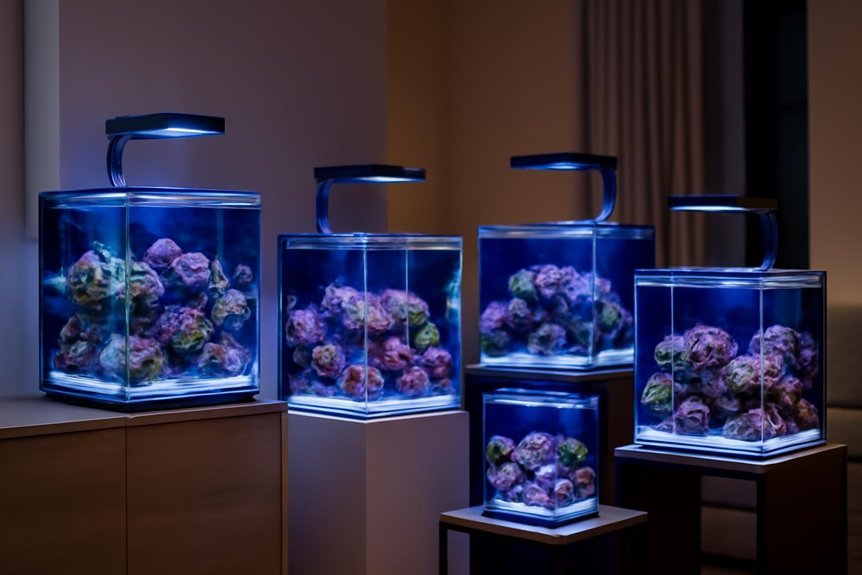
The 5 Best Nano Reef Tanks for Condos: Perfect Choices for Compact Living Spaces
Are you living in a condo and dreaming of creating your own vibrant underwater oasis? If so, you’re in luck! Nano reef tanks are the perfect solution for those with limited space, providing an eye-catching aquatic display without overwhelming your living area.
These compact tanks not only enhance your home’s aesthetic but also offer the joy of marine life right at your fingertips.
In this guide, we’ll be diving into the best nano reef tanks tailored for cozy living spaces. We understand that selecting the right tank can be challenging, especially when you’re looking for something stylish yet functional.
Our top picks are based on factors such as size, ease of maintenance, design, and overall performance, ensuring that you’ll find the ideal fit for your lifestyle.
Whether you’re a seasoned aquarist or a beginner eager to start your underwater adventure, these nano reef tanks promise a delightful addition to your home.
Ready to make a splash in your condo? Let’s explore our top five recommendations that will bring the beauty of the ocean into your compact living space!
Scroll down to discover the best options for your new aquatic journey.
biOrb Flow 30 Acrylic Aquarium (8-Gallon)
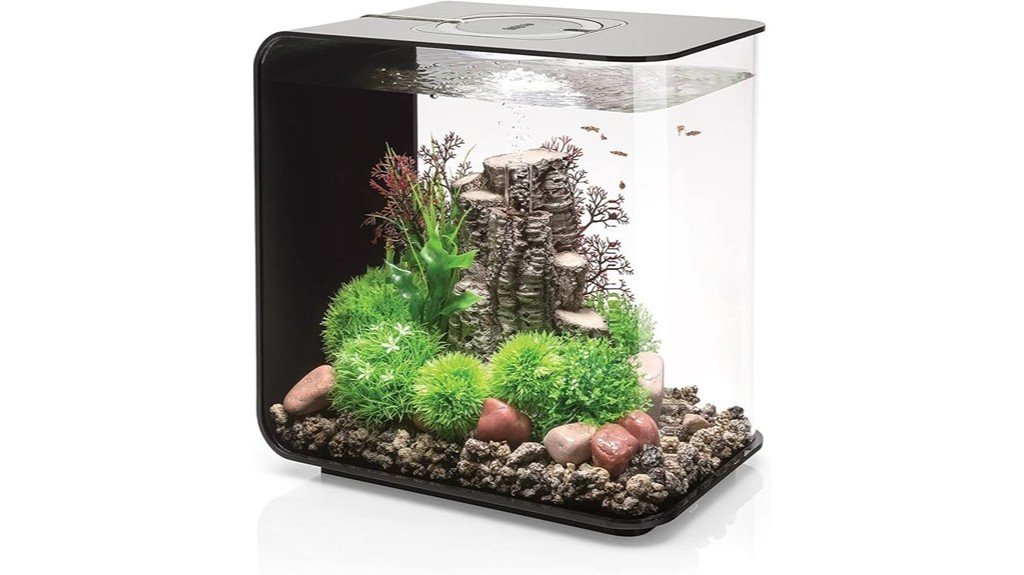
If you live in a condo and want to add a touch of underwater charm to your space, the biOrb Flow 30 Acrylic Aquarium (8-Gallon) might just be your new best friend! This chic aquarium features a minimalist design with bold black trim, making it perfect for tabletop display. Constructed from acrylic, it’s ten times stronger and fifty percent lighter than glass, plus it keeps the heat in! With a true 5-stage filtration system, maintenance is a breeze—just thirty minutes a month. Easy to set up, it comes with everything you need, so you can immerse yourself in fish-keeping without the stress!
Best For: Those living in apartments or condos looking to enhance their space with a stylish and low-maintenance aquarium.
Pros:
- Chic minimalist design that complements modern decor.
- Durable acrylic construction that is lighter and clearer than glass.
- Easy to maintain with a true 5-stage filtration system requiring only 30 minutes per month.
Cons:
- Some users report noise from the pump.
- Ongoing filter replacement costs may add up.
- Cleaning can be challenging, and light brightness may not suit all preferences.
hygger Horizon 8 Gallon LED Glass Aquarium Kit
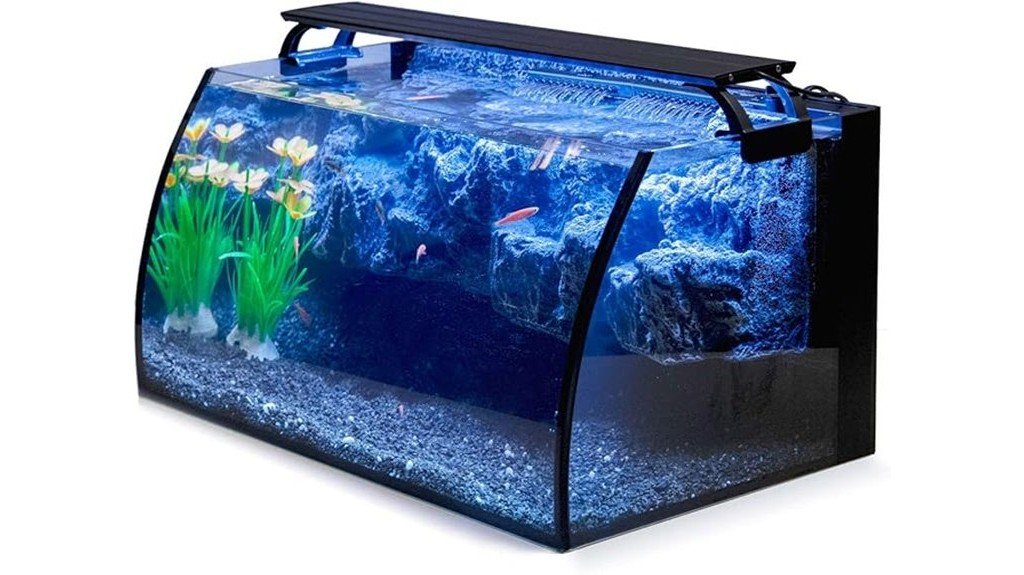
The hygger Horizon 8 Gallon LED Glass Aquarium Kit is perfect for condo dwellers who crave a vibrant underwater world without needing a massive space. This sleek glass tank includes a quiet 7W filter pump and an adjustable 18W LED light, letting you set the mood for your aquatic friends. The 3D rockery background not only looks cool but also gives your fish a cozy home. You can easily control the lighting time and brightness, making it fun to switch things up! Plus, it’s packed securely for shipping, so your aquarium will arrive in perfect condition. Enjoy your new underwater adventure!
Best For: Apartment or condo residents looking for a compact and stylish aquarium that fits limited spaces.
Pros:
- Includes a quiet 7W filter pump and adjustable 18W LED light for customizable lighting and filtration.
- The 3D rockery background adds aesthetic appeal and provides shelter for fish.
- Secure packaging ensures the aquarium arrives intact and undamaged.
Cons:
- The filter may be too strong for fish under 2 inches, requiring caution with small species.
- The actual water capacity is reduced to 6 gallons due to the background decor.
- Limited to smaller fish species, which may restrict stocking options.
HelloReef 15 Gallon Beginner Clownfish Saltwater Aquarium Kit
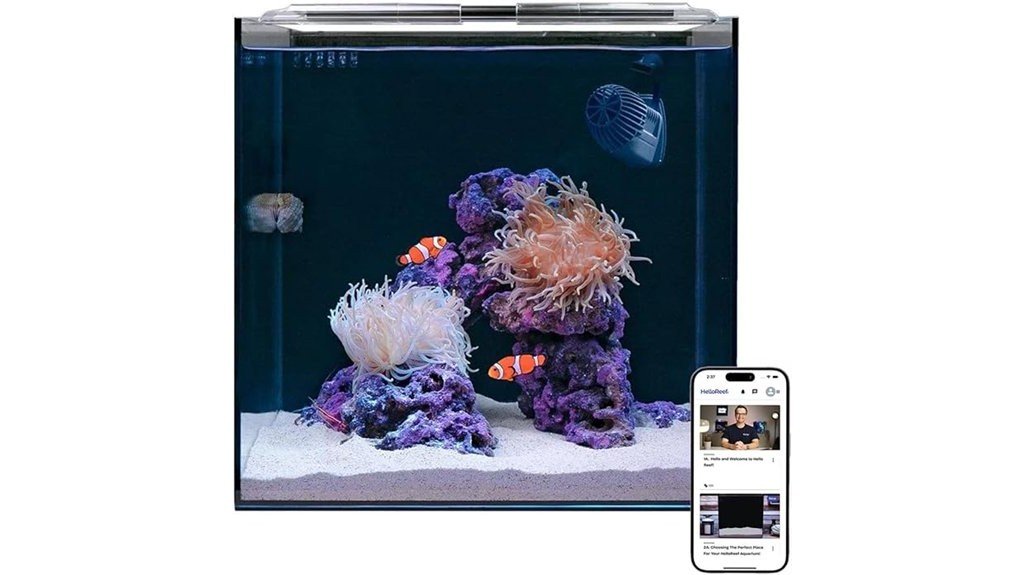
Looking for a fun and manageable way to plunge into the world of saltwater aquariums? The HelloReef 15 Gallon Beginner Clownfish Saltwater Aquarium Kit is a fantastic choice! This complete kit includes everything you need, like a filtration system, heater, and even smart LED lighting you can control with an app. At just 15 inches on each side, it fits perfectly in your condo. Plus, you’ll get access to guides and a supportive online community. With 2% of proceeds going to coral conservation, you’re helping the environment too! Just watch out for those jumping fish—no lid means they might take a leap!
Best For: Beginners and enthusiasts looking to start their journey in saltwater aquariums with a user-friendly and comprehensive setup.
Pros:
- Complete kit includes all essential components for easy setup and maintenance.
- App-controlled smart LED lighting adds convenience and enhances the aquarium’s aesthetic.
- Access to educational resources and a supportive online community for guidance.
Cons:
- Some components may feel cheap or lower quality compared to more advanced setups.
- Lack of a lid increases the risk of fish jumping out of the tank.
- Thin glass quality may raise concerns about durability and safety.
Luna Reef Nano Tank 4 Gallon Frag System

For hobbyists enthusiastic to cultivate their own coral colonies in a compact space, the Luna Reef Nano Tank 4 Gallon Frag System is a fantastic choice. Measuring just 12 x 16 x 5 inches, this sleek black acrylic tank fits snugly in any condo. With a total volume of 3.92 gallons, it’s perfect for fragging corals or acclimating small livestock. Plus, it comes with essential components like a Sicce micra pump and various plumbing accessories. While some users find it a bit pricey, many appreciate its sturdy design. Overall, it’s a great option for coral lovers of all skill levels!
Best For: Hobbyists of all skill levels looking to frag coral colonies or acclimate small livestock in a compact tank.
Pros:
- Compact design fits well in small spaces like condos.
- Includes essential components such as a Sicce micra pump and plumbing accessories.
- Sturdy construction praised by users for durability.
Cons:
- Some users consider the price to be on the higher side.
- Customer service issues reported by a few customers.
- Average rating of 3.4 out of 5 stars indicates mixed feedback.
Fluval Evo XII Saltwater Aquarium Kit (13.5 Gal)
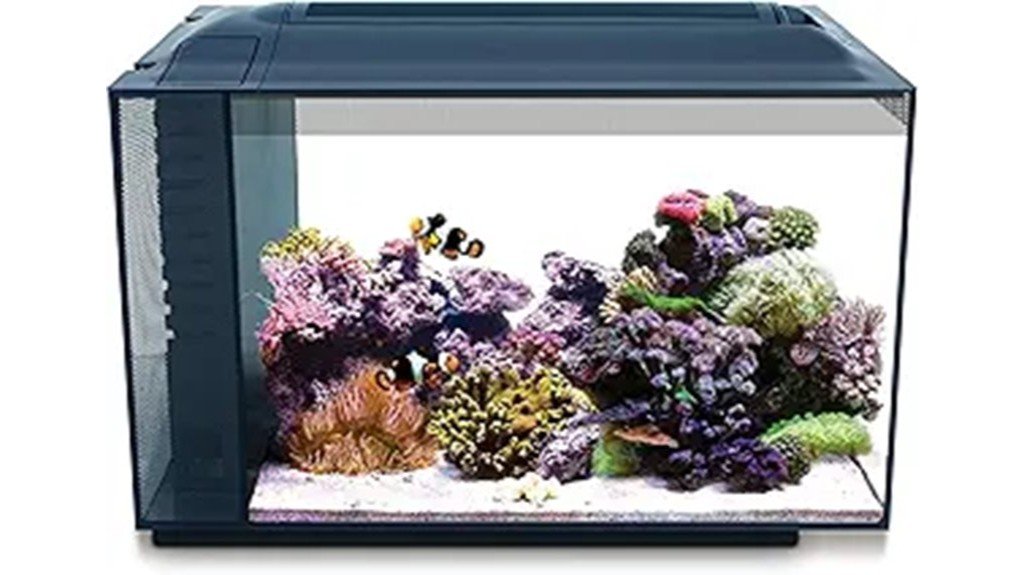
If you’re dreaming of a stunning saltwater aquarium in your condo, the Fluval Evo XII Saltwater Aquarium Kit (13.5 Gal) is a perfect fit. This sleek glass tank, measuring 22 by 11.5 by 15 inches, offers a stylish honeycomb design that hides the rear filter compartment. With its powerful 3-stage filtration system, your fish will thrive in clean water. Plus, the built-in LED light brightens your aquatic world with a simple touch, making day and night changes a breeze. Whether you’re a novice or a pro, this kit’s reef-capable setup makes it an exciting addition to your compact living space!
Best For: Those looking to create a beautiful saltwater aquarium in a compact living space, whether they are beginners or experienced aquarists.
Pros:
- Stylish honeycomb design enhances the aesthetic of any room.
- Powerful 3-stage filtration system ensures clean and healthy water for fish.
- Built-in LED lighting with touch activation simplifies day and night transitions.
Cons:
- Limited capacity of 13.5 gallons may restrict the number of fish and aquatic life.
- Requires regular maintenance to keep the filtration system optimal.
- Initial setup may be challenging for complete beginners without prior experience.
Factors to Consider When Choosing Nano Reef Tanks for Condos
When you’re picking a nano reef tank for your condo, there are some key factors to contemplate. You’ll want to evaluate the size and dimensions, as well as the quality of the filtration system, because both can really affect your fish’s happiness. Plus, lighting options and maintenance requirements play a big role in keeping your underwater world looking great without too much hassle!
Size and Dimensions
Choosing the right size and dimensions for your nano reef tank is essential, especially in the cozy confines of a condo. Nano tanks typically range from 4 to 15 gallons, making them perfect for small spaces. A 4-gallon tank might measure 12 x 16 x 5 inches, while a 15-gallon tank could be a neat cube at 15 x 15 x 15 inches. If you’re tight on space, smaller tanks fit nicely on tabletops. Just keep in mind that a filled 8-gallon tank can weigh about 68 pounds—yikes! Also, consider the height and width; taller tanks can be tricky for maintenance. A wider, shorter design might make feeding and cleaning a breeze. Happy tank hunting!
Filtration System Quality
While picking the perfect nano reef tank for your condo, the filtration system quality can make a world of difference in keeping your aquatic friends happy and healthy. You’ll want a high-quality filtration system that effectively removes harmful toxins and debris from the water. Look for a multi-stage system that combines biological, mechanical, and chemical filtration for the best results. Remember, the filter’s location matters; bottom filters can help promote beneficial bacteria, boosting tank health. Don’t forget to take into account the noise level, too! Quieter pumps can make your living space much more peaceful. Finally, regular maintenance is key—spending about 30 minutes a month guarantees your filtration system works at its best, creating a thriving environment for your marine life.
Aesthetic Appeal
Imagine stepping into your cozy condo and being greeted by the vibrant colors of a nano reef tank, where marine life dances through stunning coral displays. These compact tanks are not just functional; they enhance your space with their sleek designs and elegant materials like glass or acrylic. Their modern look fits right into your decor, making them a stylish addition. Plus, many nano tanks hide filtration systems, keeping everything neat and tidy. You can also personalize your tank with different decorations, plants, and corals, creating a unique piece that reflects your style. With a little creativity, your nano reef can become the enchanting focal point of your living room, bringing joy and beauty into your home!
Lighting Options
A beautiful nano reef tank deserves the right lighting to truly shine and support its vibrant inhabitants. LED lighting is a popular choice, offering energy efficiency and customizable brightness. You can adjust the light to mimic natural day-night cycles, setting timers for 3, 6, or even 12 hours. This helps your corals thrive! The intensity of the light plays a big role in coral growth and color, with some systems allowing you to dim it from 100% to just 10%. Plus, you can choose from different LED colors—white, blue, and red—to boost photosynthesis and bring out the beauty in your aquarium. Just remember, good placement and height adjustments help avoid overheating and pesky algae blooms!
Maintenance Requirements
When you immerse yourself in the world of nano reef tanks, you’ll quickly discover that keeping your underwater paradise thriving takes a bit of effort. Regular maintenance is key! You’ll need to do water changes every 1-2 weeks, swapping out about 10-20% of the tank’s water to keep it clean and stable. Monthly tasks like cleaning filters and checking equipment can take 30 minutes to an hour. Plus, keeping an eye on water parameters—like salinity and pH—is essential for your marine friends’ health. Don’t forget about algae! A weekly cleaning of surfaces and monitoring nutrient levels will help you maintain that stunning look. Remember, planning for filter media replacements is also a smart move!
Material Durability
Choosing the right material for your nano reef tank is like picking the perfect frame for a beautiful painting—it can make all the difference! Acrylic tanks are a fantastic option; they’re 10 times stronger and 50% lighter than glass. This makes them a smart choice for condos with weight limits. Plus, acrylic offers 23% more clarity than glass, making your tank look stunning. However, glass is more scratch-resistant, which matters if you want it to stay clear over time. Don’t forget about insulation! Acrylic retains heat better, helping you maintain stable water temperatures. When you’re choosing, think about impact resistance and weight, as these factors will help guarantee your nano reef tank is perfect for your cozy living space.
Setup Complexity
Setting up a nano reef tank can feel like a fun puzzle waiting to be solved! With these smaller tanks, you’ll find they’re often less complex than larger aquariums, making them perfect for beginners like you. Many come as complete kits, so you won’t need to hunt for filtration systems or lighting separately. Plus, their compact size means you can easily place them on a tabletop or shelf without needing fancy furniture. The straightforward filtration and lighting systems also make it easy to manage everything. And don’t worry about time—regular maintenance tasks like water changes are quicker too! So, you can enjoy your beautiful reef without feeling overwhelmed by the setup.
FAQ
How Do I Maintain Water Quality in a Small Nano Reef Tank?
1. How often should I test water parameters in my nano reef tank?
You should test water parameters at least once a week to ensure optimal conditions. Regular testing helps identify any fluctuations before they become problematic.
2. What are the key water parameters to monitor?
Key parameters include salinity, pH, ammonia, nitrite, nitrate, and phosphate levels. Monitoring these ensures a healthy environment for your reef inhabitants.
3. How frequently should I perform partial water changes?
Aim to perform partial water changes of 10-20% weekly or bi-weekly. This helps remove toxins and replenish essential minerals.
4. What type of filtration system is best for a nano reef tank?
A high-quality filtration system, such as a protein skimmer combined with mechanical and biological filters, is ideal. This setup effectively removes waste and maintains water clarity.
5. How can I avoid overfeeding my fish and corals?
Feed your livestock small amounts that they can consume within a few minutes. Observe their feeding habits to adjust portions accordingly.
6. What signs indicate poor water quality in my nano reef tank?
Signs of poor water quality include cloudy water, algae blooms, or stressed livestock. Regular observation will help you catch issues early.
7. How do I maintain stable salinity levels?
Regularly check salinity with a refractometer and top off evaporation with fresh water. Avoid drastic changes to maintain stability.
8. Can I use tap water for my nano reef tank?
It’s not recommended to use tap water, as it may contain harmful chemicals. Instead, use RO/DI (Reverse Osmosis/Deionization) water for better quality.
9. What should I do if I notice an issue with my livestock’s health?
If you notice health issues, immediately test the water parameters and address any discrepancies. Quarantine affected livestock if necessary to prevent spread.
10. How does live rock contribute to water quality maintenance?
Live rock provides biological filtration and helps stabilize water parameters. It also offers habitat for beneficial bacteria that break down waste.
11. What role do water additives play in a nano reef tank?
Water additives can help replenish trace elements and stabilize conditions. Use them sparingly and only when necessary based on water tests.
What Types of Fish Are Best for Nano Reef Aquariums?
FAQs about Fish for Nano Reef Aquariums
1. What types of fish are suitable for nano reef aquariums?
Small, peaceful fish such as clownfish, gobies, and cardinals are ideal for nano reef aquariums due to their size and temperament.
2. Why are small fish recommended for nano reefs?
Small fish thrive in tight spaces, ensuring they do not overcrowd the tank, which helps maintain a balanced ecosystem.
3. Can clownfish live in a nano reef aquarium?
Yes, clownfish are a popular choice for nano reef aquariums, as they adapt well to smaller environments and are relatively easy to care for.
4. Are gobies a good addition to a nano reef tank?
Gobies are excellent for nano reef aquariums because they are small, generally peaceful, and can help keep the substrate clean.
5. What about cardinal fish?
Cardinal fish are also suitable for nano reef tanks; they are small, colorful, and tend to be peaceful, making them a great community addition.
6. How important is fish compatibility in a nano reef aquarium?
Compatibility is crucial; adding incompatible species can lead to stress and aggression, disrupting the harmony of your ecosystem.
7. What factors should I consider when adding new fish?
Research the specific needs and temperaments of potential new fish to ensure they will coexist peacefully with your current residents.
8. Can I keep multiple species in a nano reef aquarium?
Yes, but it’s essential to choose species that are known to get along and to consider the size of your tank to prevent overcrowding.
9. How many fish can I keep in a nano reef aquarium?
The number of fish depends on the size of the tank and the specific species; generally, a rule of thumb is one inch of fish per gallon of water.
10. What should I do before introducing new fish to my nano reef?
Always quarantine new fish for at least two weeks before adding them to your nano reef to prevent the introduction of diseases.
11. Is it possible to keep larger fish in a nano reef aquarium?
Larger fish are not recommended for nano reef aquariums as they require more space and can disrupt the delicate balance of the smaller environment.
How Often Should I Feed My Fish in a Nano Reef Tank?
1. How often should I feed my fish in a nano reef tank?
Feed your fish once or twice a day to maintain their health and ensure a balanced diet.
2. What is the ideal portion size for feeding?
Offer only what your fish can consume within a few minutes to prevent overfeeding.
3. What happens if I overfeed my fish?
Overfeeding can lead to poor water quality and health problems for your fish, including obesity and increased waste.
4. Can I skip a day of feeding?
Yes, skipping a day occasionally won’t harm your fish, as they can tolerate short periods without food.
5. What type of food should I provide?
Choose high-quality fish food that meets the specific dietary needs of your fish species, including flakes, pellets, or frozen food.
6. Is it okay to feed different types of fish together?
Yes, but ensure that the food provided meets the dietary needs of all species in your nano reef tank.
7. Should I observe my fish while feeding?
Absolutely! Observing them during feeding helps you gauge their appetite and ensures they are consuming the food.
8. What signs indicate I’m overfeeding my fish?
If you notice uneaten food accumulating in the tank or changes in fish behavior, such as lethargy, you may be overfeeding.
9. Can I feed my fish at different times of the day?
Yes, you can vary feeding times, but consistency in feeding frequency is key for their routine.
10. Are there any specific feeding techniques for nano reef tanks?
Consider using a feeding ring or target feeding to ensure that all fish can access the food without competition.
Can I Use Live Rock in My Nano Reef Tank Setup?
FAQs about Using Live Rock in Nano Reef Tanks
1. What is live rock?
Live rock is natural coral reef rock that houses beneficial microorganisms and algae, making it an essential component of a healthy marine ecosystem.
2. Can I use live rock in a nano reef tank?
Yes, live rock can be used in a nano reef tank. It offers vital filtration and creates a habitat for various marine organisms.
3. How does live rock benefit my nano reef tank?
Live rock aids in biological filtration by providing a surface for beneficial bacteria to grow, helping to maintain water quality and stability.
4. Is there a size limit for live rock in nano tanks?
Absolutely. It’s crucial to choose pieces of live rock that fit comfortably within your tank to avoid overcrowding and ensure adequate space for your marine life.
5. Will live rock affect the water parameters?
Yes, live rock can influence water parameters as it may introduce organisms that can alter nutrient levels. Regular monitoring is essential after adding live rock.
6. How should I prepare live rock before adding it to my tank?
Rinse the live rock in saltwater to remove debris and unwanted organisms before adding it to your nano reef tank. Avoid using freshwater, as it can kill beneficial bacteria.
7. Can I use dry rock instead of live rock?
Yes, dry rock can be used, but it may take longer to establish beneficial bacteria compared to live rock. You can also seed dry rock with live rock to speed up the process.
8. How much live rock should I use in my nano tank?
A general guideline is to use 1 to 2 pounds of live rock per gallon of water, but this can vary based on your specific tank setup and design preferences.
9. Does live rock require special care?
While live rock is relatively low-maintenance, it’s important to monitor for any die-off that can lead to ammonia spikes and to ensure proper water flow around the rock.
10. Can I move live rock once it’s in the tank?
You can move live rock after it’s placed in the tank, but frequent changes can disrupt the established organisms. It’s best to plan the aquascape before adding it.
What Lighting Is Suitable for Coral Growth in Nano Reef Tanks?
FAQ 1: What type of lighting is best for coral growth in nano reef tanks?
LED lights specifically designed for coral growth are ideal, as they provide the full spectrum of light necessary for healthy coral development.
FAQ 2: How many hours of light should I provide for my corals?
Corals thrive with 10 to 12 hours of light daily, which helps optimize their photosynthesis process and maintain vibrant colors.
FAQ 3: Why is full spectrum light important for corals?
Full spectrum light mimics natural sunlight, ensuring that corals receive the necessary wavelengths for effective photosynthesis and growth.
FAQ 4: Can I use regular aquarium lights for my nano reef tank?
Regular aquarium lights may not provide the specific light spectrum needed for coral growth, so it’s best to use lights designed for reef tanks.
FAQ 5: How does light duration affect coral health?
Inadequate light duration can lead to poor coral health, while too much light can cause bleaching; maintaining a consistent 10 to 12 hours is essential.
FAQ 6: Are there specific LED brands recommended for coral growth?
While many brands offer suitable LED lights, look for those marketed specifically for reef tanks to ensure optimal coral growth.
FAQ 7: Do I need to adjust my lighting as corals grow?
Yes, as corals grow and develop, you may need to adjust the light intensity or duration to meet their increasing energy needs.
FAQ 8: What is the role of photosynthesis in coral health?
Photosynthesis allows corals to convert light into energy, which is crucial for their growth, color, and overall health.
FAQ 9: Can too much light harm my corals?
Yes, excessive light can lead to coral bleaching, where the corals lose their vibrant colors and can become unhealthy or die.
FAQ 10: How can I monitor my lighting effectiveness for corals?
Regularly observe your corals for signs of growth and color vibrancy; adjustments may be necessary if you notice any distress or changes in appearance.
Final Thoughts
In selecting the ideal nano reef tank for your condo, you can elevate your living space into a stunning aquatic retreat. I confidently recommend the following options based on your specific needs:
- biOrb Flow 30: This tank is perfect for beginners and budget-conscious hobbyists. Its all-in-one design simplifies setup and maintenance, making it a great choice if you’re just starting out and want a seamless experience.
- Fluval Evo XII: If you’re looking for performance without breaking the bank, the Fluval Evo XII is your go-to. It offers excellent filtration and lighting, making it suitable for those who want to foster a vibrant marine environment without a steep learning curve.
- Red Sea Nano Cube: Designed for advanced users, this tank delivers exceptional durability and performance. If you’re serious about creating a stunning reef ecosystem and have experience in marine aquariums, this is the tank for you.
- Aqueon 10 Gallon Aquarium Kit: For those who want a reliable and budget-friendly option, the Aqueon kit is a solid choice. It’s user-friendly and versatile, making it easy to customize as you grow in your aquarium journey.
- Innovative Marine Nuvo Fusion 10: If you prioritize aesthetics and want a tank that looks as good as it performs, the Nuvo Fusion 10 combines style with functionality. Ideal for those who appreciate a sleek design and are willing to invest a bit more for quality.
Choose biOrb Flow 30 if you’re a beginner or on a budget, choose Fluval Evo XII for a balance of performance and affordability, choose Red Sea Nano Cube if you’re an advanced user seeking top-notch durability, choose Aqueon 10 Gallon for a reliable entry-level setup, and choose Innovative Marine Nuvo Fusion 10 if you want a chic and functional aquarium. Happy reefing!