
The 5 Best Nano Reef Tanks for Effortless Filtration and Stunning Aquascapes
Are you an aquarium enthusiast eager to craft a breathtaking underwater paradise without the usual complexities? Look no further than nano reef tanks! These compact aquariums simplify water quality management while offering endless possibilities for stunning aquascaping.
Whether you’re a beginner looking to dip your toes into marine life or a seasoned aquarist wanting to enhance your setup, there’s a perfect nano reef tank for you.
In this guide, we’ll delve into the best nano reef tanks available on the market, highlighting key features that cater to various skill levels and preferences. From the innovative Fluval Evo XII to the sleek NICREW 2.5 Gallon, each tank on our list is designed to make your aquatic dreams a reality while minimizing maintenance efforts.
We’ll also discuss important criteria like filtration efficiency, size, and aesthetic appeal to help you make an informed decision.
With so many options out there, it can be overwhelming to choose the right tank for your space. But don’t worry! We’ve done the research for you, so you can focus on creating your perfect aquatic haven.
Ready to find the ideal nano reef tank that suits your needs? Scroll down to explore our top picks!
Fluval Evo XII Saltwater Aquarium Kit (13.5 Gal)
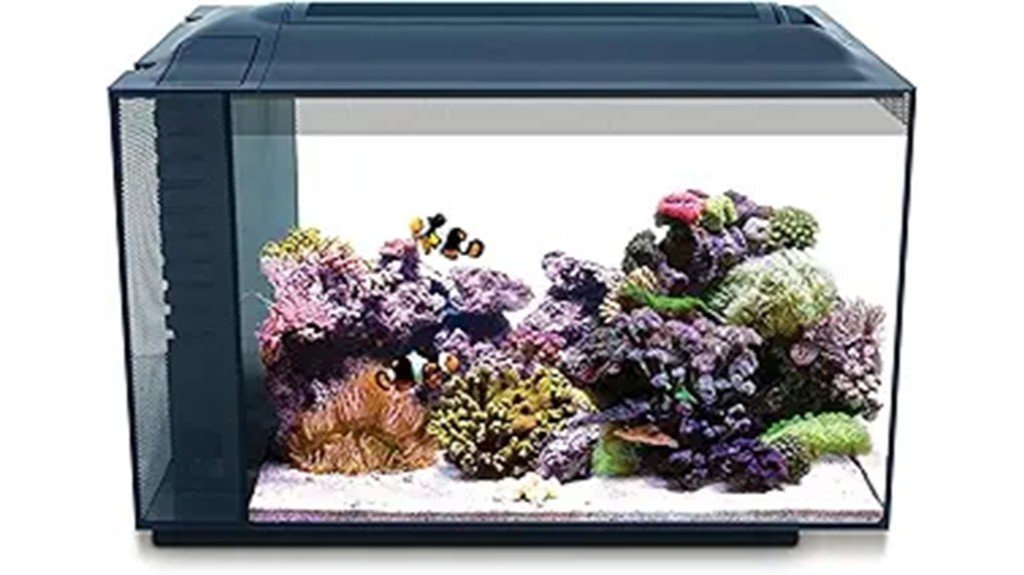
If you’re looking for a stylish yet functional addition to your home or office, the Fluval Evo XII Saltwater Aquarium Kit is a fantastic choice. This 13.5-gallon glass aquarium is perfect for saltwater fish, with dimensions that fit nicely in smaller spaces. Its sleek honeycomb design hides the filter, keeping your view clean. The powerful 3-stage filtration system guarantees your aquatic friends stay healthy and happy. Plus, with a convenient LED light that adjusts for day and night, your tank will always look vibrant. It’s a reef-capable setup that adds a modern touch to any environment—who wouldn’t want that?
Best For: Anyone looking to add a stylish and functional saltwater aquarium to their home or office that fits into smaller spaces.
Pros:
- Stylish design with a honeycomb pattern that conceals the filter compartment for a clean view.
- Powerful 3-stage filtration system ensures a healthy environment for aquatic life.
- Convenient LED lighting with day and night settings enhances the aquarium’s aesthetics.
Cons:
- Limited capacity of 13.5 gallons may not be suitable for larger fish or extensive aquascaping.
- Setup may require additional equipment for advanced reef-keeping enthusiasts.
- The sleek aluminum casing may be prone to scratches and requires careful handling.
NICREW 2.5 Gallon Nano Nature Aquarium Kit
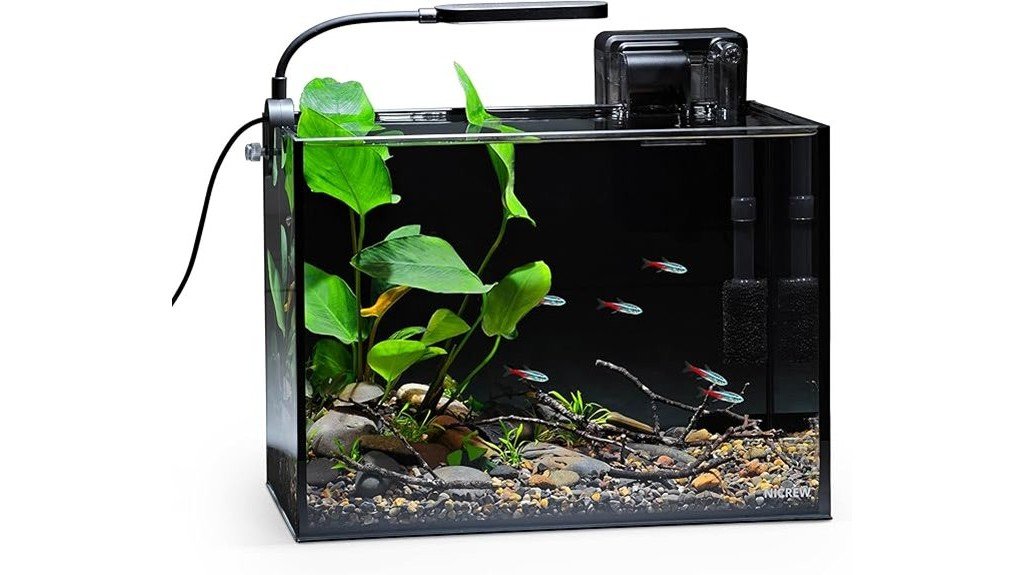
The NICREW 2.5 Gallon Nano Nature Aquarium Kit is perfect for anyone looking to add a splash of aquatic life to their space without taking up too much room. This sleek, rimless tank fits nicely on desktops or countertops, making it an ideal choice for small fish, shrimp, or even a betta. You’ll love how easy it is to set up—just follow the beginner-friendly guide! With high-clarity glass that makes your aquascape pop, this kit features excellent filtration and lighting. You’ll enjoy clear water and happy fish with minimal effort. Immerse yourself in your new underwater adventure today!
Best For: Individuals seeking a compact aquarium solution for small spaces, perfect for beginners wanting to keep small fish, shrimp, or bettas.
Pros:
- Compact and stylish design suitable for desktops and countertops.
- High-clarity glass enhances visibility of the aquascape.
- Effortless setup and maintenance with a beginner-friendly guide included.
Cons:
- Limited capacity may not be suitable for larger fish or multiple species.
- Smaller size may require more frequent water changes.
- Basic lighting and filtration may not support more advanced aquascaping needs.
hygger Horizon 8 Gallon LED Glass Aquarium Kit
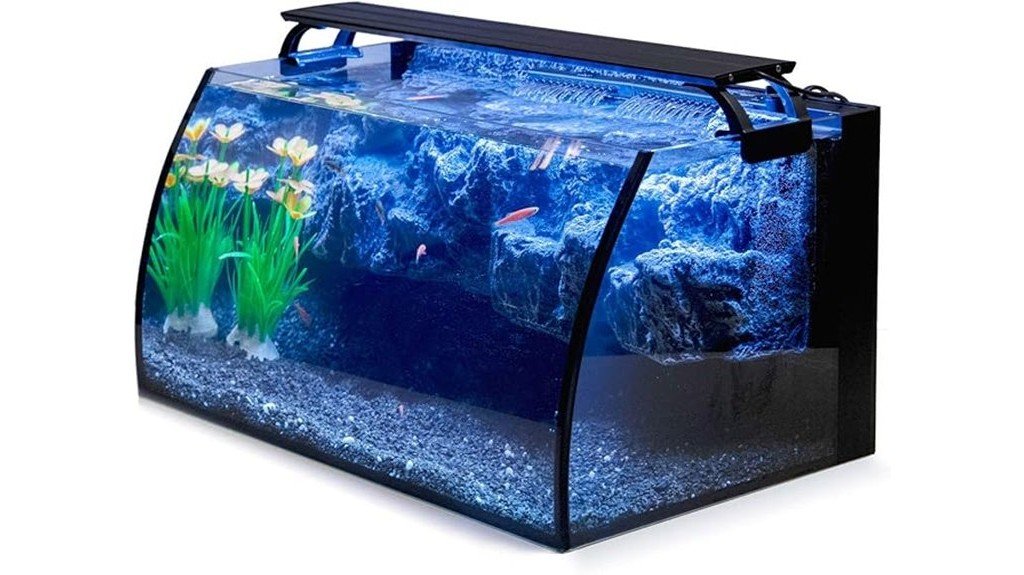
Looking for an aquarium that combines style and functionality? The hygger Horizon 8 Gallon LED Glass Aquarium Kit is just what you need! It features a stunning 3D rockery background that not only looks great, but also provides hiding spots for your fish. The adjustable LED light lets you customize brightness and timing, so you can create the perfect ambiance. Plus, the quiet 7W filter keeps your tank clean without disturbing your aquatic friends. With its unique convex shape, this tank offers a fantastic viewing experience. You’ll love how easy it is to maintain and how beautiful it can be!
Best For: Anyone looking for a stylish and functional aquarium that enhances any space while providing a comfortable environment for small fish.
Pros:
- Stunning 3D rockery background enhances aesthetic appeal and offers hiding spots for fish.
- Adjustable LED light with multiple modes and timers allows for customizable ambiance.
- Quiet, efficient 7W filter ensures clean water without disturbing aquatic life.
Cons:
- May be too strong for fish under 2 inches, requiring caution when stocking.
- Holds only 6 gallons of water due to background decor, limiting fish capacity.
- Unique convex shape might occupy more space compared to traditional tank designs.
Luna Reef Nano Tank 4 Gallon Frag System

If you’re a hobbyist enthusiastic to plunge into the world of coral fragging, the Luna Reef Nano Tank 4 Gallon Frag System is a fantastic choice. This sleek, black acrylic tank measures 12 by 16 inches and holds nearly 3.92 gallons of water. It’s perfect for fragging coral colonies or even acclimating new livestock. Plus, it includes a Sicce pump and all the necessary plumbing, making setup a breeze. While some feedback mentions it’s on the pricey side, many love its compact design and sturdy feel. With a two-year warranty, you’ll enjoy peace of mind as you create your underwater masterpiece!
Best For: This product is best for hobbyists of all skill levels looking to frag coral colonies and acclimate new livestock in a compact and stylish setup.
Pros:
- Compact design ideal for limited spaces.
- Includes pump and plumbing for easy setup.
- Sturdy acrylic construction enhances durability.
Cons:
- Some customers feel the price is on the higher side.
- Customer service issues have been reported.
- Average rating of 3.4 out of 5 stars indicates mixed feedback.
Factors to Consider When Choosing Nano Reef Tanks for Simple Filtration
When you’re picking a nano reef tank for simple filtration, size really matters—too small and you might struggle with water quality. You’ll also want to think about the efficiency of the filtration system and the lighting options since they can make or break your underwater paradise. Plus, a tank that looks great and is easy to maintain will keep both you and your fish happy!
Tank Size Considerations
Choosing the right size for your nano reef tank can feel a bit like picking the perfect ice cream flavor—there are just so many options! Nano reef tanks usually range from 2.5 to 13.5 gallons. Smaller tanks are easier to manage, but you’ll need to change the water more often because there’s less volume. Reflect on what marine life you want, too! Smaller tanks work best for tiny fish, shrimp, or corals, while larger tanks let you explore more species. Don’t forget to take into account dimensions; height and width can affect how light and filtration work, which is vital for coral health. The total volume impacts water stability, critical for keeping your marine buddies happy and healthy!
Filtration System Efficiency
Filtration system efficiency plays an essential role in keeping your nano reef tank thriving and sparkling clear. A powerful filtration system usually includes mechanical, chemical, and biological stages, which are vital for water quality. When choosing a filter, consider its water processing volume; a filter meant for larger tanks can work wonders in a smaller setup due to higher turnover rates. Regularly maintaining and replacing filter media helps keep harmful substances at bay. Don’t forget to factor in your tank’s bioload—if you have a lot of fish, you’ll need a stronger filter to handle the extra waste. Finally, opt for a system that runs quietly, ensuring your peaceful underwater world isn’t disturbed by noise.
Lighting Options Available
After setting up an efficient filtration system, the next big decision for your nano reef tank is lighting. LED lights are a fantastic choice because they give you full spectrum control, helping your corals thrive and glow beautifully. Look for adjustable options that mimic natural sunrise and sunset cycles; this not only looks cool but also keeps your marine life healthy. You can even find customizable modes that create cloud cover or storm effects, adding excitement to your tank. Just remember, wattage and lumens matter! They determine how bright your lights are, which affects your corals’ health and your tank’s overall vibe. Plus, compact LED designs fit perfectly without taking up too much space. Happy lighting!
Design and Aesthetics
When it comes to creating a stunning nano reef tank, the design and aesthetics can make all the difference. You’ll want to choose high-clarity glass or acrylic to let light shine through, making your corals and fish pop! Think about the shape too; unique designs like convex arcs can give you an immersive view. Plus, integrating LED lighting systems can help simulate natural light, bringing out vibrant colors in your aquatic life. Don’t forget about filtration systems! Placing them discreetly keeps your tank looking neat and stylish. A well-designed tank not only looks great but also makes it easier to enjoy your underwater world. After all, who wouldn’t want an eye-catching reef to admire?
Maintenance Requirements Low
Choosing a nano reef tank can be exciting, especially since they often come with low maintenance requirements that make your life easier. With their smaller size, water changes and cleaning tasks become quick and manageable. Plus, many nano tanks feature efficient three-stage filtration systems that keep water clear without much effort. You’ll also love how easy it is to access your tank for feeding and maintenance, cutting down on the time you spend on upkeep. Regularly checking water parameters is simple, so you can make quick adjustments to keep everything happy. Additionally, the compact size encourages low-maintenance species of corals and fish, which means more time enjoying your stunning aquascape and less time worrying about chores!
Material Quality Importance
Material quality plays an essential role in your nano reef tank experience, especially for simple filtration systems. Choosing high-clarity glass, with a transmittance rate of 91.2%, gives you a fantastic view of your aquatic life. You’ll love how it enhances your monitoring and enjoyment. On the other hand, acrylic is lightweight and impact-resistant, making it easy to move around. Just remember that glass usually provides better thermal stability, keeping your water temperature steady. Durable materials resist scratches, so your tank stays clear and beautiful longer. Plus, premium materials can handle the challenges of saltwater, ensuring your tank lasts. Investing in quality means less hassle and more time admiring your stunning aquascapes!
Equipment Compatibility Factors
Finding the right equipment to match your nano reef tank isn’t just a matter of picking something that looks cool; it’s about making sure everything fits together nicely. First, check that the tank’s size works with your filtration system. If you’ve got a 4-gallon tank, a filter rated for 2-8 gallons will do just fine. Next, think about the filter media—make sure it supports your corals and fish. Don’t forget to confirm the power requirements; you want your setup to avoid electrical overloads. Finally, consider how easy it is to access the filtration components. Limited space can make maintenance a hassle, so pick a system that allows for simple cleaning and media replacement. Happy reefing!
FAQ
What Fish Species Are Best for Nano Reef Tanks?
1. What types of fish are suitable for nano reef tanks?
Small fish species such as clownfish, gobies, and blennies are ideal for nano reef tanks. They thrive in limited spaces and add vibrant colors to the aquarium.
2. Are clownfish a good choice for nano reef tanks?
Yes, clownfish adapt well to smaller environments and are known for their striking colors. They typically coexist peacefully with corals and invertebrates.
3. What characteristics make gobies suitable for nano reef tanks?
Gobies are small and generally peaceful fish, making them perfect for the confined space of a nano reef. They also often have interesting behaviors that can enhance the aquarium’s dynamics.
4. How do blennies fit into nano reef tanks?
Blennies are another excellent option for nano reef tanks due to their small size and peaceful nature. Their unique shapes and colors contribute to the aesthetic appeal of the tank.
5. Can small fish coexist with corals in a nano reef tank?
Yes, many small fish species, including clownfish, gobies, and blennies, can coexist peacefully with corals. Their compatibility helps to create a harmonious aquatic environment.
6. What benefits do small fish bring to a nano reef tank?
Small fish like clownfish, gobies, and blennies not only add vibrant colors but also lively behavior to the tank. They contribute to the overall ecosystem by interacting with the tank’s inhabitants.
7. Are there any fish species to avoid in nano reef tanks?
Larger or more aggressive fish should be avoided in nano reef tanks due to limited space and potential aggression. Stick with smaller, peaceful species for a better community.
8. How many fish can I keep in a nano reef tank?
The number of fish you can keep depends on the tank’s size and filtration system, but typically, one or two small fish species are recommended for a nano reef. Overcrowding can lead to stress and poor water quality.
9. How do I maintain water quality in a nano reef tank with fish?
Regular water changes, proper filtration, and monitoring water parameters are essential for maintaining water quality. Small fish can produce waste, so keeping the tank clean is crucial.
10. Do small fish require special care in nano reef tanks?
While small fish are generally easier to care for, they still need a balanced diet, stable water conditions, and compatible tank mates. Regular observation is key to ensuring their health and well-being.
How Often Should I Change the Water in My Nano Reef Tank?
1. How often should I change the water in my nano reef tank?
You should change approximately 10-15% of the water weekly to maintain optimal water quality.
2. Why is regular water change important for my nano reef tank?
Regular water changes help remove waste, toxins, and excess nutrients, contributing to a healthier environment for both fish and corals.
3. What percentage of water should I change weekly?
Aim for a weekly water change of 10-15% to ensure your tank remains stable and healthy.
4. Can I change more than 15% of the water in my nano reef tank?
While it’s generally recommended to stick to 10-15%, changing more can stress the tank’s inhabitants. Always monitor their response.
5. How does water testing influence my water change schedule?
Regular testing of water parameters can help you determine if adjustments to your water change frequency or volume are necessary.
6. What tools do I need to test my nano reef tank water?
You will need a reliable water testing kit that includes tests for pH, ammonia, nitrite, nitrate, and salinity.
7. What signs indicate I need to change the water more frequently?
If you notice elevated levels of ammonia or nitrite, or if your fish exhibit stress, it may be time to increase the frequency of water changes.
8. Is it okay to change water less frequently than once a week?
While you can change water less frequently, it may lead to deteriorating water quality, which can harm your tank’s inhabitants.
9. What should I do before adding new water to the tank?
Always ensure the new water is properly treated, matched in temperature, and salinity to prevent shocking your fish and corals.
10. Can I use tap water for my nano reef tank?
It’s best to use filtered or dechlorinated water, as tap water may contain harmful chemicals that can affect the health of your reef tank.
Can I Use Tap Water for My Nano Reef Tank?
1. Can I use tap water in my nano reef tank?
No, it is not advisable to use tap water for your nano reef tank due to the presence of chlorine and other harmful contaminants.
2. What are the risks of using tap water in a nano reef tank?
Tap water can introduce chlorine and heavy metals that can negatively affect the health of marine life and disrupt the tank’s ecosystem.
3. What type of water is best for a nano reef tank?
The best water for a nano reef tank is RO/DI (Reverse Osmosis/Deionized) water, as it is free from impurities and contaminants.
4. Can I treat tap water to make it safe for my nano reef tank?
Yes, you can use a dechlorinator to treat tap water, but it may not remove all harmful contaminants. RO/DI water is generally a safer option.
5. What is RO/DI water?
RO/DI water is water that has been purified through a reverse osmosis and deionization process, making it suitable for sensitive marine environments like nano reef tanks.
6. How does chlorine affect marine life in a nano reef tank?
Chlorine can be toxic to fish and invertebrates, leading to stress, illness, or even death if introduced into the aquarium environment.
7. Is using bottled water a good alternative for my nano reef tank?
Bottled water can be a safer alternative, but it’s important to check for added minerals or contaminants that may not be suitable for marine life.
8. How can I ensure the water quality in my nano reef tank?
Regularly test your water parameters and use a reliable filtration system, such as RO/DI, to maintain optimal water quality for your marine inhabitants.
9. What are the benefits of using RO/DI water?
RO/DI water helps create a stable environment by eliminating impurities, reducing the risk of algae blooms, and providing better overall water quality for your tank.
10. Can I use untreated well water for my nano reef tank?
Untreated well water may contain minerals and contaminants that can be harmful to marine life, so it’s recommended to test and treat it before use.
What Are the Ideal Water Parameters for a Nano Reef Tank?
FAQ 1: What is the ideal pH level for a nano reef tank?
The ideal pH level for a nano reef tank is between 8.1 and 8.4. Maintaining this range helps ensure the health of corals and marine life.
FAQ 2: What salinity should be maintained in a nano reef tank?
Salinity should be kept around 1.023 to 1.025 in a nano reef tank. This level is crucial for the osmoregulation of marine organisms.
FAQ 3: What is the maximum recommended nitrate level for a nano reef tank?
Nitrate levels should be kept below 5 ppm to prevent algae growth and ensure the well-being of sensitive marine life.
FAQ 4: What phosphate level is ideal for a nano reef tank?
Phosphate levels should remain below 0.03 ppm to avoid detrimental effects on corals and to prevent algae blooms.
FAQ 5: What calcium levels are ideal for a nano reef tank?
Calcium levels should be maintained between 400 and 450 ppm, which is essential for the growth of corals and other calcifying organisms.
FAQ 6: How does pH affect the health of a nano reef tank?
pH affects the availability of nutrients and overall metabolic processes in marine organisms. Keeping it stable within the ideal range promotes coral growth and resilience.
FAQ 7: Why is salinity important in a nano reef tank?
Salinity is vital for maintaining the osmotic balance of marine species. Fluctuations can lead to stress and health issues in fish and corals.
FAQ 8: What are the consequences of high nitrate levels in a nano reef tank?
High nitrate levels can lead to poor water quality, algae overgrowth, and can negatively impact the health of fish and corals.
FAQ 9: How does phosphate affect a nano reef tank?
Excessive phosphate can lead to algae blooms, which compete with corals for light and nutrients, ultimately harming the reef ecosystem.
FAQ 10: Why is calcium important for a nano reef tank?
Calcium is crucial for the skeletal development of corals and other invertebrates. Maintaining appropriate levels supports the structural integrity and growth of the reef.
How Do I Maintain Coral Health in a Nano Reef Tank?
FAQ: Maintaining Coral Health in a Nano Reef Tank
1. What water parameters should I stabilize for corals?
Stable water parameters include temperature, salinity, pH, alkalinity, and calcium levels. Regular testing ensures these parameters remain within the ideal ranges for coral health.
2. How important is lighting for coral health?
Good lighting is crucial as it supports photosynthesis in corals. Choose an appropriate light spectrum and intensity tailored to the specific coral species in your tank.
3. How do I monitor nutrient levels in my nano reef tank?
Regularly test for nitrates, phosphates, and other nutrients using reliable test kits. Keeping nutrient levels balanced prevents algae growth and supports coral health.
4. How often should I perform water changes?
Regular water changes, typically every 1-2 weeks, help maintain water quality and replenish essential trace elements. Aim for changing 10-20% of the water volume with each change.
5. What are the risks of overfeeding in a nano reef tank?
Overfeeding can lead to excess nutrients in the water, promoting unwanted algae growth and deteriorating water quality. It’s important to feed only what your corals and fish can consume in a short period.
6. How can I monitor coral growth?
Regularly observe your corals for signs of healthy growth, such as new polyps or expansion. Keeping a growth log can help track changes and identify any issues early on.
7. What should I look for in coral appearance?
Healthy corals typically exhibit vibrant colors and full polyp extension. Look out for signs of stress, such as bleaching or retraction, which may indicate water quality issues.
8. How can I ensure proper water circulation?
Proper water circulation is vital for nutrient distribution and waste removal. Use powerheads or pumps to create gentle currents that mimic natural reef conditions.
9. What role do trace elements play in coral health?
Trace elements are essential for various biological processes in corals. Regularly supplementing these can enhance coral growth and resilience.
10. Can I keep different coral species together?
Yes, but it’s important to research compatibility among species. Some corals may have different lighting and flow requirements or may be aggressive towards one another.
11. How do I deal with pests in my nano reef tank?
Regularly inspect corals for pests like flatworms or nudibranchs. Quarantine new additions and consider using targeted treatments to manage infestations without harming coral health.
Final Thoughts
Transform your space into an underwater paradise with the right nano reef tank! Here’s a confident breakdown of the top picks tailored for different needs:
- Fluval Evo XII: This stylish tank is perfect for beginners and those who want a visually appealing setup. With its excellent filtration and customizable lighting, it makes maintenance a breeze while enhancing your aquascape.
- NICREW 2.5 Gallon: Ideal for budget-conscious aquarists, this compact tank offers great value without sacrificing quality. It’s perfect for small spaces and is easy to care for, making it a great starter choice.
- AquaScape 10 Gallon: For those looking for durability and performance, this tank is robust and designed for advanced users. It provides plenty of room for creativity in your aquascaping while ensuring your fish thrive.
- Red Sea Reef Nano: If you’re serious about your reef and want advanced features, this tank is for you. It offers superior filtration and water stability, making it a strong choice for experienced hobbyists who want to create a thriving ecosystem.
- Fluval Flex: A versatile option that balances aesthetics and functionality, this tank is great for hobbyists who appreciate a modern design and want a well-rounded experience.
Choose Fluval Evo XII if you’re a beginner wanting style and ease, choose NICREW 2.5 Gallon if you’re on a budget, choose AquaScape 10 Gallon for durability and performance, choose Red Sea Reef Nano if you’re an advanced aquarist, and choose Fluval Flex for a versatile and modern setup. Dive in and create your stunning reef today!