
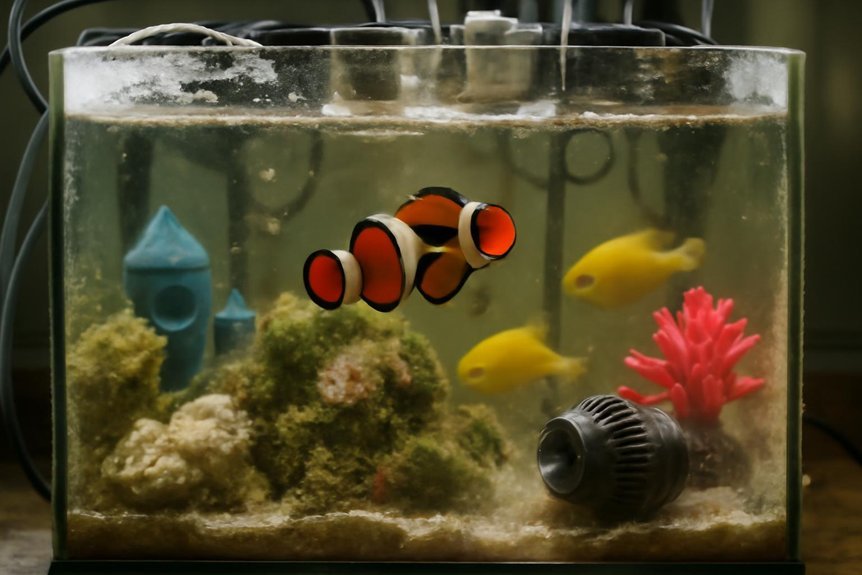
Beginner Nano Reef Mistakes & How to Avoid Them
Starting a nano reef can feel like embarking on an exciting adventure — the kind where you can’t wait to see the vibrant colors of coral and the delicate dance of fish swimming about.
But, just like any journey, it’s easy to stumble along the way. I remember my first attempt; I was so eager to dive in that I thought, “Who needs to cycle the tank? I’ll just toss in a few fish right away!” That enthusiasm quickly turned into a lesson in chaos as ammonia levels spiked, and my little aquatic friends began to suffer.
If you’re new to this world, you might find yourself considering similar shortcuts — maybe thinking cramming a few extra fish in your tank won’t hurt.
But trust me, it can turn a peaceful underwater paradise into a frantic struggle for survival.
So, how do you avoid these common pitfalls? Let’s take a moment to explore some practical tips that can help ensure your reef thrives, rather than just survives.
Remember, patience is key in this journey, and taking the time to understand the fundamentals will make all the difference. Your little slice of ocean will reward you with beauty and tranquility if you let it grow the right way.
Key Takeaways
- Neglecting Water Quality Testing: Regularly test pH, ammonia, nitrites, and nitrates to avoid toxic conditions that stress fish and corals.
- Skipping the Cycling Process: Always complete the cycling process to develop beneficial bacteria and prevent toxic ammonia levels for livestock.
- Overcrowding the Tank: Avoid adding too many species at once; overcrowding leads to stress and territorial disputes among fish.
- Ignoring Maintenance Routines: Establish a routine for cleaning equipment and monitoring algae growth to maintain a healthy nano reef environment.
- Rushing Livestock Addition: Allow the tank to stabilize before introducing fish and corals to prevent overwhelming the system and ensure compatibility.
Underestimating the Importance of Water Quality
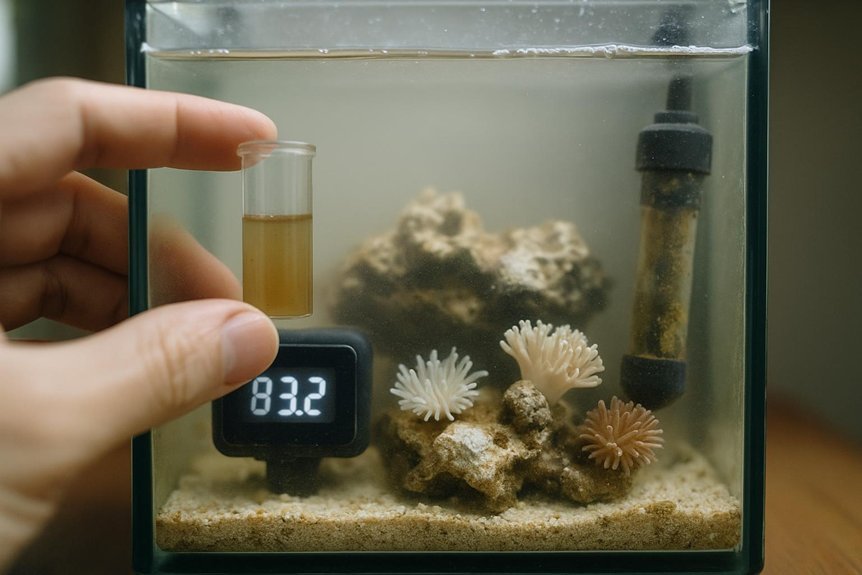
When you first immerse yourself in the exciting world of nano reefs, it’s easy to overlook one essential aspect: water quality. You might think, “It’s just water, right?” But that couldn’t be further from the truth! Keeping your water clean and balanced is fundamental for the health of your tiny underwater ecosystem. pH levels, salinity, and ammonia are just a few factors you’ll need to monitor. If these levels go haywire, your fish and corals could suffer. Plus, a healthy water environment means less stress for your marine life, leading to vibrant colors and happy behaviors. So, don’t let water quality slip your mind; it’s the foundation of your nano reef adventure, and your aquatic friends will thank you for it!
Skipping the Cycle Process
Many new nano reef enthusiasts are tempted to skip the cycling process, thinking they can just fill their tank with water and add fish right away. But here’s the scoop: cycling is essential for creating a healthy environment in your tank. During cycling, beneficial bacteria develop, breaking down harmful waste from fish and uneaten food. If you skip this step, you risk shocking your fish with toxic ammonia levels, which can lead to sickness or even death. Instead of rushing, take your time! Test the water regularly and wait for those bacteria to flourish. Your fish will thank you for it. Plus, you’ll have a thriving reef that’s much more enjoyable to watch. Patience pays off in the world of nano reefs!
Overcrowding the Tank
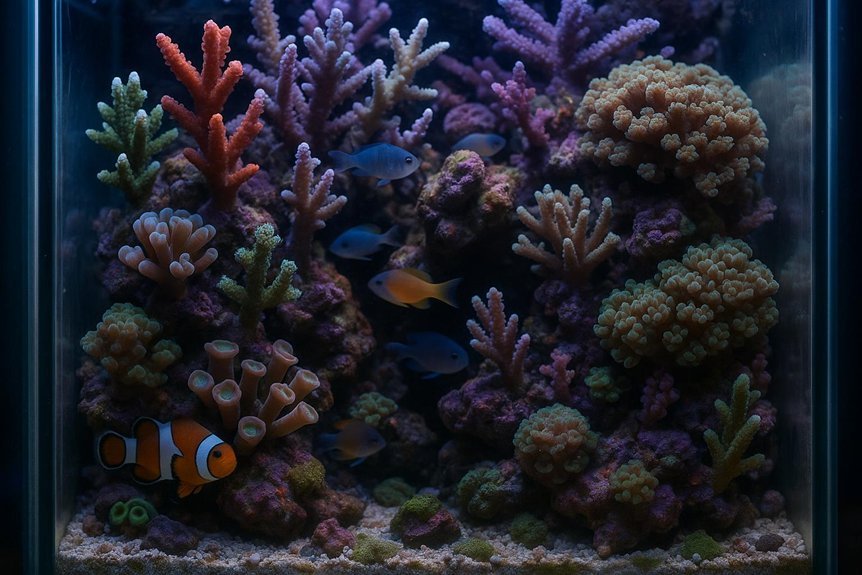
While it might be tempting to fill your tiny tank with a bunch of colorful fish, overcrowding can actually lead to some big problems. A small tank has limited space, which means there’s only so much oxygen, food, and waste management available. When you cram in too many fish, they can become stressed, fight for territory, and even get sick. Plus, excess waste can spike ammonia levels, harming your tank’s ecosystem. You might think you’re creating a vibrant underwater world, but overcrowding can turn it into a chaotic mess. Instead, focus on a few well-chosen species that can thrive together. This approach not only keeps your fish happy but also creates a beautiful, balanced environment that you’ll enjoy.
Choosing Incompatible Species
Choosing fish for your nano reef can feel like a fun puzzle, but mixing incompatible species is a mistake that many beginners make. You might be tempted to pick colorful fish that catch your eye, but not all species get along. Some may be aggressive or territorial, which can lead to stress or even injury. Imagine adding a peaceful clownfish only to find it bullied by a more aggressive damselfish! To avoid this, do your research on compatibility before making your selections. Look for species that thrive together in nature, and consider their size and temperament. Creating a harmonious environment means happier fish, which makes your reef more enjoyable for you to watch. So, choose wisely and keep the peace!
Neglecting Regular Maintenance
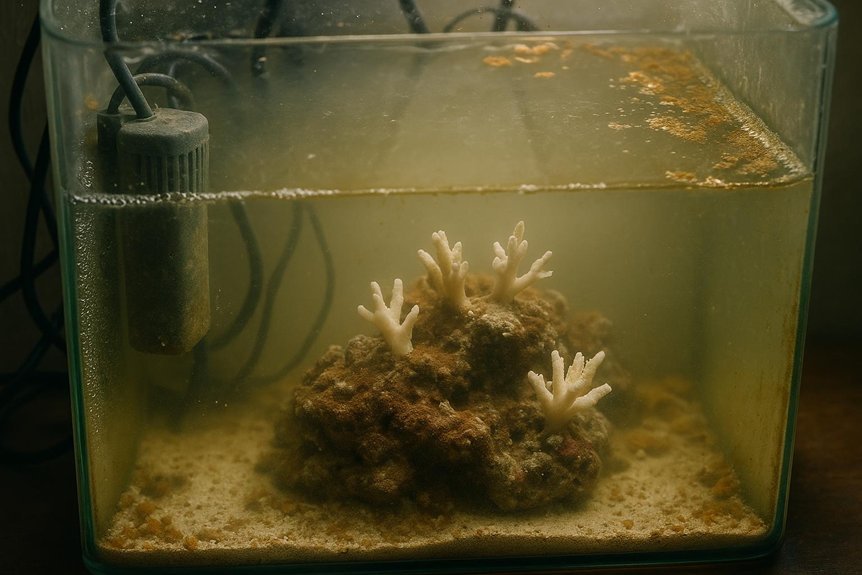
Regular maintenance is key to keeping your nano reef healthy and thriving, yet it’s a step that many beginners overlook. You might think that once your tank is set up, it’ll take care of itself, but that’s far from true! Regular water changes help keep toxins at bay, and testing water parameters guarantees everything stays balanced. Don’t forget to clean your filtration system, as it can get clogged with debris. Feeding your fish is fun, but overfeeding can lead to messy tanks—yuck! Regularly checking for algae growth is also important, as it can quickly take over. By staying on top of these tasks, you’ll create a vibrant underwater world that’ll be the envy of all your friends. Happy reef keeping!
Ignoring Lighting Requirements
You might think that once you’ve got your nano reef up and running, the fun is all about picking out cool fish and corals. But don’t forget about lighting! Proper lighting is essential for your corals and plants to thrive. Different species have different light demands, and ignoring these can lead to unhappy, unhealthy inhabitants. If your corals look bleached or aren’t growing, it might be time to reevaluate your lighting setup. Make sure you’re using the right spectrum and intensity, and consider how long your lights are on each day. Remember, too much light can be just as harmful as too little! So, take the time to research and adjust your lighting, and your nano reef will flourish.
Using Inappropriate Substrates
When setting up your nano reef, picking the right substrate might not seem like a big deal, but it can make a huge difference in your tank’s health. Using inappropriate substrates, like regular gravel, can lead to problems. For instance, it might trap waste and create a nasty environment for your fish and corals. Instead, consider substrates specifically designed for marine tanks, such as aragonite sand. This type helps maintain stable pH levels and provides a better habitat for beneficial bacteria. Remember, the right substrate isn’t just about looks; it’s about creating a thriving ecosystem. So, don’t just grab any sand you see at the store—take the time to choose wisely, and your reef will thank you!
Failing to Monitor Water Parameters
Even if your fish and corals seem happy swimming around, neglecting to monitor water parameters can lead to serious trouble in your nano reef. You might think everything’s perfect, but hidden issues can wreak havoc. Regularly checking temperature, salinity, pH, and ammonia levels is essential. This way, you can catch problems before they escalate. For example, a slight drop in pH can stress your corals, making them more vulnerable to disease. It’s like trying to breathe during a sudden cold snap—no fun at all! Investing in a reliable test kit can save you from unexpected disasters and guarantee your little underwater world thrives. So, keep an eye on those numbers; your reef will thank you!
Overfeeding Marine Life
One of the easiest mistakes to make in a nano reef is overfeeding your marine life. You might think a little extra food will make your fish and invertebrates happy, but it can actually do more harm than good. Uneaten food can pollute the water, leading to harmful algae blooms and stressed-out creatures. Instead, aim to feed small amounts that your marine friends can consume in just a couple of minutes. This keeps the water clean and your inhabitants healthy. Remember, in the wild, they don’t have buffet-style meals! Keeping a close eye on their feeding habits will help you find the right balance. So, keep it light, and your reef will thrive!
Not Planning for Equipment Needs
Though you might think setting up a nano reef is as simple as plopping in a few fish and some rocks, not planning for your equipment needs can lead to a world of trouble. You’ll need a good filter to keep the water clean and a heater to maintain the right temperature. Without these, your little marine paradise could quickly turn into a fishy disaster!
Lighting is also essential, especially if you’re planning to keep corals. They need the right type of light to thrive. Don’t forget about water testing kits, either; they help you monitor levels of ammonia, nitrites, and nitrates. So, take a little time to plan your equipment, and you’ll set your nano reef up for success!
Rushing Into Adding Livestock
When you’re excited about your new nano reef, it can be tempting to rush into adding livestock right away. You might think, “The sooner, the better!” But hold on! Jumping the gun can lead to disaster. Your tank needs time to establish a stable environment before adding fish or corals. If you add livestock too soon, you risk overwhelming the system, causing stress or even death to your new pets. Instead, give your tank at least a few weeks to cycle properly. Test the water regularly and make sure your parameters are stable. Then, you can slowly introduce livestock. Remember, patience is key in creating a thriving underwater world that you’ll love to watch grow!
FAQ
What Equipment Do I Need for a Nano Reef Tank?
1. What is a nano tank?
A nano tank is a small aquarium, typically ranging from 5 to 20 gallons, designed for keeping marine life. It offers a compact setup suitable for beginners or those with limited space.
2. Do I need a filtration system for my nano reef tank?
Yes, a reliable filtration system is essential for maintaining water quality in a nano reef tank. It helps remove waste and toxins, providing a healthier environment for your marine inhabitants.
3. Is a heater necessary for a nano reef tank?
Absolutely, a heater is necessary to maintain a stable temperature in your nano reef tank. Most marine species thrive in warmer waters, usually between 75°F and 80°F.
4. What type of lighting should I use?
LED lighting is often recommended for nano reef tanks, as it provides the necessary spectrum for coral growth while being energy-efficient. Ensure the lighting is appropriate for the types of corals and marine life you plan to keep.
5. What kind of salt mix do I need?
You should use a high-quality marine salt mix specifically formulated for reef aquariums. This mix provides the essential trace elements and minerals required for coral and marine life health.
6. What substrate is best for a nano reef tank?
A fine-grained sand substrate is commonly used in nano reef tanks. It helps replicate a natural environment and provides a surface for beneficial bacteria to grow.
7. Why are test kits important for a nano reef tank?
Test kits are crucial for monitoring water parameters such as pH, ammonia, nitrites, and nitrates. Regular testing ensures that water quality remains optimal for your marine life.
8. What is a hydrometer, and why do I need one?
A hydrometer is a tool used to measure the specific gravity of your saltwater. This measurement is vital for ensuring the salinity levels are suitable for the marine species you are keeping.
9. Do I need any additives for my nano reef tank?
Yes, additives may be necessary to maintain water quality, including calcium, alkalinity boosters, and trace elements. These help support coral growth and overall tank health.
10. What other equipment might be beneficial for a nano reef tank?
In addition to the essential equipment, consider adding a protein skimmer to remove organic waste and an aquarium chiller if you live in a warmer climate. These can enhance the overall stability of your tank.
How Often Should I Change the Water in My Nano Reef?
1. How often should I change the water in my nano reef tank?
You should change approximately 10-15% of the water weekly to maintain optimal conditions.
2. Why is it important to change the water regularly?
Regular water changes help stabilize water parameters, which is crucial for the health of your corals and fish.
3. What percentage of water should I change weekly?
A weekly change of 10-15% is recommended for nano reef tanks.
4. Can I change more than 15% of the water at once?
While it’s possible, changing more than 15% can cause stress to the inhabitants due to rapid shifts in water chemistry.
5. What happens if I don’t change the water regularly?
Neglecting regular water changes can lead to poor water quality, which may harm your corals and fish.
6. Is it okay to change the water less frequently?
Changing the water less frequently than weekly can result in unstable parameters and negatively affect the health of your tank.
7. What should I monitor in my nano reef tank?
Keep an eye on water parameters such as salinity, pH, and ammonia levels to ensure a healthy environment.
8. Can I use tap water for water changes?
Using tap water is not recommended unless it has been treated to remove chlorine and other harmful substances.
9. What type of water should I use for changes?
It’s best to use RO/DI water or saltwater mix specifically formulated for reef tanks.
10. Will regular water changes help reduce algae growth?
Yes, frequent water changes can help limit nutrient buildup, which in turn can reduce algae growth in the tank.
Can I Use Tap Water for My Nano Reef?
FAQ 1: Can I use tap water in my nano reef aquarium?
No, using tap water in a nano reef is not recommended. It often contains harmful chemicals and impurities that can negatively impact marine life.
FAQ 2: What are the risks of using tap water for my nano reef?
Tap water may contain chlorine, chloramines, and heavy metals, which can be toxic to fish and corals. These substances can disrupt the delicate balance of your aquarium’s ecosystem.
FAQ 3: What type of water should I use for my nano reef?
It is best to use purified or distilled water for your nano reef. These options ensure a cleaner, safer environment for your aquarium’s inhabitants.
FAQ 4: How can I purify tap water for my nano reef?
You can use a reverse osmosis (RO) system or water filtration unit to remove impurities from tap water. This process effectively eliminates harmful chemicals, making the water safe for your fish and corals.
FAQ 5: Is bottled water suitable for my nano reef?
Bottled water can be used, but it’s essential to check that it is free from added minerals and chemicals. Always verify the source and composition to ensure it is appropriate for marine life.
FAQ 6: What are the benefits of using purified water in my nano reef?
Purified water provides a stable and clean environment, which is crucial for the health of your aquatic life. It minimizes the risk of disease and promotes better growth for corals and fish.
FAQ 7: How do I know if my water is safe for my nano reef?
Testing your water for parameters like pH, ammonia, nitrites, and nitrates can help determine its safety. Additionally, using a water test kit can help identify any harmful contaminants.
FAQ 8: Can I use rainwater for my nano reef?
Rainwater can be used if properly collected and filtered, as it is often free from chemicals. However, it’s crucial to test it for pollutants and ensure it has the right mineral content for marine life.
FAQ 9: How often should I change the water in my nano reef?
Regular water changes, typically around 10-20% weekly, help maintain water quality and remove toxins. This practice is essential for sustaining a healthy environment in your aquarium.
FAQ 10: What should I do if I accidentally use tap water in my nano reef?
If you’ve used tap water, monitor your aquarium closely for any signs of stress in your marine life. You may need to perform water changes with purified water to help mitigate any negative effects.
What Types of Fish Are Best for Beginners?
FAQs on Beginner Fish Choices
1. What are some hardy fish suitable for beginners?
Hardy fish like clownfish, neon tetras, and gobies are excellent choices for novice aquarists due to their resilience.
2. Why are clownfish recommended for beginners?
Clownfish are known for their vibrant colors and adaptability, making them ideal for new aquarium setups. They also have a friendly demeanor.
3. What makes neon tetras a good option for new fish keepers?
Neon tetras are small, colorful, and easy to care for, thriving in various water conditions. Their peaceful nature makes them great for community tanks.
4. Are gobies suitable for beginner aquariums?
Yes, gobies are hardy and can adapt to different environments. They often add unique behavior to the tank, which can be enjoyable to observe.
5. How should I prepare my tank for these fish?
Ensure your tank is properly cycled and that the water conditions—such as temperature and pH—match the needs of your chosen fish species.
6. What tank size is ideal for beginners?
A minimum of 10 gallons is recommended for beginners to provide stable water conditions. Larger tanks are generally easier to maintain.
7. Can I keep multiple species in one tank?
Yes, but it’s important to choose compatible species that share similar care requirements. Researching each species’ temperament is crucial.
8. How often should I feed my beginner fish?
Feed your fish small amounts once or twice a day, ensuring they can consume it within a few minutes to avoid overfeeding and water quality issues.
9. What should I know about water quality for beginner fish?
Regularly test your water parameters, including ammonia, nitrite, and nitrate levels. Maintaining good water quality is key to keeping your fish healthy.
10. What is the importance of tank decorations for beginner fish?
Decorations provide hiding spots and territories for fish, reducing stress and promoting natural behaviors. Ensure they are safe and suitable for your chosen species.
11. When should I introduce new fish to my tank?
After your tank is fully cycled and stable, you can introduce new fish. It’s best to add them gradually to prevent overwhelming your tank’s ecosystem.
How Do I Choose the Right Corals for My Tank?
1. What factors should I consider when choosing corals for my tank?
Consider your tank’s lighting, water parameters (like pH and salinity), and the compatibility of your tank mates. These factors will help ensure a healthy environment for the corals.
2. What are some beginner-friendly coral species?
Hardy species such as Zoanthids and Mushrooms are great for beginners. They are resilient and can thrive in a range of conditions, making them ideal for those new to reef tanks.
3. How do lighting conditions affect coral selection?
Different corals have varying light requirements. Research the specific needs of the species you want to keep to ensure your tank lighting matches those needs.
4. What water parameters should I monitor for corals?
Key parameters include temperature, pH, salinity, and nitrate levels. Regular testing will help you maintain a stable environment conducive to coral health.
5. How do tank mates influence coral choice?
Coral-eating fish or aggressive tank mates can harm sensitive corals. Choose corals that are compatible with your existing fish and invertebrates to prevent conflicts.
6. How can I gradually add corals to my tank?
Start with hardier corals and monitor their health before introducing more sensitive species. This gradual approach allows you to learn and adjust your care routine.
7. What should I know about coral placement in the tank?
Corals have different requirements for flow and light intensity, so place them accordingly. Research specific coral needs to optimize their growth and health.
8. Can I mix different coral species in the same tank?
Yes, but be cautious with compatibility. Some corals can compete for space and resources, while others may harm each other.
9. How often should I test my water for coral health?
Regular testing is advised, typically weekly or bi-weekly, especially after adding new corals. This helps ensure stable conditions for your coral species.
10. What is the importance of coral acclimation?
Acclimating corals to your tank’s conditions is crucial to reduce stress. Gradually introduce them to your tank’s environment over several hours to help them adjust.
Final Thoughts
So, there you have it! By avoiding these common beginner mistakes, you’ll set your nano reef up for success. Take your time, keep an eye on water quality, and always research before adding new fish or corals. Remember, patience is key in this underwater adventure! With a little care and attention, you’ll create a vibrant, thriving reef that’s as stunning as it is healthy. Happy reef-keeping, and may your tank be full of colorful surprises!