
5 Best Nano Reef Tanks for Thriving Coral Growth in 2025
Are you a reef enthusiast looking to create your very own vibrant underwater ecosystem? If so, this guide is tailored just for you! Setting up a nano reef tank can be a rewarding yet challenging endeavor, particularly when it comes to nurturing beautiful corals.
In 2025, several nano reef tanks have emerged as top contenders, boasting advanced features and user-friendly designs that make them ideal for both beginners and seasoned aquarists alike.
The right nano reef tank can significantly improve your chances of successfully cultivating coral, providing a stable environment that mimics natural conditions. Key factors to consider include tank size, filtration systems, lighting options, and ease of maintenance.
With so many options on the market, it’s essential to find a tank that not only meets your aesthetic desires but also supports the health and growth of your coral.
In this roundup, we’ll highlight the five best nano reef tanks that stand out for their performance and features in 2025. Each selection has been carefully evaluated to ensure it meets the needs of coral lovers seeking to bring a slice of the ocean into their homes.
Ready to dive in? Scroll down to discover the top picks that will help you turn your aquatic dreams into reality!
Coralife LED BioCube Aquarium Fish Tank Kit (32 Gallon)
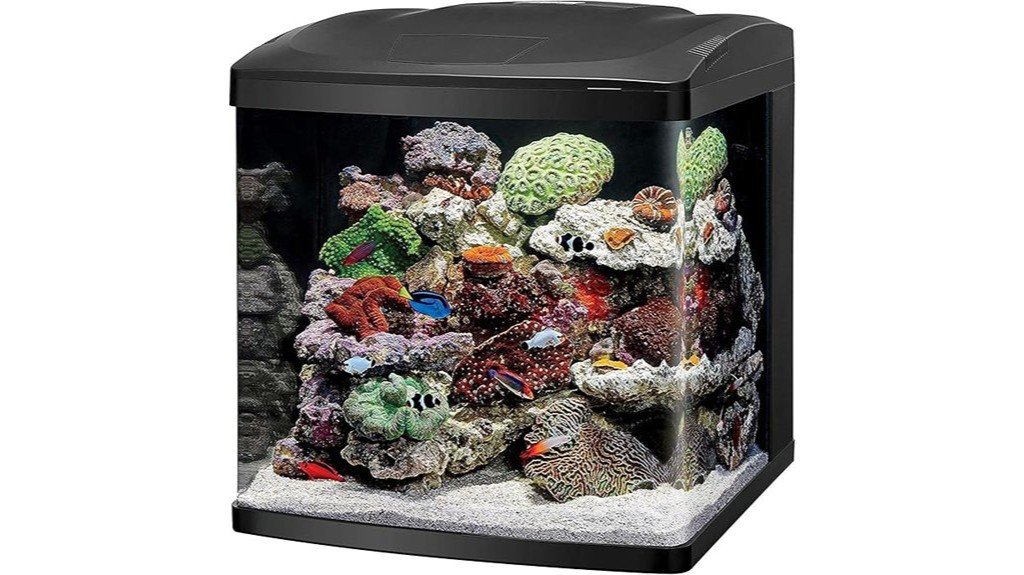
If you’re looking for a fantastic starter aquarium that supports vibrant coral growth, the Coralife LED BioCube Aquarium Fish Tank Kit (32 Gallon) is an excellent choice. This sleek, modern tank is made of glass and weighs 62 pounds, making it sturdy and stylish. Its compact filtration system lets you set it up easily and maintain it with minimal fuss. The quiet pump guarantees your fish won’t get startled. Plus, the built-in LED lighting mimics the sun, helping your corals thrive. Just remember, the timer can be a bit tricky, so check out YouTube for handy tutorials!
Best For: Beginners and experienced aquarists looking for a stylish and functional starter aquarium that fosters coral growth.
Pros:
- Compact and customizable built-in filtration system for easy maintenance.
- Vibrant LED lighting with programmable timer simulates natural day/night cycles.
- Quiet operation from the submersible pump ensures a peaceful environment for fish.
Cons:
- Some users report noise from the filter motor which can be bothersome.
- The programmable timer may be complex, requiring external tutorials for ease of use.
- Additional equipment and modifications may be needed for optimal performance.
NICREW 2.5 Gallon Nano Nature Aquarium Kit
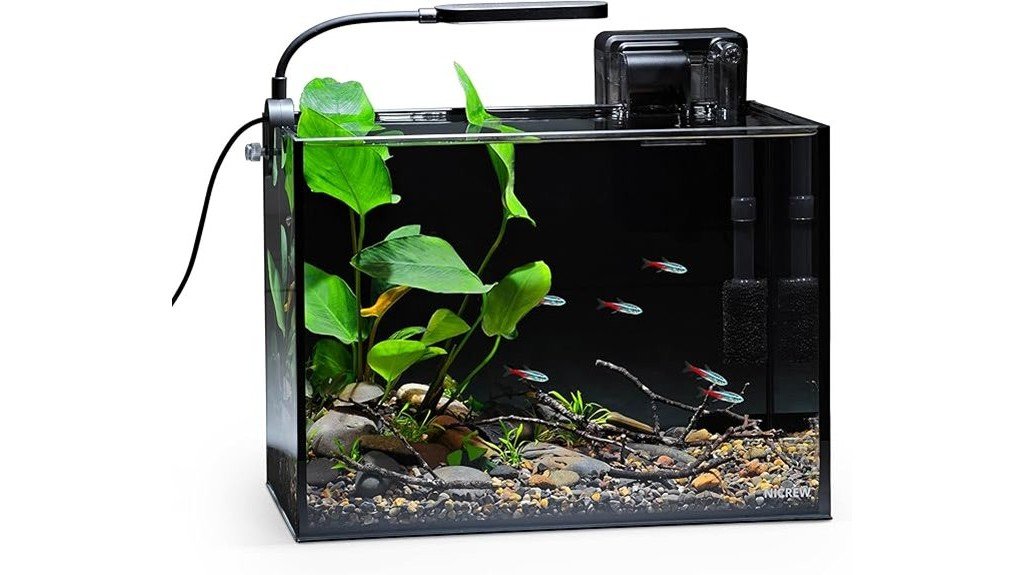
The NICREW 2.5 Gallon Nano Nature Aquarium Kit is perfect for anyone looking to immerse themselves in the world of aquariums without overwhelming effort. This compact, rimless tank fits right on your desk, making it ideal for small fish, shrimp, or bettas. With its sleek design, it’ll catch everyone’s eye! You’ll love how easy it is to set up—just follow the beginner-friendly guide. Plus, the high-clarity glass offers amazing visibility for your underwater world. Equipped with solid filtration and lighting, your aquatic friends will thrive with minimal fuss. Immerse yourself and enjoy your new aquatic adventure!
Best For: Those seeking a stylish, low-maintenance aquarium for small fish, shrimp, or bettas in a compact space.
Pros:
- Easy setup with beginner-friendly instructions.
- High-clarity glass enhances visibility for an immersive experience.
- Stylish design fits well on desktops and countertops.
Cons:
- Limited capacity may not suit larger fish or multiple species.
- Requires regular maintenance despite being low-effort.
- Lighting may need upgrading for more demanding plants.
Coralland 8-Gallon Saltwater Aquarium
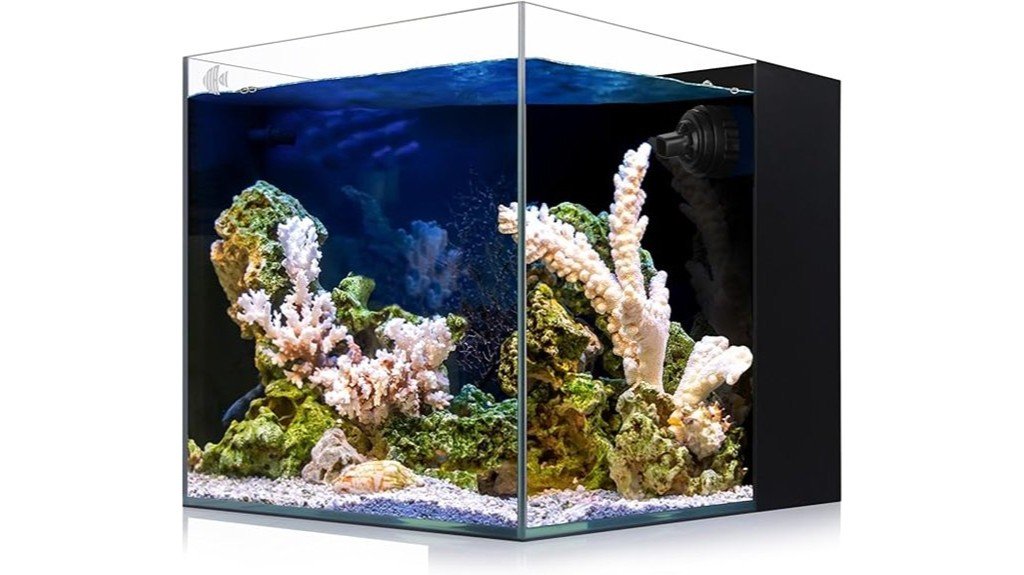
Looking for a compact aquarium that brings the ocean right to your desk? The Coralland 8-Gallon Saltwater Aquarium is your perfect match! With a display capacity of 5.5 gallons and a rear sump of 2.5 gallons, it’s designed for marine environments filled with colorful saltwater fish, live rock, and stunning corals. Its ultra-clear glass enhances visibility, while the modern 45° angled joints add style and strength. Setting it up is a breeze, making it ideal for both beginners and seasoned aquarists. Just remember, this tank doesn’t come with accessories, so you’ll need to grab those separately to create your underwater paradise!
Best For: Beginners and experienced aquarists looking for a stylish and compact marine aquarium for their desk.
Pros:
- Premium low iron ultra-clear glass for enhanced visibility and aesthetics.
- User-friendly design simplifies setup and maintenance for all skill levels.
- Compact size is perfect for small spaces and desktop displays.
Cons:
- Does not come with any accessories, requiring additional purchases.
- Limited capacity may not be suitable for larger marine setups.
- Smaller rear sump may restrict filtration options compared to larger tanks.
Fluval Evo XII Saltwater Aquarium Kit (13.5 Gal)
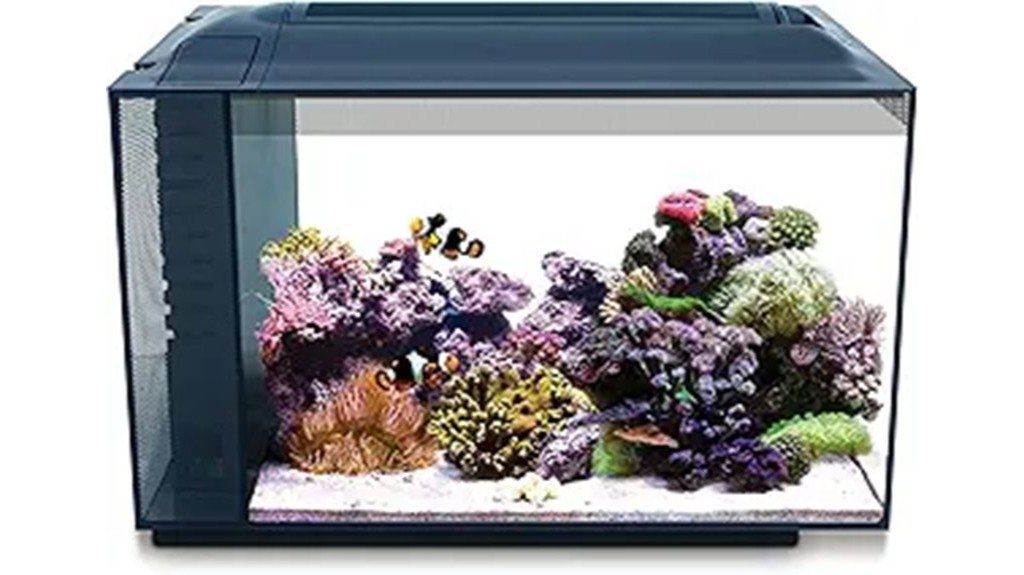
For anyone enthusiastic to immerse themselves in the world of saltwater aquariums, the Fluval Evo XII Saltwater Aquarium Kit (13.5 Gal) is a fantastic choice. Its sleek, modern design not only looks great but also hides the filter compartment, keeping things tidy. Inside, you’ll find a powerful 3-stage filtration system, ensuring your fish and corals stay happy and healthy. Plus, the handy LED light lets you create day and night cycles with just a touch. With a 13.5-gallon capacity, it’s perfect for beginners ready to explore reef setups. Immerse yourself, and watch your aquatic world thrive!
Best For: Beginners looking to start their saltwater aquarium journey with a stylish and functional setup.
Pros:
- Powerful 3-stage filtration keeps the aquarium environment clean and healthy for fish and corals.
- Modern aesthetic design enhances any space while concealing the filter compartment.
- Convenient LED lighting with touch start allows for customizable day and night cycles.
Cons:
- Limited capacity of 13.5 gallons may restrict the number and size of fish and corals.
- Initial setup and maintenance can be challenging for complete novices.
- Higher price point compared to freshwater aquarium kits may deter budget-conscious buyers.
biOrb Flow 30 Acrylic 8-Gallon Aquarium
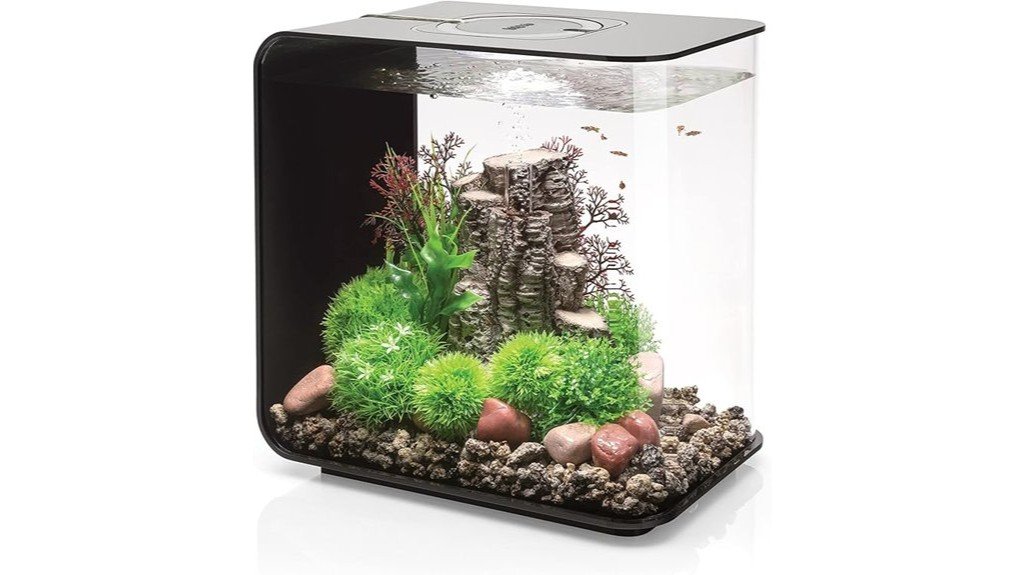
If you’re searching for a stylish way to showcase coral and marine life, the biOrb Flow 30 Acrylic 8-Gallon Aquarium is a fantastic choice. With its chic minimalist design and bold black trim, you’ll love how it looks on any tabletop. Plus, it’s made from acrylic, making it ten times stronger and fifty percent lighter than glass. The true 5-stage filtration system helps keep the water clean, and maintenance only takes about thirty minutes a month. You’ll find it easy to set up, and the included LED lighting adds a beautiful glow. Just remember to keep it out of direct sunlight!
Best For: Those seeking a stylish and compact aquarium to display marine life in a modern home or office setting.
Pros:
- Chic minimalist design that complements any decor.
- Durable acrylic construction that is lighter and stronger than glass.
- Easy maintenance with a true 5-stage filtration system requiring only about 30 minutes per month.
Cons:
- Pump noise can be a concern for some users.
- Filter replacement costs may add up over time.
- Cleaning difficulty and light brightness may require user adjustments for optimal experience.
Factors to Consider When Choosing Nano Reef Tanks for Coral Growth
When you’re picking a nano reef tank for coral growth, there are a few important factors to keep in mind. Consider the tank size, as it affects everything from water quality to coral space. You’ll also want to think about the filtration system, lighting requirements, and how easy it is to maintain—trust me, you’ll thank yourself later!
Tank Size Considerations
Choosing the right tank size is one of the most important decisions you’ll make for your nano reef. A minimum of 20 gallons is often recommended, as this size helps keep water conditions stable and supports a variety of coral species. Larger tanks, like those 32 gallons or more, provide even better filtration and water circulation, which are crucial for healthy coral growth. Remember, the volume of live rock and coral placement can take up swimming space for fish and increase the bioload, so plan accordingly. If you’re just starting, a 10-gallon tank can simplify things and boost your chances of success. So, take your time when choosing the size that best fits your coral dreams!
Filtration System Quality
A high-quality filtration system is like the heart of your nano reef tank, pumping life into your underwater paradise. It’s vital for keeping water clarity and quality, which directly affects your corals’ health and growth. Look for a system that combines mechanical, chemical, and biological components for the best results. Ideally, the filtration should cycle your tank’s water 3-5 times per hour to maintain a balanced environment. Proper flow rate is essential too; it helps spread nutrients evenly and prevents nasty detritus buildup that can harm your corals. Don’t forget about regular maintenance! Clogged filters can lead to low oxygen levels, putting your corals at risk. Keep that heart pumping strong!
Lighting Requirements Importance
Lighting plays an essential role in the success of your nano reef tank, especially when it comes to keeping your corals happy and healthy. Proper lighting fuels photosynthesis, which is like food for your corals. LED systems that let you adjust intensity and spectrum can mimic natural sunlight, helping both corals and live plants thrive. Plus, using timers for sunrise and sunset cycles keeps things natural, promoting healthy behaviors. Remember, different coral species have different light needs—some love bright light, while others prefer the shade. Keep an eye on light intensity and duration, too; too much light can lead to pesky algae, while too little can stunt coral growth. It’s all about finding the right balance!
Material Durability Factors
When picking out a nano reef tank, material durability is a big deal, and it can really affect your coral’s success. Acrylic tanks are super strong—ten times tougher and fifty percent lighter than glass! They’re also great insulators, keeping the temperature stable for your corals while saving you some cash on heating. However, glass tanks can be easier to keep looking good since they don’t scratch as easily, which helps with light transmission. Low iron ultra-clear glass enhances visibility, too, allowing more light to reach your corals. Just remember, reinforced corners in glass tanks help prevent leaks, so consider that when making your choice. It’s all about finding the right balance for thriving coral growth!
Maintenance and Setup Ease
Choosing the right nano reef tank isn’t just about the size; it’s also about how easy it is to set up and maintain. Luckily, nano reef tanks require less upkeep than larger ones, making them perfect for beginners. You’ll still need to do regular water changes and check water parameters to keep your corals happy. Many tanks come with simple instructions, so you can quickly create your aquascape and set up the filtration and lighting. Make sure the filtration system is effective, as it’s essential for maintaining stable water conditions. Plus, a programmable lighting system that mimics sunrise and sunset can boost coral growth, giving your small aquatic world the best chance to thrive!
Compatibility With Accessories
To guarantee your nano reef tank thrives, it’s essential to think about how well it’ll work with your existing accessories. If you have a solid filtration system, make sure your tank’s design allows for customizable filtration chambers. This helps keep water quality high for your corals. Also, consider lighting options—like LED systems with adjustable spectrums—to support coral photosynthesis. Don’t forget about supplemental equipment, such as protein skimmers and water pumps; they’re key for maintaining ideal water conditions. Finally, check if the tank’s design is compatible with various substrates and decor. A stable environment will help beneficial bacteria flourish, which is super important for coral health. Happy reef keeping!
FAQ
What Size Corals Are Suitable for Nano Reef Tanks?
1. What types of corals are ideal for nano reef tanks?
Small corals such as zoanthids, mushrooms, and small SPS varieties are ideal for nano reef tanks. They can thrive in the limited space these tanks provide.
2. Why are zoanthids suitable for nano reef tanks?
Zoanthids are small and hardy corals that come in various colors, making them perfect for enhancing the aesthetics of a nano tank. They are also relatively easy to care for.
3. What are mushrooms, and why are they a good choice for nano reefs?
Mushrooms are soft corals that can adapt well to different water conditions. Their ability to flourish in smaller spaces makes them a popular choice for nano reef tanks.
4. Can small SPS varieties be kept in nano reef tanks?
Yes, small SPS (Small Polyp Stony) varieties can be kept in nano reef tanks. They require stable water parameters and adequate light but can thrive in smaller environments.
5. How do small corals affect tank overcrowding?
Small corals minimize the risk of overcrowding in a nano reef tank since they occupy less space. This allows for a more balanced ecosystem and easier maintenance.
6. What lighting conditions do small corals require in nano tanks?
Small corals typically require moderate to high lighting, depending on the species. It’s essential to research each type to provide the appropriate light intensity for optimal growth.
7. How often should I feed corals in a nano reef tank?
Feeding frequency for corals in nano reef tanks can vary, but generally, they benefit from being fed every few days. Use coral-specific foods to enhance their health and coloration.
8. Do small corals require any specific water conditions?
Yes, small corals generally thrive in stable water conditions with specific parameters for salinity, pH, and temperature. Regular water testing is crucial to maintain a healthy environment.
9. Can I mix different types of small corals in a nano reef tank?
Mixing different types of small corals is usually possible, but it’s important to consider their compatibility and care requirements. Ensure that the needs of each species align to prevent stress.
10. What are some common mistakes to avoid when keeping small corals in nano tanks?
Common mistakes include overcrowding, neglecting water quality, and inadequate lighting. It’s important to research and plan your nano tank setup to avoid these issues for healthy coral growth.
How Often Should I Feed My Corals?
FAQs on Feeding Corals
1. How often should I feed my corals?
Corals should be fed every few days to ensure they receive adequate nutrition.
2. What type of food should I give my corals?
Provide small amounts of specialized coral food or finely crushed marine food to support their health.
3. How do I know if my corals are getting enough food?
Monitor their growth and overall health; if they appear to be thriving, your feeding regimen is likely effective.
4. Can I overfeed my corals?
Yes, overfeeding can lead to poor water quality and negatively affect coral health, so it’s important to balance their feeding.
5. What signs indicate my corals are not receiving enough food?
Signs include stunted growth, fading colors, or retraction of polyps, which may indicate they need more nutrition.
6. Should I adjust feeding frequency based on coral type?
Yes, different coral species have varying dietary needs, so tailor your feeding schedule accordingly.
7. Is it necessary to feed corals in a well-established tank?
Even in established tanks, supplemental feeding can promote better growth and health, so it’s beneficial to maintain a feeding routine.
8. Can I feed corals during the day or night?
It’s typically best to feed corals in the evening when they are more active and open for feeding.
9. How should I prepare food for my corals?
Food should be finely ground or in small bits to ensure corals can easily capture and consume it.
10. What should I do if my corals are not responding to feeding?
If corals show no response to feeding, reassess your food type, quantity, and the environmental conditions in the tank.
Are There Any Specific Lighting Requirements for Coral Growth?
1. What type of lighting is best for coral growth?
Corals thrive under a combination of LED or T5 lights. These light sources should provide the right intensity and spectrum for optimal growth.
2. How important is light intensity for corals?
Light intensity is crucial for coral health, as insufficient light can hinder their growth and overall vitality. Ensure your lighting setup delivers the necessary intensity tailored to your specific coral species.
3. What light spectrum do corals require?
Corals require a specific spectrum of light, typically including both blue and white light. The blue light is particularly beneficial as it promotes photosynthesis in zooxanthellae, the algae living within corals.
4. How long should I keep the lights on for corals?
To mimic natural daylight cycles, lights should be on for about 10-12 hours a day. This duration supports coral growth and helps maintain their health and color.
5. Can corals adapt to different lighting conditions?
Yes, corals can adapt to varying lighting conditions, but sudden changes can be stressful. It’s best to gradually acclimate them to new lighting setups to minimize shock.
6. Do different coral species have different lighting needs?
Absolutely. Different coral species have varying light requirements, with some preferring lower light and others thriving in high-light conditions. Research the specific needs of your coral species for best results.
7. Is it necessary to use specialized lighting for coral reefs?
While not mandatory, specialized lighting can enhance coral growth and health. Using lights designed for reef aquariums can help provide the ideal spectrum and intensity for corals.
8. How often should I check my lighting setup?
Regularly check your lighting setup to ensure it’s functioning properly and meeting the needs of your corals. Monitoring light intensity and spectrum is essential for maintaining optimal conditions.
9. What are the signs of inadequate lighting for corals?
Signs of inadequate lighting include slow growth, fading colors, and increased susceptibility to disease. If you notice these signs, it may indicate that your lighting conditions need adjustment.
10. Can I use natural sunlight for coral growth?
While natural sunlight can be beneficial, it’s often inconsistent and may lead to fluctuations in temperature and algae growth. Controlled artificial lighting is typically recommended for maintaining stable conditions.
Can I Mix Different Coral Species in a Nano Reef Tank?
1. Can I mix different coral species in a nano reef tank?
Yes, mixing different coral species is possible in a nano reef tank, but it requires careful planning.
2. What should I consider regarding lighting for mixed corals?
Ensure that all coral species have compatible lighting requirements to thrive without stress.
3. How do I check water parameters for different corals?
Research the specific water parameters needed for each coral species, such as pH, salinity, and temperature, and maintain a stable environment.
4. Is space a concern when mixing corals?
Yes, it’s important to provide enough space for each coral species to grow and prevent competition for resources.
5. How can I monitor coral interactions in the tank?
Regularly observe your corals for signs of aggression or competition, such as tissue recession or stinging, and adjust their placement if necessary.
6. Are there specific coral species that are more compatible?
Generally, soft corals tend to be more adaptable and can coexist with other soft or LPS corals, but always research specific compatibility.
7. What are the risks of mixing coral species?
Mixing incompatible species can lead to stress, disease, or even death of corals due to aggressive interactions or unsuitable environmental conditions.
8. How can I ensure a healthy ecosystem in a mixed coral tank?
Maintain stable water quality, provide proper lighting, and ensure adequate space and flow to support all coral species.
9. Should I start with one coral species before adding more?
Starting with one species and gradually adding others can help you monitor the tank’s stability and manage interactions more effectively.
10. What are the signs of stress in corals?
Signs of stress include color fading, tissue recession, or reduced polyp extension; these indicate that adjustments may be needed.
11. Can I use coral frags in a mixed species tank?
Yes, using coral frags can be a great way to start a mixed coral tank, but ensure they are established and compatible with existing species.
What Water Parameters Are Ideal for Thriving Corals?
FAQ on Ideal Water Parameters for Thriving Corals
1. What is the ideal temperature range for corals?
The ideal temperature range for corals is between 75-80°F. Maintaining this temperature helps ensure optimal health and growth for coral species.
2. What salinity levels should I maintain for corals?
A salinity level of approximately 1.024-1.026 is recommended for thriving corals. Consistent salinity levels are crucial for coral health.
3. What is the optimal pH level for coral systems?
The optimal pH level for corals is between 8.1-8.4. Keeping the pH within this range supports metabolic processes in corals.
4. How important is alkalinity for coral health?
Alkalinity is vital for coral health, with ideal levels ranging from 8-12 dKH. Proper alkalinity helps maintain stable pH and supports coral growth.
5. How often should I test water parameters for my corals?
Regular testing of water parameters is essential, ideally on a weekly basis. Frequent checks allow for timely adjustments to maintain optimal conditions for corals.
6. What can happen if the temperature is too high or too low?
If the temperature deviates from the ideal range, corals can experience stress, leading to bleaching or even mortality. Maintaining stable temperatures is critical for their survival.
7. How does salinity affect coral health?
Incorrect salinity levels can lead to osmotic stress in corals, affecting their ability to absorb nutrients and expel waste. Consistent salinity is key for their overall vitality.
8. What effects can an unstable pH have on corals?
An unstable pH can disrupt calcium carbonate formation, essential for coral skeletal development. This may hinder growth and lead to weakened coral structures.
9. Why is alkalinity important for coral reefs?
Alkalinity buffers pH fluctuations and provides essential carbonate ions for calcification. This process is crucial for building and maintaining coral skeletons.
10. What should I do if my water parameters are outside the ideal range?
If your water parameters are outside the ideal ranges, take immediate steps to adjust them gradually. Rapid changes can stress corals, so aim for slow and steady adjustments.
11. Can water quality affect coral coloration?
Yes, poor water quality or improper parameters can lead to dull coloration in corals. Healthy conditions promote vibrant colors and overall coral vitality.
Final Thoughts
In summary, selecting the right nano reef tank is crucial for creating a vibrant underwater ecosystem teeming with corals. For beginners seeking an easy setup, the Coralife BioCube is an excellent choice; its user-friendly design and built-in filtration make it a breeze to maintain. If you’re on a budget but still want quality, the biOrb Flow stands out with its stylish appearance and efficient performance. For advanced users looking for greater customization and durability, the Innovative Marine Nuvo Fusion series offers versatile options that can adapt to any coral enthusiast’s needs.
Remember, proper lighting and consistent maintenance are essential for success. Choose the Coralife BioCube if you’re a beginner wanting simplicity, choose the biOrb Flow if you’re budget-conscious but want style, and choose the Innovative Marine Nuvo Fusion if you’re an advanced aquarist ready to take your reef to the next level. Immerse yourself in this rewarding hobby and watch your mini ocean thrive right in your living room!