
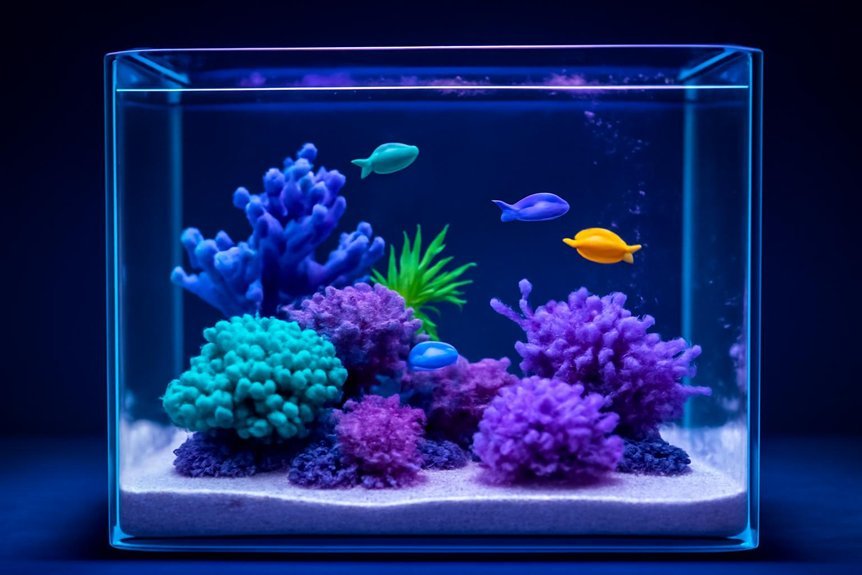
5 Best Nano Reef Tanks for Low Maintenance: Effortless Aquascaping for Beginners
Are you a beginner looking to dive into the captivating world of nano reef tanks without the overwhelming maintenance? You’re in the right spot!
This guide is designed specifically for newcomers who want to create stunning underwater landscapes with minimal effort. Nano reef tanks offer a compact and manageable solution for those eager to introduce vibrant corals and colorful fish into their homes.
In this roundup, we’ll highlight five of the best nano reef tanks that make aquascaping and upkeep a breeze. We’ve considered essential factors such as ease of setup, maintenance requirements, and overall aesthetic appeal to ensure you find the perfect option for your space.
These tanks not only simplify the process but also enable you to enjoy your very own ocean oasis with less hassle.
Ready to transform your home with a beautiful aquatic display? Scroll down to explore our top picks and discover the ideal nano reef tank for your low-maintenance aquatic adventure!
40 oz Micro Reef Ready Aquarium
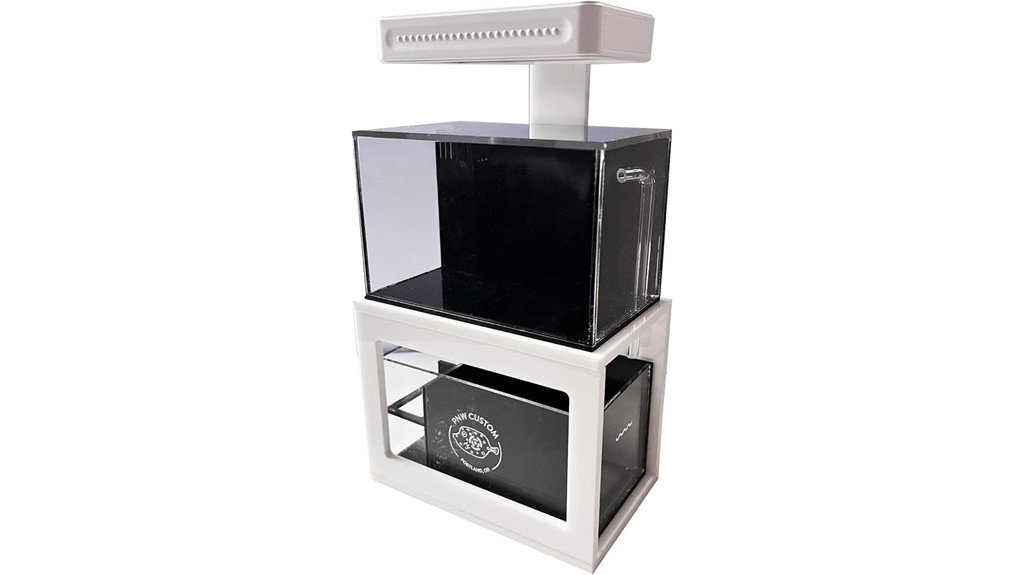
If you’re on the lookout for a small yet enchanting aquarium, the 40 oz Micro Reef Ready Aquarium might just be your perfect match! This little desktop saltwater tank is a fantastic choice for beginners. It includes an LED light and a built-in sump and pump, making it easy to maintain. With dimensions of just 5.7 inches long and 8 inches high, it fits perfectly on your desk. You can even use it for both freshwater and saltwater fish! Just keep an eye on customer reviews, as some folks reported issues with parts upon delivery. Happy fishkeeping!
Best For: Beginners looking for a compact and easy-to-maintain aquarium for both freshwater and saltwater fish.
Pros:
- High-quality construction ensures durability and longevity.
- Efficient design with built-in sump and adjustable return pump for optimal water flow.
- Excellent customer service, ready to assist with inquiries.
Cons:
- Reports of broken parts upon arrival, leading to potential frustration.
- Discrepancies in light specifications may affect user expectations.
- Difficulty in obtaining customer support for replacements or repairs can be a concern.
Luna Reef Nano Tank 4 Gallon Frag System

The Luna Reef Nano Tank 4 Gallon Frag System is perfect for hobbyists looking to immerse themselves in coral fragging without the hassle of high maintenance. With its sleek black acrylic design, this tank measures 12 x 16 x 5 inches, making it compact yet functional. You’ll love the included Sicce micra pump and plumbing, which makes setup a breeze. It’s great for fragging corals or even acclimating small livestock. While some users mention price concerns, the solid construction and 2-year warranty mean you’re investing in quality. Immerse yourself in the world of nano reefs with this easy-to-use system, and enjoy your underwater adventure!
Best For: Hobbyists of all skill levels looking for a compact and functional system to frag corals or acclimate small livestock.
Pros:
- Sleek and modern black acrylic design that fits well in any space.
- Includes a Sicce micra pump and plumbing for easy setup.
- Solid construction backed by a 2-year manufacturer warranty.
Cons:
- Some users have reported concerns about the perceived high price.
- Customer service issues have been noted by certain customers.
- Average rating of 3.4 out of 5 stars indicates mixed user experiences.
Coralland 8-Gallon Saltwater Aquarium
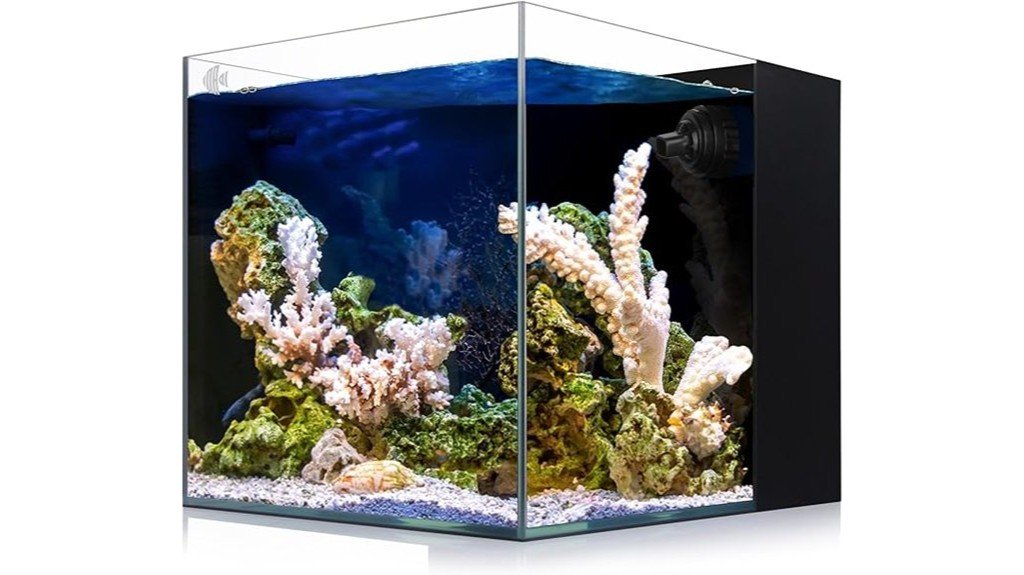
Looking for a low-maintenance aquarium that fits perfectly on your desk or small space? The Coralland 8-Gallon Saltwater Aquarium is your ideal choice! With its 5.5-gallon display and 2.5-gallon rear sump, it’s designed for saltwater fish, live rock, and coral systems. Made from premium low iron ultra-clear glass, it enhances visibility while adding a modern touch to any room. The user-friendly design makes setup and cleaning a breeze, whether you’re a beginner or an experienced aquarist. Just remember, it doesn’t come with accessories, so you’ll need to grab those separately. Immerse yourself in the fun of marine life!
Best For: Those looking for a compact and stylish aquarium suitable for saltwater fish, live rock, and coral systems in small spaces.
Pros:
- Premium low iron ultra-clear glass enhances visibility and reduces greenish tint.
- User-friendly design simplifies setup and maintenance for beginners and experienced aquarists alike.
- Modern aesthetic with a 45° angled joint design adds a contemporary touch to any room.
Cons:
- Does not come with any accessories, requiring additional purchases for a complete setup.
- Limited capacity may not be suitable for larger marine setups or multiple fish.
- Smaller rear sump may restrict filtration options compared to larger aquariums.
CURRENT USA Orbit Marine IC LED Aquarium Light (36-48 Inch)

For anyone passionate about keeping a stunning saltwater reef aquarium with minimal fuss, the CURRENT USA Orbit Marine IC LED Aquarium Light (36-48 Inch) is a fantastic choice. This sleek light fixture, measuring under half an inch thick, delivers full-spectrum lighting with vibrant colors that boost coral growth. It features cool effects like cloud cover and lightning, making your tank feel alive! Plus, the LOOP controller lets you customize a full day-night cycle, so you can easily simulate natural conditions. Installation is a breeze with adjustable brackets, and you can expand it as your aquarium grows. Your corals will thank you!
Best For: Reef aquarium enthusiasts looking for a sleek, customizable LED lighting solution that promotes coral growth and simulates natural conditions.
Pros:
- Offers full-spectrum lighting with vibrant colors for optimal coral growth.
- Includes advanced features like cloud cover effects and a customizable day-night cycle.
- Easy installation with adjustable brackets and expandable system for future needs.
Cons:
- May be overkill for simple freshwater tanks or non-reef setups.
- Some users may find the advanced features complex to set up initially.
- The price point may be higher compared to standard aquarium lights.
NICREW 2.5 Gallon Nano Nature Aquarium Kit
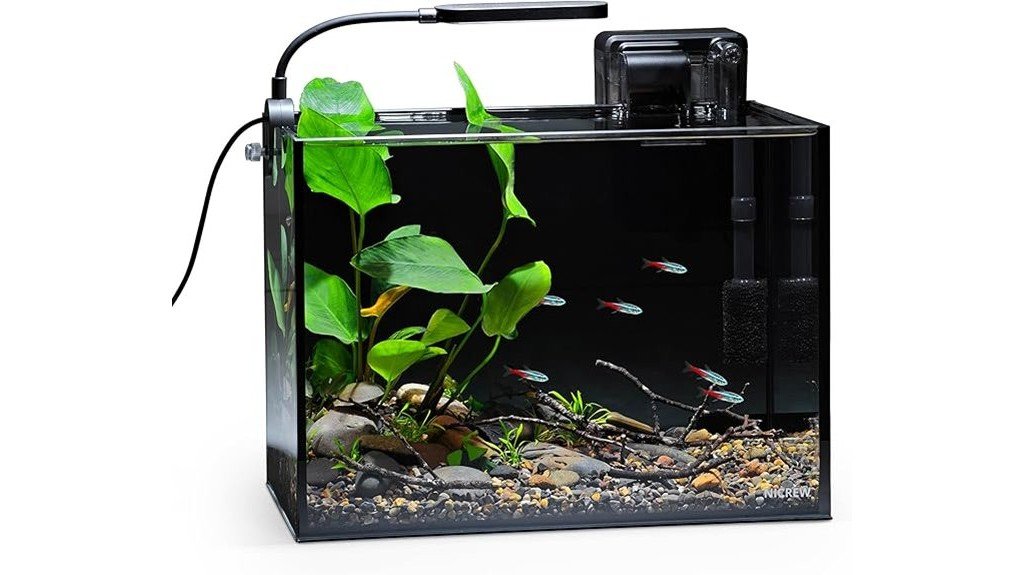
If you’re new to the world of aquariums or just want a low-maintenance option, the NICREW 2.5 Gallon Nano Nature Aquarium Kit is perfect for you. This compact tank is stylish and fits easily on your desk. Made from high-clarity glass, it guarantees a stunning view of your fish and plants. Setting it up is a breeze, thanks to the beginner-friendly guide and included leveling mat. With its premium filtration and lighting, your aquatic friends will be happy and healthy with minimal effort. Immerse yourself in the joy of aquascaping without the stress—this kit makes it simple and fun!
Best For: Those new to aquariums or looking for a low-maintenance and stylish desktop fish tank.
Pros:
- Easy setup with beginner-friendly instructions and included leveling mat.
- High-clarity glass provides excellent visibility for an immersive experience.
- Compact design suitable for small spaces or desktops.
Cons:
- Limited capacity may not be suitable for larger fish or multiple species.
- Requires regular maintenance despite being low-maintenance.
- Additional equipment may be needed for specific aquatic setups.
Factors to Consider When Choosing Nano Reef Tanks for Low Maintenance
When you’re picking a nano reef tank for low maintenance, there are some key factors to think about. First, consider the size and capacity, since a well-sized tank can make all the difference in keeping things balanced. You’ll also want to check out the filtration system, lighting options, and the quality of materials, as these can affect how much work you’ll need to put in later on.
Size and Capacity
Choosing the right size and capacity for your nano reef tank is essential, especially if you’re aiming for low maintenance. Nano tanks usually range from 2.5 to 8 gallons, perfect for small spaces. However, a tiny 2.5-gallon tank requires constant monitoring, as water changes can happen quickly. On the other hand, tanks of 4 gallons or more, like the Luna Reef Nano Tank, provide a more stable environment, giving you more wiggle room in your maintenance routine. Plus, wider tanks improve water flow and oxygenation, making your underwater world happier. If you pick a tank with a built-in sump or filtration system, you’ll spend even less time on upkeep, leaving you more time to admire your aquatic friends!
Filtration System Efficiency
Now that you’ve got the right size for your nano reef tank, it’s time to think about how to keep that water crystal clear and your marine life happy. A solid filtration system is key! You want one that combines mechanical, chemical, and biological filtration to tackle toxins and waste effectively. Look for adjustable return pumps with around 50 GPH flow rates to keep water moving and nutrients flowing. If possible, choose a tank with a built-in sump; it offers extra space for larger filters and equipment like protein skimmers. Remember, regular maintenance is essential, too! Cleaning and replacing filter media keeps everything running smoothly and your reef thriving. A little effort here goes a long way in creating a healthy ecosystem!
Lighting Options Available
Lighting plays an essential role in your nano reef tank, as it not only illuminates your underwater world but also supports the health of your coral and other marine life. LED lighting systems are a fantastic choice since they’re energy-efficient and last a long time, which means less hassle for you. Full spectrum LED lights can really boost coral growth and their vibrant colors. Plus, adjustable lighting lets you mimic natural day-night cycles, keeping your fish and corals happy. Advanced fixtures even offer cool features like programmable cloud effects and moonlight settings, adding a fun twist to your tank. With the right lighting, you can minimize algae growth and guarantee your reef stays healthy with minimal effort!
Material Quality and Durability
When setting up a nano reef tank, the material you choose can make a big difference in how long your aquarium lasts and how well it performs. Acrylic is lightweight and shatter-resistant, while traditional glass offers scratch resistance, so think about your priorities. Low iron ultra-clear glass improves visibility and reduces that pesky greenish tint, making your aquarium look stunning! Look for tanks with reinforced corners and 45° angled joints, which help prevent leaks and guarantee durability. High-clarity materials enhance colors and reduce distortion, giving you a front-row seat to your aquatic show. Finally, don’t forget to check the warranty—one or two years can give you peace of mind about the tank’s quality and craftsmanship!
Maintenance Requirements
Choosing a nano reef tank means you’ll want to think about maintenance requirements right from the start. Luckily, these tanks are often easier to care for than larger ones. You might only need to change the water every 1-2 weeks, depending on how many fish and corals you have. An efficient filtration system can make a big difference, reducing how often you clean and test water quality. Regularly checking salinity, pH, and nitrate levels is key, but some hobbyists use automated systems for extra ease. Opting for low-maintenance fish and corals can considerably cut down on your workload. Plus, equipment like adjustable pumps and programmable LED lights can streamline tasks, making your reef-keeping experience more enjoyable!
Compatibility With Livestock
Making sure your nano reef tank is compatible with the right livestock is key to creating a thriving underwater world. First, consider that smaller tanks support fewer species, so research the adult size and bioload of your potential fish and corals. Remember, some coral species have specific light and flow needs, so choose a tank with adjustable systems to keep them happy. It’s also important to pick fish and coral that get along, as aggression can quickly turn your small space into a battleground. Finally, keep a close eye on water quality, since fluctuations happen faster in smaller tanks. A little planning goes a long way, ensuring your reef thrives with vibrant life!
FAQ
What Type of Fish Are Best for Nano Reef Tanks?
1. What small fish are suitable for nano reef tanks?
Small fish like clownfish, gobies, and blennies are ideal for nano reef tanks due to their size and compatibility with limited space.
2. Are clownfish good for nano reef tanks?
Yes, clownfish are excellent for nano reef tanks as they are small, peaceful, and can adapt well to smaller environments.
3. What role do gobies play in a nano reef tank?
Goby fish are small and often help maintain the tank’s ecosystem by sifting through sand and keeping it clean.
4. Can blennies thrive in nano reef tanks?
Absolutely! Blennies are hardy fish that do well in nano reef tanks and add unique personality and color to the setup.
5. How many fish can I keep in a nano reef tank?
The number of fish depends on the tank size, but generally, one or two small fish are recommended to avoid overcrowding and maintain water quality.
6. Do these small fish require specific water conditions?
Yes, clownfish, gobies, and blennies thrive in stable water conditions, so regular monitoring and maintenance of salinity and temperature are crucial.
7. Are these fish compatible with each other?
Clownfish, gobies, and blennies are generally peaceful and can coexist harmoniously in a nano reef tank, making them great tank mates.
8. What is the best food for small fish in a nano reef tank?
A varied diet including high-quality flakes, pellets, and frozen or live foods ensures that these small fish receive balanced nutrition.
9. How can I enhance the colors of my nano reef fish?
Providing a varied diet and maintaining good water quality can enhance the vibrancy of your fish’s colors, making your nano reef more visually appealing.
10. Is it necessary to have live rock in a nano reef tank?
Yes, live rock provides essential biological filtration, hiding spots for fish, and a natural environment that benefits the overall ecosystem of the nano reef.
How Often Should I Perform Water Changes in a Nano Reef?
FAQ 1: How often should I change the water in my nano reef tank?
You should perform water changes every one to two weeks. This frequency helps maintain optimal water quality.
FAQ 2: What percentage of water should I change during each water change?
It is recommended to change about 10-20% of the water during each water change. This amount is sufficient to keep your tank healthy without causing significant disruption.
FAQ 3: Why are water changes important for a nano reef?
Water changes are essential for maintaining water quality and removing toxins. They help ensure a healthy environment for your aquatic life.
FAQ 4: Can I change the water more frequently than every week?
While you can change the water more frequently, it’s usually not necessary for a nano reef. Stick to the recommended frequency to avoid stressing your tank’s ecosystem.
FAQ 5: What happens if I skip water changes?
Skipping water changes can lead to poor water quality and increased levels of harmful substances. This may result in stress or illness for your aquatic inhabitants.
FAQ 6: Should I use a water conditioner during changes?
Yes, using a water conditioner is advisable to neutralize harmful substances in tap water. This helps protect your tank’s delicate ecosystem during water changes.
FAQ 7: How do I determine the right amount of water to change?
To determine the right amount, aim for 10-20% of your tank’s total water volume. This ensures you are making a significant impact on water quality without overwhelming the system.
FAQ 8: Is it necessary to vacuum the substrate during water changes?
Vacuuming the substrate can be beneficial, particularly if you notice debris buildup. It helps remove waste and uneaten food, contributing to better water quality.
FAQ 9: Can I change the water during feeding time?
It’s best to perform water changes when your fish are not actively feeding. This minimizes stress and helps ensure that food particles do not disrupt the water change process.
FAQ 10: Should I test the water parameters after a water change?
Yes, testing water parameters after a water change is a good practice. This helps you monitor the effectiveness of your changes and maintain optimal conditions for your nano reef.
Can I Use Tap Water for My Nano Reef Tank?
FAQ 1: Can I use tap water for my nano reef tank?
No, tap water is not recommended for nano reef tanks as it often contains harmful chemicals and impurities.
FAQ 2: What are the risks of using tap water in a reef tank?
Tap water can introduce toxins, heavy metals, and chlorine, which can negatively affect the health of marine life in your tank.
FAQ 3: What type of water is best for a nano reef tank?
RO/DI (Reverse Osmosis/Deionized) water is the best option as it removes impurities, providing a cleaner environment for marine organisms.
FAQ 4: Is pre-mixed saltwater a good alternative?
Yes, pre-mixed saltwater is an excellent alternative as it is formulated specifically for marine aquariums, ensuring proper salinity and chemical balance.
FAQ 5: How does RO/DI water benefit my reef tank?
RO/DI water eliminates contaminants and ensures that the water parameters are suitable for marine life, promoting a healthier ecosystem.
FAQ 6: Can I treat tap water to make it safe for my reef tank?
While some treatments can remove certain chemicals, it’s generally safer and more effective to use RO/DI water or pre-mixed saltwater.
FAQ 7: What should I look for in pre-mixed saltwater?
Ensure that it is sourced from reputable suppliers and that it meets the necessary parameters for marine life, such as correct salinity and pH.
FAQ 8: How often should I change the water in my nano reef tank?
Regular water changes, typically around 10-15% every 1-2 weeks, help maintain water quality and remove waste products.
FAQ 9: Can I use distilled water instead of RO/DI water?
Distilled water can be used, but it may lack essential minerals that marine life needs, making RO/DI water the preferable choice.
FAQ 10: What are the benefits of maintaining good water quality in a nano reef tank?
Good water quality supports healthy growth, reproduction, and overall well-being of marine organisms, reducing the risk of disease and stress.
What Are the Ideal Water Parameters for a Nano Reef?
FAQs about Ideal Water Parameters for a Nano Reef
1. What is the ideal temperature range for a nano reef?
The ideal temperature for a nano reef is between 76-82°F. Maintaining this range is crucial for the health of the marine life.
2. What pH level should I aim for in my nano reef?
The pH should be maintained between 8.1 and 8.4. This level supports proper biological processes and coral health.
3. What salinity is recommended for a nano reef?
A salinity level of 1.023-1.025 is ideal for a nano reef. This range mimics natural seawater conditions.
4. Why is it important to monitor ammonia levels?
Ammonia should be kept at zero or very low levels, as it is toxic to fish and invertebrates. Regular testing ensures a safe environment.
5. Should nitrite levels be monitored in a nano reef?
Yes, nitrite levels should also be zero or very low. Elevated nitrite can harm aquatic life and indicates a problem in the nitrogen cycle.
6. What about nitrate levels in a nano reef?
Nitrate levels should be kept at zero or very low as well. High nitrates can lead to algae blooms and poor water quality.
7. How often should I test the water parameters?
Regular testing is essential, ideally weekly or bi-weekly. This helps you catch any fluctuations that could impact your reef’s health.
8. What tools do I need for testing water parameters?
You will need a reliable test kit for ammonia, nitrite, nitrate, pH, and salinity. Digital meters can provide more accurate readings for some parameters.
9. Can fluctuations in these parameters affect my nano reef?
Yes, fluctuations can stress marine life and lead to health issues. Consistency in water parameters is key to a thriving nano reef.
10. What should I do if my water parameters are off?
If your parameters are outside the ideal range, take corrective actions such as adjusting temperature, performing water changes, or using additives. Monitor closely until stability is restored.
How Can I Prevent Algae Growth in My Nano Reef Tank?
1. What water parameters should I monitor to prevent algae growth?
It’s important to maintain stable water parameters, including salinity, pH, ammonia, nitrite, and nitrate levels. Regular testing will help ensure that these parameters remain in the ideal range for your reef tank.
2. How does overfeeding contribute to algae growth?
Overfeeding introduces excess nutrients into the tank, which can fuel algae blooms. It’s crucial to feed your fish only what they can consume in a few minutes to minimize waste.
3. What role does lighting play in algae growth?
Proper lighting is essential, as too much light can promote algae growth. Ensure that your lighting schedule mimics natural conditions and consider using timers to regulate the duration of light exposure.
4. How often should I perform water changes?
Regular water changes, typically every 1-2 weeks, help to reduce nutrient levels and maintain water quality. This practice is vital for preventing algae outbreaks in your nano reef tank.
5. What is a clean-up crew, and why is it important?
A clean-up crew consists of invertebrates like snails and hermit crabs that help consume algae and detritus. Introducing these animals can significantly reduce algae growth and maintain a healthy tank environment.
6. Can I use chemical treatments to control algae?
While chemical treatments are available, they may not address the underlying issues causing algae growth. It’s often better to focus on natural methods, such as improving water quality and introducing a clean-up crew.
7. How can I reduce nutrient levels in my tank?
To lower nutrient levels, ensure you are not overfeeding and perform regular water changes. Additionally, consider using a protein skimmer or other filtration methods to remove excess nutrients efficiently.
8. What types of algae are common in nano reef tanks?
Common types of algae include green hair algae, cyanobacteria, and diatoms. Identifying the type of algae can help determine the best approach for control and prevention.
9. Is it beneficial to add live rock to my tank?
Yes, adding live rock can help establish a beneficial bacterial population that competes with algae for nutrients. This can contribute to a more balanced ecosystem in your nano reef tank.
10. How can I prevent algae blooms during cycling?
During the cycling process, monitor nutrient levels closely and avoid overfeeding. Patience is key; allow the tank to establish itself before adding livestock or making significant changes.
11. What should I do if I already have an algae problem?
If algae are present, reduce lighting duration, perform immediate water changes, and consider adding more clean-up crew members. Manual removal of algae can also be effective in managing existing outbreaks.
Final Thoughts
In conclusion, selecting the ideal nano reef tank can truly elevate your underwater experience. For budget-conscious hobbyists, the 40 oz Micro Reef is an excellent choice, offering great value without compromising on quality. If you’re a beginner looking for an all-in-one solution, the NICREW 2.5 Gallon kit simplifies setup and maintenance, making it perfect for those just starting out. For advanced users seeking both durability and performance, the CURRENT USA Orbit Marine light is a top-tier option that will ensure your corals flourish beautifully.
To put it simply: choose the 40 oz Micro Reef if you’re on a budget, choose the NICREW 2.5 Gallon kit if you’re a beginner, and choose the CURRENT USA Orbit Marine light if you’re an advanced user wanting the best for your reef. Dive in and enjoy your low-maintenance reef aquarium journey! Happy fishkeeping!