
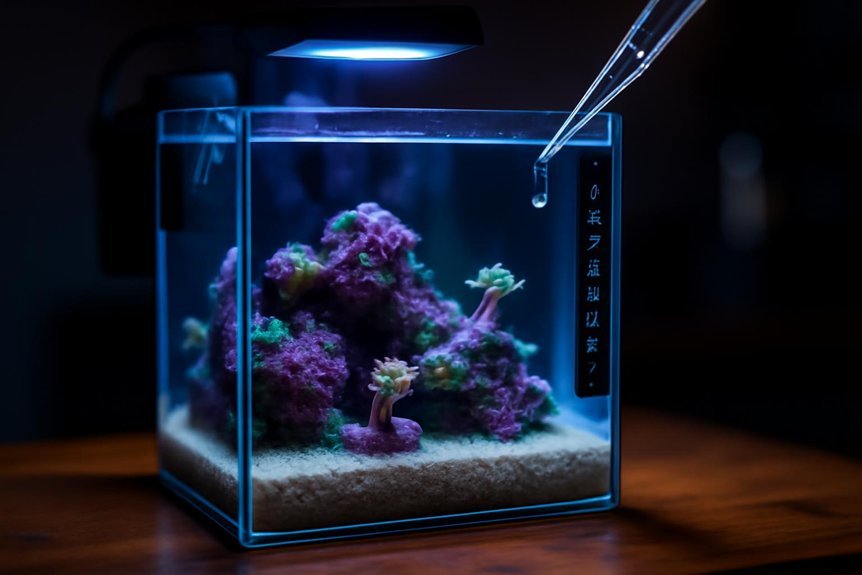
How to Start a Nano Reef Tank Step-by-Step
Starting a nano reef tank can be an exciting adventure, and it’s easier than you might think! Imagine the moment you first lay eyes on that small, glimmering tank—perhaps you picture it nestled on your desk or perched in the corner of your living room.
First, you’ll want to pick the right tank size that fits your space, usually between 5 and 20 gallons. Remember that time you measured your bookshelf to find the perfect spot for your favorite plant? This is just as crucial; you want your tank to shine without crowding your other treasures.
Next, think about where to place it—away from direct sunlight is key. Picture yourself standing in your living room, sipping your coffee, as the light from the window casts beautiful reflections on the water’s surface, but not so much that it turns your tank into a greenhouse.
Once you have your tank set up, you’ll gather the essential equipment needed for filtration, heating, and lighting. It’s a bit like assembling a cozy little home for your future aquatic friends.
But wait, there’s more to learn about creating the perfect underwater ecosystem! Just like nurturing a garden, your journey into the nano reef world will be filled with little surprises and discoveries along the way.
Each step you take brings you closer to a vibrant underwater haven, and before you know it, you’ll be captivated by the colorful dance of your new marine life.
Key Takeaways
- Choose a tank size between 5 to 20 gallons and place it on a stable, flat surface away from direct sunlight and high-traffic areas.
- Set up essential equipment including filtration, heater, lighting, and protein skimmer according to manufacturer instructions.
- Rinse the tank, check for leaks, and add substrate like fine sand or small gravel along with live or dry rocks.
- Start cycling the tank by adding a source of ammonia and regularly monitor water parameters until ammonia and nitrites reach zero.
- Introduce marine life gradually after successful cycling, ensuring a stable environment for your nano reef tank.
Choosing the Right Tank Size and Location
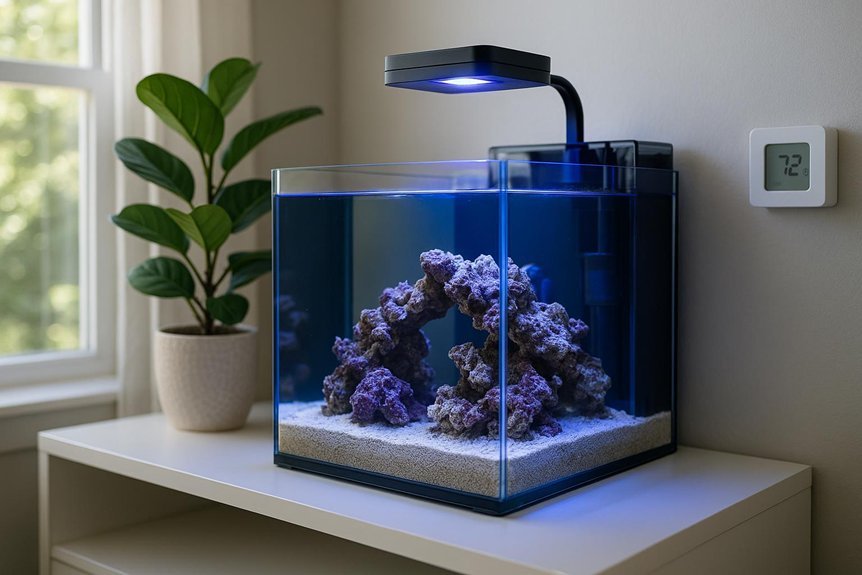
When you’re diving into the world of nano reef tanks, choosing the right size and spot is super important. First, think about how much space you’ve got. A tank between 5 to 20 gallons is usually perfect for beginners. It’s manageable, but still offers room for some amazing marine life.
Now, let’s talk location! Find a flat, stable surface away from direct sunlight. This helps control temperature and prevents algae from taking over. You don’t want your tank to be near vents or high-traffic areas either; fish need peace and quiet!
Essential Equipment for Your Nano Reef Tank
To create a thriving nano reef tank, you’ll need some essential equipment that keeps everything running smoothly. First, grab a reliable filtration system; it’s key for maintaining water clarity and quality. Next, invest in a good heater to keep the water at a comfy temperature for your marine friends. Don’t forget quality lighting—LEDs are energy-efficient and help your corals grow. A protein skimmer is also great for removing waste, ensuring a clean environment. You’ll also need salt mix for your water changes, a hydrometer to measure salinity, and test kits to monitor ammonia, nitrite, and nitrate levels. With this equipment, you’re well on your way to creating a stunning underwater paradise!
Setting Up the Aquarium: Step-by-Step
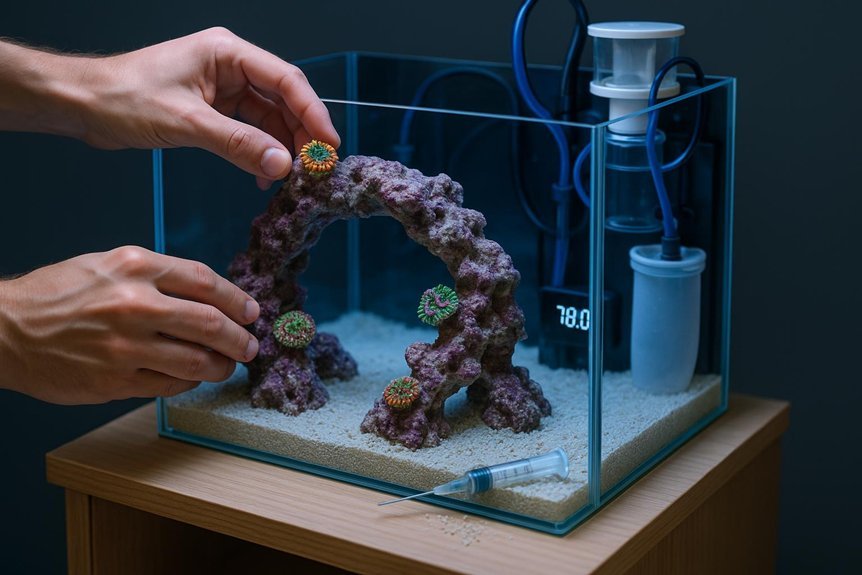
Setting up your nano reef tank can be an exciting adventure, and each step brings you closer to creating your own underwater world. Start by placing your tank on a sturdy, level surface, ensuring it can support the weight of the water and equipment. Next, rinse the tank with fresh water to remove any dust. Once it’s clean, set up your filtration and lighting systems according to the manufacturer’s instructions. This is the time to check for any leaks, so fill the tank with water and let it sit for a day. Finally, you can start adding any accessories, like heaters or powerheads, to prepare for the arrival of your marine friends. You’ll be amazed at how quickly it all comes together!
Selecting the Right Substrate and Rock
Choosing the right substrate and rock for your nano reef tank is essential because it sets the foundation for your aquatic ecosystem. For substrate, consider using fine sand or small gravel, as they mimic natural environments and help beneficial bacteria thrive. Plus, they look great! When it comes to rock, live rock is a fantastic choice since it provides essential filtration and homes for tiny critters. You can also use dry rock, but it might take longer to establish beneficial bacteria. Remember to arrange your rocks creatively, creating caves and hiding spots for fish. Think of it as building a miniature underwater city! With the right substrate and rock, you’re one step closer to creating a vibrant reef habitat.
Cycling Your Nano Reef Tank
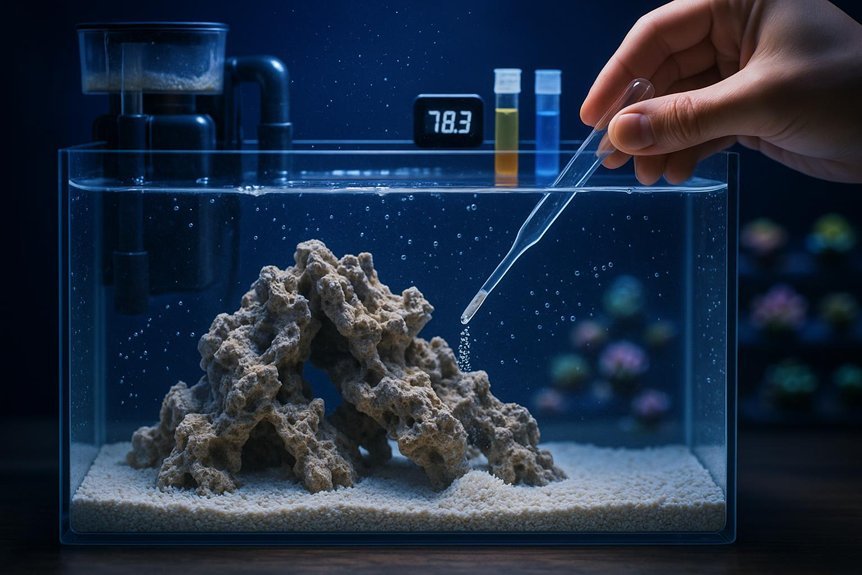
Now that you’ve got your substrate and rock set up, it’s time to get your nano reef tank cycling. This process helps establish beneficial bacteria that’ll break down waste in your tank, keeping your water safe for future fish and corals. Start by adding a source of ammonia, which can come from fish food, shrimp, or ammonia drops. Monitor the water parameters regularly. You’ll notice ammonia levels rise, then fall as bacteria take over. After a few weeks, you should see nitrites spike and then drop too, followed by nitrates appearing. Once ammonia and nitrites are at zero, you’ve successfully cycled your tank! Pat yourself on the back, because you’re one step closer to an awesome underwater world!
Choosing the Best Coral and Fish
Once your tank is cycled and ready for life, picking the right coral and fish can feel like choosing toppings for a pizza—there are just so many delicious options! Start with hardy corals like zoanthids or mushrooms, which are colorful and easy to care for. They’ll thrive in your nano reef while adding some flair. For fish, consider small species like clownfish or gobies; they’re perfect for tiny tanks and have vibrant personalities. Just remember to avoid larger fish that might outgrow your space. Always check compatibility, too! Some fish and corals don’t play well together. With the right choices, your nano reef will flourish, becoming a beautiful underwater world that you’ll love to watch!
Maintenance Tips for a Healthy Nano Reef
To keep your nano reef tank thriving, regular maintenance is key, and it doesn’t have to be a chore! Start by checking your water parameters weekly; this includes salinity, pH, and ammonia levels. A simple test kit makes it easy! Next, perform a 10-15% water change every couple of weeks to keep things fresh. Don’t forget to clean algae off the glass and equipment; a little scrubbing goes a long way. Feeding your fish is important too, but avoid overfeeding—your tank will thank you for it! Finally, keep an eye on your coral and fish for any signs of stress. With these simple tips, you’ll have a vibrant and happy nano reef that’ll impress everyone!
Troubleshooting Common Issues
When you start a nano reef tank, it’s not uncommon to run into a few bumps along the way. You might notice cloudy water, which often means there’s a bacterial bloom. Don’t panic! Just wait it out; it usually clears up in a few days. If your fish seem stressed or are hiding, check your water parameters—ammonia or nitrite spikes can be the culprits. Also, watch for algae growth. A little is normal, but too much can be a problem. You can reduce it by adjusting your lighting schedule and adding some snails or hermit crabs. Remember, every tank has its quirks, so don’t hesitate to seek advice from fellow aquarists. Happy reefing!
FAQ
How Much Time Should I Dedicate to My Nano Reef Tank Weekly?
FAQs about Time Commitment for Your Nano Reef Tank
1. How many hours should I spend on my nano reef tank each week?
You should aim to dedicate around 5 to 10 hours weekly to your nano reef tank.
2. What activities should I include in my weekly maintenance?
Weekly maintenance should encompass water changes, cleaning equipment, and checking for algae growth.
3. How often should I monitor water parameters?
It’s essential to monitor water parameters at least once a week to ensure a stable environment for your tank’s inhabitants.
4. Is feeding my tank’s inhabitants time-consuming?
Feeding typically takes only a short amount of time, but it’s crucial to do it consistently and appropriately.
5. Should I spend time observing my reef tank?
Yes, regular observation helps you detect any changes or issues early, promoting a healthier tank.
6. Can I combine activities to save time?
Absolutely! You can combine feeding and observation, or monitor parameters while doing maintenance tasks.
7. What if I can’t dedicate 5 to 10 hours a week?
If time is limited, consider focusing on critical tasks, but be aware that inconsistent care can affect tank health.
8. Is there a recommended schedule for maintenance activities?
Establishing a routine for specific tasks, such as deep cleaning or water testing, can help streamline your weekly commitment.
9. How important is consistency in maintaining my nano reef tank?
Consistency is crucial; maintaining a regular schedule helps create a stable environment for your aquatic life.
10. What happens if I neglect my tank for a week?
Neglecting your tank can lead to imbalances in water chemistry, unhealthy inhabitants, and potentially costly problems down the line.
Can I Use Tap Water for My Nano Reef Tank?
1. Can I use tap water for my nano reef tank?
No, using tap water for a nano reef tank is not recommended. It often contains harmful contaminants and chemicals that can adversely affect marine life.
2. What are the risks of using tap water in a reef tank?
Tap water may have chlorine, heavy metals, and other impurities that can stress or kill sensitive marine organisms. These elements disrupt the delicate balance necessary for a healthy reef environment.
3. What type of water should I use for my nano reef tank?
It is best to use distilled or reverse osmosis (RO) water for your nano reef tank. Both options are free from harmful substances and provide a pristine environment for marine life.
4. Why is distilled water preferred for reef tanks?
Distilled water is purified through evaporation and condensation, removing most contaminants. This ensures a clean and safe source of water for your reef tank.
5. What is reverse osmosis water?
Reverse osmosis water is created by forcing tap water through a semi-permeable membrane, effectively removing impurities and minerals. This process yields high-quality water that is ideal for marine aquariums.
6. Are there any benefits to using RO water over tap water?
Yes, using RO water helps maintain stable water parameters, which are crucial for the health of reef inhabitants. It also minimizes the risk of algae blooms caused by excess nutrients.
7. How can I test my tap water for contaminants?
You can test your tap water using water testing kits available at aquarium stores. These kits measure levels of chlorine, heavy metals, and other harmful substances.
8. Can I treat tap water to make it safe for my reef tank?
While some treatments can remove specific contaminants, it can be challenging to ensure complete safety. It is generally more reliable to use distilled or RO water instead.
9. How often should I change the water in my nano reef tank?
Regular water changes, typically 10-20% every 1-2 weeks, help maintain water quality. Using purified water during these changes is essential for long-term health.
10. Is there any other type of water I can use aside from distilled and RO?
You can also consider using natural seawater, provided it is collected from a clean and uncontaminated source. However, ensure it is properly filtered and tested before use.
How Do I Prevent Algae Growth in My Nano Reef Tank?
FAQs on Preventing Algae Growth in Nano Reef Tanks
1. What water parameters should I maintain to prevent algae?
Keeping stable water parameters such as pH, salinity, and nitrate levels is crucial. Regular testing will help you ensure that your tank conditions are optimal.
2. How does light exposure affect algae growth?
Excessive light can promote algae blooms. Limiting light exposure to 8-10 hours a day can help reduce the growth of unwanted algae.
3. How often should I perform water changes in my nano reef tank?
Regular water changes, ideally 10-20% weekly, help keep nutrient levels in check and reduce algae growth. Consistency is key for maintaining a healthy environment.
4. Can adding herbivorous fish help control algae?
Yes, introducing herbivorous fish, such as certain types of tangs or blennies, can help manage algae. These fish graze on algae, helping to keep it under control.
5. Are snails effective in preventing algae growth?
Certain snails, like turbo or astrea snails, are excellent at consuming algae. Including them in your tank can help maintain a balanced ecosystem.
6. What role does tank maintenance play in algae prevention?
Regular maintenance, including cleaning equipment and removing detritus, helps prevent nutrient buildup that can fuel algae growth.
7. Should I use a protein skimmer in my nano reef tank?
A protein skimmer can be beneficial for removing organic waste before it breaks down and contributes to nutrient levels that promote algae. It’s especially useful in smaller tanks.
8. Is it necessary to have live rock in my nano reef tank?
Yes, live rock can provide biological filtration and compete with algae for nutrients. It can help create a balanced ecosystem that discourages excessive algae growth.
9. How can I identify if my tank has an algae problem?
Look for visible green, brown, or red growths on the substrate, rocks, or glass. An increase in algae can indicate nutrient imbalances or excessive light.
10. What should I do if I notice an algae bloom?
If an algae bloom occurs, reduce lighting, increase water changes, and consider adding algae-eating fish or invertebrates to help combat the problem. Monitor water parameters closely during this time.
What Are the Best Lighting Options for a Nano Reef Tank?
FAQ 1: Why are LED lights recommended for nano reef tanks?
LED lights are energy-efficient and produce minimal heat, making them suitable for the compact environment of a nano reef tank. They also offer a full spectrum of light essential for coral growth and health.
FAQ 2: What spectrum of light do corals need?
Corals thrive under specific light spectrums, particularly in the blue and white ranges. Using LED lights that mimic natural sunlight helps promote photosynthesis in corals.
FAQ 3: How does adjustable intensity benefit a nano reef tank?
Adjustable intensity allows you to customize light levels according to different coral species and their growth stages. This flexibility supports optimal health and growth for a diverse range of corals.
FAQ 4: What are the advantages of using energy-efficient lighting?
Energy-efficient lighting reduces electricity costs and minimizes heat output, which is crucial in small tank environments. This helps maintain stable water temperatures, benefiting the overall ecosystem.
FAQ 5: Are there specific LED brands that are best for nano reef tanks?
While many brands offer suitable LED options, look for ones specifically designed for marine aquariums. Brands like Kessil and AI Prime are popular for their quality and adjustable features.
FAQ 6: How long should I keep the lights on in my nano reef tank?
Generally, a photoperiod of 8 to 12 hours is ideal for most reef tanks. However, monitor your corals’ response and adjust the duration based on their specific needs.
FAQ 7: Can I use other types of lighting besides LED?
While LED is the most recommended type, some hobbyists use T5 or metal halide lights. However, these options may generate more heat and consume more energy, making LED a more practical choice for nano tanks.
FAQ 8: How can I simulate natural light cycles in my nano reef tank?
Using a timer for your lighting system can help mimic natural day and night cycles. Gradually increasing and decreasing light intensity throughout the day can further replicate natural conditions.
FAQ 9: What should I consider when positioning my lights?
Position lights to ensure even coverage across the tank, accommodating for varying heights of corals. Keep in mind that light intensity diminishes with distance, so adjust placements accordingly.
FAQ 10: How do I know if my corals are getting enough light?
Signs of healthy corals include vibrant colors and extended polyps during the light cycle. If you notice bleaching or retraction, it may indicate insufficient lighting or too much intensity.
How Often Should I Test Water Parameters in My Nano Reef Tank?
1. How often should I test water parameters in my nano reef tank?
You should test water parameters at least once a week to ensure a stable environment for your tank’s inhabitants.
2. When should I test my water parameters after adding new livestock?
It’s essential to test your water parameters immediately after adding new livestock to ensure compatibility and prevent stress.
3. What changes in the tank should prompt a water test?
Any significant modifications, such as altering filtration, adding new corals, or changing substrates, should be followed by water testing.
4. What parameters should I test in my nano reef tank?
Key parameters to measure include pH, ammonia, nitrite, nitrate, salinity, and alkalinity, as these directly affect the health of your coral and fish.
5. How can regular testing benefit my reef tank?
Regular testing allows for early detection of potential issues, helping you maintain a balanced ecosystem and avoid harmful spikes in toxins.
6. What should I do if my water parameters are off?
If you detect imbalances, take corrective measures immediately, such as adjusting water changes, dosing appropriate additives, or modifying feeding routines.
7. Can I rely on a single test result for my tank’s health?
No, it’s important to monitor trends over time rather than relying on a single test result, as fluctuations can indicate underlying issues.
8. How do I know if my testing kit is accurate?
Regularly calibrate your testing equipment and compare results with another reliable testing method to ensure accuracy.
9. Should I test parameters differently for fish and coral?
While some parameters overlap, coral often requires more specific conditions, such as higher alkalinity and calcium levels, making regular testing crucial for their health.
10. What is the best time of day to test water parameters?
Testing in the morning when lights are off can provide a more consistent baseline, as many parameters fluctuate throughout the day due to photosynthesis and biological activity.
Final Thoughts
Starting a nano reef tank can be an exciting adventure! By choosing the right tank size, setting up essential equipment, and carefully selecting your corals and fish, you’re on your way to creating a vibrant underwater world. Remember, patience is key during the cycling process, and regular maintenance will keep your reef thriving. So, roll up your sleeves, get your hands wet, and have fun bringing a piece of the ocean right into your home!