
What Size Nano Reef Tank Should You Start With?
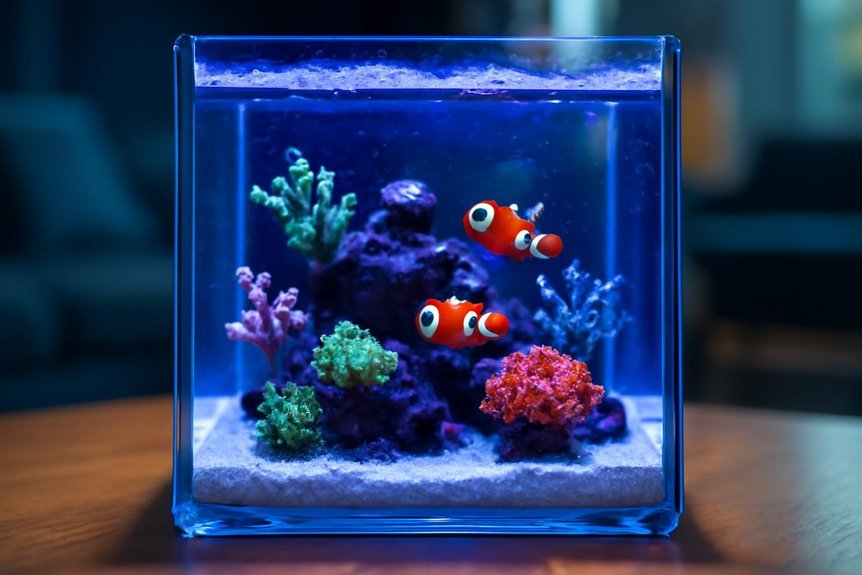
Thinking about diving into the enchanting world of a nano reef tank? That’s fantastic! Picture this: you walk into your living space and your eyes are instantly drawn to a vibrant 10-gallon tank, teeming with colorful corals and lively fish.
This size is often recommended for beginners, and for good reason. It provides just enough room to create a diverse underwater ecosystem without feeling overwhelming.
I remember when I first set up my own 10-gallon reef. The excitement of selecting the perfect clownfish and watching it dart playfully among the anemones was unforgettable.
Plus, with a tank of this size, maintaining stable water conditions felt achievable rather than daunting, which is a huge relief for anyone just starting out.
But before you make your choice, there are other important factors to consider. Think about the space you have available, the types of marine life you want to keep, and how much time you can dedicate to maintenance.
Each decision we make in this journey adds a new layer to our underwater adventure. So, let’s explore these considerations together!
Key Takeaways
- Consider starting with a 10-gallon tank for a balance of manageability and space for diverse marine life.
- A 5-gallon tank is suitable for beginners with limited space but requires more frequent maintenance.
- A 20-gallon tank offers greater stability and less frequent water changes, ideal for those willing to invest time.
- Assess your daily routine and commitment level to determine the best size for your lifestyle.
- Ensure the chosen tank size fits comfortably in your living space without obstructing views or access.
Understanding Nano Reef Tanks
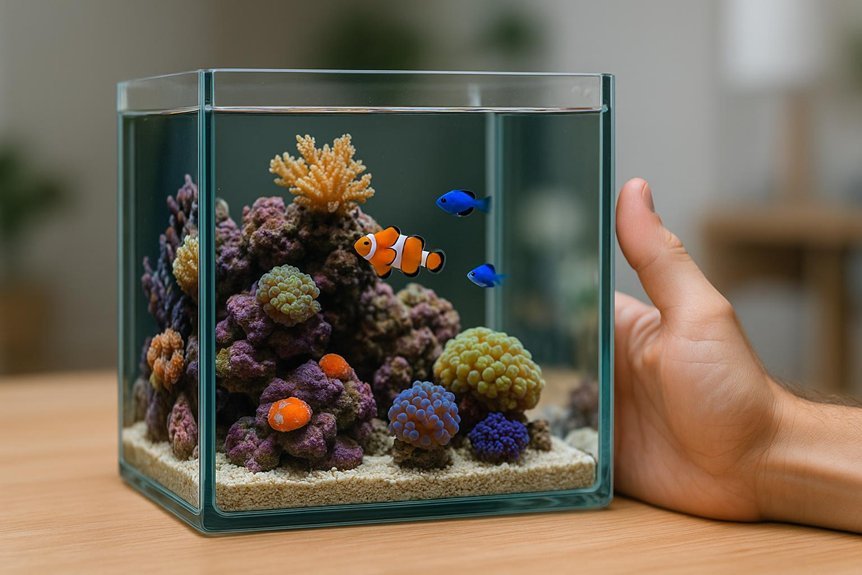
When you plunge into the world of nano reef tanks, you’re stepping into a miniature ocean filled with vibrant coral, colorful fish, and fascinating marine life. These tanks, typically ranging from 5 to 30 gallons, offer a perfect entry point for beginners. You’ll quickly discover that smaller tanks can be just as enchanting as larger ones, but they require a bit more care and attention. You’ll need to monitor water parameters closely, as changes can happen rapidly in a confined space. Choosing the right equipment is essential, but don’t worry; there’s plenty of advice out there. With a little patience and creativity, you’ll create your own underwater paradise that can inspire awe and wonder for anyone who gazes into it.
Key Factors to Consider
Creating a stunning nano reef tank isn’t just about the size; it involves several key factors that can make or break your underwater adventure. First, think about the type of marine life you want to keep. Some fish and corals require more space and specific conditions than others, so do your homework! Next, consider your budget—not just for the tank but for equipment, maintenance, and livestock. Don’t forget about water quality; smaller tanks can be trickier to manage. Lighting is also essential, as certain corals thrive with specific light conditions. Finally, think about your commitment level. A nano reef can be rewarding but needs regular care. Balancing these factors can set you up for a thriving aquatic oasis!
Popular Sizes and Their Benefits
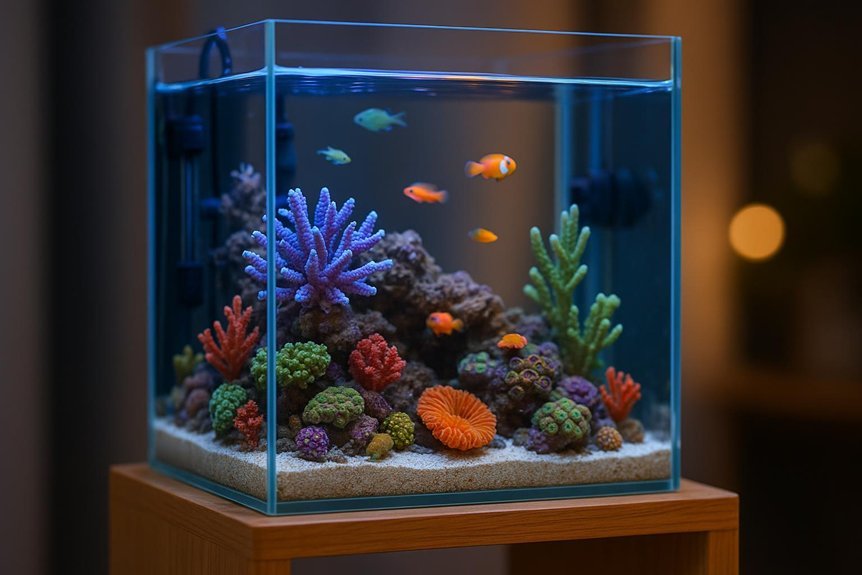
Choosing the right size for your nano reef tank can be just as important as picking the perfect fish or corals. Popular sizes like 5 gallons, 10 gallons, and 20 gallons each offer unique benefits. A 5-gallon tank is great for beginners; it’s small, manageable, and fits almost anywhere. If you want a bit more space, a 10-gallon tank provides extra room for fish to swim and corals to grow, making it easier to maintain water quality. For those ready to dive deeper, a 20-gallon tank allows for a more diverse ecosystem, with more fish and coral options. Whatever size you choose, remember that each has its perks, helping you create an amazing underwater world right at home!
Assessing Your Space and Lifestyle
Before you plunge into the world of nano reef tanks, it’s essential to take a good look at your space and lifestyle. Think about where you’d like to place the tank—do you have a cozy corner or a dedicated shelf? Make sure it fits without crowding your room or blocking your favorite view. Next, consider your daily routine. Do you have time to enjoy the tank and keep an eye on your aquatic friends? Nano reefs can be enchanting, but they require attention. If you’re always on the go, a smaller tank might be perfect. Remember, it’s about finding balance between your passion for marine life and your everyday life. After all, a happy hobbyist means a thriving reef!
Maintenance Considerations for Different Sizes
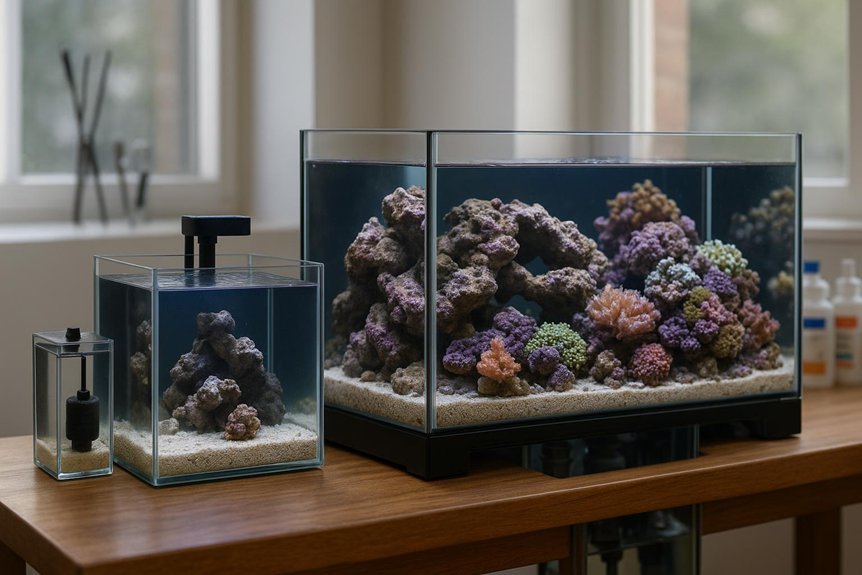
When you think about setting up a nano reef tank, it’s important to realize that maintenance needs can change quite a bit depending on the size you choose. A smaller tank, like a 5-gallon, requires more frequent water changes because it can quickly become unbalanced. You’ll need to monitor water parameters closely, too! On the other hand, a larger 20-gallon tank offers a bit more stability, giving you a little breathing room between maintenance tasks. However, don’t get too relaxed; it still needs regular attention! Keep in mind that the bigger the tank, the more equipment you might need, which can increase your work. So, choose a size that fits your schedule and enjoy the beautiful world of reef keeping!
FAQ
Can I Mix Different Fish Species in a Nano Reef Tank?
1. Can I keep multiple fish species in a nano reef tank?
Yes, you can keep multiple fish species in a nano reef tank, but compatibility is key.
2. What should I consider when choosing fish for a nano reef tank?
Consider the compatibility of the species, their size, and their social behavior to ensure a harmonious environment.
3. How does tank size affect fish compatibility?
The size of your nano reef tank determines how many fish can live comfortably. Overcrowding can lead to stress and aggression.
4. What role does filtration play in mixing fish species?
Proper filtration is essential to maintain water quality, which is crucial for the health of mixed fish species. Ensure your filtration system can handle the bio-load of multiple fish.
5. Are there specific fish species that are more compatible in nano reef tanks?
Yes, some fish species are known to be more peaceful and compatible in smaller tanks, such as certain gobies or clownfish. Research species before introducing them.
6. How does the environment affect my fish in a nano reef tank?
The environment, including water parameters like salinity, temperature, and pH, must be stable and suitable for all species to thrive together.
7. What are the signs that fish are not compatible?
Signs of incompatibility include aggression, fin nipping, hiding, and stress. Monitor behavior closely after introducing new fish.
8. Can I add invertebrates with my fish in a nano reef tank?
Yes, many invertebrates can coexist with fish, but ensure they are compatible and that your fish won’t see them as food.
9. How many fish can I safely add to a nano reef tank?
The number of fish depends on the tank’s size and filtration but aim for a general rule of one inch of fish per gallon of water, adjusting for species needs.
10. What should I do if my fish are showing signs of stress?
If you notice signs of stress, consider isolating aggressive fish, checking water parameters, and ensuring proper hiding spots are available in the tank.
11. Is it necessary to quarantine new fish before adding them to a nano reef tank?
Yes, quarantining new fish is highly recommended to prevent the introduction of diseases and parasites into your established tank.
What Lighting Is Best for a Nano Reef Tank?
FAQs about Lighting for a Nano Reef Tank
1. What type of lighting is best for a nano reef tank?
LED lights are the best choice for nano reef tanks due to their energy efficiency and ability to provide the necessary light spectrum for corals.
2. Why are LEDs preferred for nano reef tanks?
LEDs are customizable, allowing hobbyists to adjust the spectrum and intensity to meet the specific needs of their tank’s inhabitants.
3. How does adjustable intensity benefit a reef tank?
Adjustable intensity supports both photosynthetic organisms and enhances the overall aesthetic of the tank, promoting a healthy environment.
4. Can I use other types of lighting for my nano reef tank?
While other lighting types exist, such as T5 or metal halide, they may not offer the same energy efficiency and versatility as LED lights.
5. What should I consider when choosing LED fixtures?
Look for fixtures that provide a full spectrum of light and have adjustable settings to cater to different coral species and growth stages.
6. How important is light spectrum for corals?
The right light spectrum is crucial for coral health, as it supports photosynthesis and overall growth, ensuring vibrant colors and resilience.
7. How long should I keep the lights on in my nano reef tank?
Generally, a light cycle of 8-12 hours a day is recommended to mimic natural conditions and promote coral health without causing stress.
8. Do I need to supplement LED lighting?
Depending on the specific requirements of your corals, you may need to supplement LED lighting with additional light sources to ensure optimal growth.
9. How can I maintain optimal lighting for my tank?
Regularly monitor the intensity and spectrum of your LED lights, adjusting them as necessary based on the health and growth of your corals.
10. What are the benefits of using programmable LED fixtures?
Programmable LED fixtures allow for automated light schedules that can simulate dawn and dusk, enhancing the natural environment for your tank’s inhabitants.
How Often Should I Perform Water Changes?
FAQ 1: How often should I change water in a nano reef tank?
You should perform water changes every one to two weeks for a nano reef tank. This frequency helps maintain optimal water quality.
FAQ 2: Why are water changes important for a nano reef tank?
Water changes are crucial because they help dilute toxins that accumulate over time. This practice ensures a healthier environment for your corals and fish.
FAQ 3: What are the signs that my nano reef tank needs a water change?
If you notice cloudy water, a rise in algae growth, or changes in fish behavior, it may be time for a water change. Regular monitoring is key to maintaining tank health.
FAQ 4: Can I perform water changes more frequently than every week?
Yes, performing water changes more frequently can be beneficial, especially in a heavily stocked tank. Just ensure that you do not disturb the ecosystem too much.
FAQ 5: How much water should I change during a water change?
Changing 10-20% of the tank’s water is generally recommended for a nano reef tank. This amount is sufficient to refresh the water without shocking the system.
FAQ 6: Should I use a water conditioner during water changes?
Yes, using a water conditioner can neutralize harmful substances in tap water, like chlorine and chloramines. This is important to ensure the safety of your aquatic life.
FAQ 7: Is it necessary to test water parameters before a water change?
It’s a good practice to test water parameters before changes. This helps you understand the condition of your water and decide how much to change.
FAQ 8: What should I do with the removed water during a change?
You can either discard the removed water or use it for watering plants. Just ensure it doesn’t contain any harmful substances.
FAQ 9: How do I replace the water after a change?
After removing the old water, replace it with fresh, pre-mixed seawater that matches the temperature and salinity of the tank. This helps reduce stress on your inhabitants.
FAQ 10: Will water changes affect my coral and fish?
Properly timed and executed water changes should have a positive effect on your coral and fish. They help maintain a stable and healthy environment for growth and wellbeing.
Are There Specific Corals That Thrive in Smaller Tanks?
1. What types of corals are suitable for small tanks?
Zoanthids, Mushrooms, and Xenia are ideal corals for smaller tanks due to their hardiness and adaptability.
2. Why are Zoanthids a good choice for nano reefs?
Zoanthids thrive in smaller environments and can tolerate a range of water conditions, making them resilient and easy to care for.
3. How do Mushrooms adapt to smaller tank conditions?
Mushroom corals are known for their ability to adjust to various light and water quality conditions, making them suitable for nano aquariums.
4. What care do Xenia corals require in small tanks?
Xenia corals are hardy and can flourish in smaller setups, but they do best with stable water parameters and adequate lighting.
5. Are there any specific lighting requirements for these corals?
Yes, all these corals need proper lighting to thrive, which should be tailored to their specific needs for optimal growth.
6. How important is water quality for corals in small tanks?
Maintaining high water quality is crucial for the health of corals in smaller tanks, as fluctuations can be more detrimental in confined spaces.
7. Can these corals coexist with each other in a small tank?
Yes, Zoanthids, Mushrooms, and Xenia can coexist well in small tanks, provided there is enough space and proper care.
8. What is the growth rate of these corals in smaller tanks?
These corals generally have moderate growth rates, but their growth can vary based on water quality, light, and feeding.
9. How often should I monitor water parameters for these corals?
It’s recommended to check water parameters regularly, ideally weekly, to ensure optimal conditions for your corals.
10. Do I need any special equipment for keeping these corals?
Basic equipment such as a good filtration system, appropriate lighting, and regular testing kits for water quality will suffice for maintaining these corals.
How Do I Manage Algae Growth in a Nano Reef Tank?
FAQs on Managing Algae Growth in a Nano Reef Tank
1. What lighting conditions help reduce algae growth in a nano reef tank?
Proper lighting is crucial; use a timer to limit light exposure to 8-10 hours per day, and choose lights that promote coral growth while minimizing excess algae growth.
2. How often should I perform water changes to control algae?
Regular water changes, ideally 10-20% weekly, help maintain water quality and reduce nutrient levels that contribute to algae growth.
3. What role does water circulation play in algae management?
Good water circulation prevents stagnant areas where algae can thrive, ensuring that nutrients are evenly distributed and helping to maintain a healthy reef environment.
4. Can introducing herbivorous fish help with algae control?
Yes, adding herbivorous fish like tangs or blennies can naturally graze on algae, helping to manage its growth in your tank.
5. Are there specific snails that help control algae in a nano reef tank?
Certain snails, such as trochus or astrea snails, are effective at consuming algae and can be beneficial additions to your nano reef tank.
6. How can I monitor nutrient levels in my tank to prevent algae?
Regular testing of nitrates and phosphates using aquarium test kits allows you to keep track of nutrient levels and take action if they rise too high.
7. What are some common signs of excessive algae growth?
Excessive algae growth may manifest as green or brown coatings on surfaces, cloudy water, or a decrease in overall tank aesthetics.
8. Is it necessary to use chemical treatments for algae control?
Chemical treatments can be used but should be a last resort; focusing on natural management techniques like adjusting lighting and water quality is often more effective.
9. How does overfeeding contribute to algae growth?
Overfeeding increases nutrient levels in the water, promoting algae growth; it’s important to feed only what your fish can consume within a few minutes.
10. What are some preventative measures to avoid algae outbreaks?
Maintaining a balanced ecosystem with proper filtration, regular maintenance, and a well-planned feeding schedule can help prevent algae outbreaks in the first place.
Final Thoughts
So, if you’re diving into the world of nano reef tanks, a 10-gallon option is a fantastic choice! It’s manageable, stable, and gives you room to create a stunning underwater scene. Plus, you’ll enjoy the thrill of caring for your marine friends without feeling overwhelmed. Remember, it’s all about finding the right balance for your space and lifestyle. Get ready to make a splash and bring a piece of the ocean right into your home!